
Compare models

Google Pixel 9a vs iPhone 14 Plus

  • 1-year warranty
  • Free standard shipping
  • Free 30-day returns
Google Pixel 9a
Starting at

Refurbished price:A$586.44

Versus A$719.76 new

See options
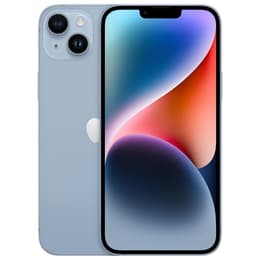
iPhone 14 Plus
Starting at

Refurbished price:A$536.00

Versus A$1,249.00 new

See options

Differences at a glance

The Google Pixel 9a (2025) and the Apple iPhone 14 Plus (2022) represent distinct approaches to modern smartphone design, contrasting a compact mid-range Android device with a larger-screen iOS alternative. While the Pixel 9a runs on the Android operating system with deep artificial intelligence integration, the iPhone 14 Plus operates on Apple's iOS ecosystem within an expanded physical footprint. These two devices differ primarily in display sizing, software environments, and feature sets, offering unique everyday experiences.

Available Models

Colour

Storage

Scores

Durability

Both models balance long-term usability with different release timelines and software support windows, influencing how many years each device will remain current.

  • Software longevity: The Google Pixel 9a benefits from an extensive seven-year update commitment, while the iPhone 14 Plus follows Apple's traditional multi-year software support lifecycle.
  • Repairability and build: Both handsets feature robust water resistance ratings, though their internal components and glass designs require professional handling for major repairs.
  • Expected lifespan: Users can anticipate several years of reliable daily operation from both platforms, supported by ongoing security patches and feature updates.

Release year

2025

2022

Operating system

Android

iOS

Foldable

No

No

Performance

Daily operation relies on different hardware configurations that manage multitasking, app launching, and energy efficiency according to each manufacturer's design.

  • System responsiveness: Both devices handle daily applications, web browsing, and media streaming smoothly, maintaining steady fluidity during typical user tasks.
  • Multitasking capacity: Generous memory allocation allows multiple active applications to run concurrently without noticeable reloading delays.
  • Battery behavior: Both units deliver energy management capable of sustaining a full day of mixed usage, though physical battery capacities and charging speeds differ between the platforms.

Screen quality

Display characteristics vary significantly in physical dimensions and refresh rates, altering the visual experience for media consumption and text legibility.

  • Display technology: Both phones utilize vibrant OLED panel technology that delivers deep black levels and high contrast for photos and videos.
  • Refresh rate smoothness: The Pixel 9a incorporates a high adaptive refresh rate up to 120Hz for fluid scrolling, whereas the iPhone 14 Plus maintains a standard 60Hz refresh rate.
  • Screen dimensions: The iPhone 14 Plus features a larger 6.7-inch viewing area, while the Pixel 9a provides a more compact 6.3-inch screen that is easier to handle with one hand.

Resolution

1080x2424

1284 x 2778

Screen type

P-OLED

Super Retina XDR OLED

Audiovisual

Imaging hardware and software processing combine to handle everyday photography, video capture, and audio recording across different environments.

  • Camera versatility: Both models feature dual rear camera configurations supported by image stabilization for clear landscape and portrait shots.
  • Low-light capability: Advanced computational processing algorithms help both devices preserve detail and color accuracy in dim lighting conditions.
  • Media and audio output: Integrated stereo speakers deliver clear sound for hands-free calls and casual media viewing, complemented by reliable microphone arrays.

Miscellaneous

Physical dimensions, connectivity standards, and security authentication methods shape the ergonomics and day-to-day utility of each handset.

  • Biometric security: The Pixel 9a relies on an in-display fingerprint scanner, while the iPhone 14 Plus uses facial recognition technology for unlocking and authentication.
  • Physical handling: The lighter weight and narrower profile of the Pixel 9a contrast with the broader, heavier frame of the larger iPhone 14 Plus.
  • Connectivity: Both smartphones support modern 5G networks, high-speed Wi-Fi standards, and Bluetooth accessories for seamless wireless pairing.

Weight

186 oz

203 oz

Screen size (in)

6.3

6,7

Network

5G

5G

SIM card

Physical SIM + eSIM

Physical SIM + eSIM

Carrier compatibility

Unlocked

Unlocked

What the community thinks

Users evaluating these models often report satisfaction with the dependable daily performance and clear display panels, though some note that the larger frame of the iPhone can feel heavy during prolonged one-handed use, while others mention that the Pixel's mid-range processor tier lacks the peak graphical throughput of higher-end alternatives. Choosing between them depends largely on personal preference regarding software ecosystems and physical dimensions.

Users prioritizing a larger viewing canvas, iOS software consistency, and facial recognition will find the iPhone 14 Plus well-suited to their needs, while users favoring a high-refresh-rate display, compact ergonomics, and deep artificial intelligence tools may lean toward the Google Pixel 9a. For those interested in a sustainable choice, a quality-assured refurbished option provides a reliable way to acquire either device while minimizing environmental impact. Ultimately, both smartphones offer capable feature sets aligned with distinct consumer priorities.