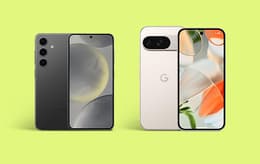
Google Pixel 9 vs iPhone 14 Plus

Google Pixel 9
Google Pixel 9
Starting at

Refurbished price:A$717.00

Versus A$1,349.00 new

See options
iPhone 14 Plus
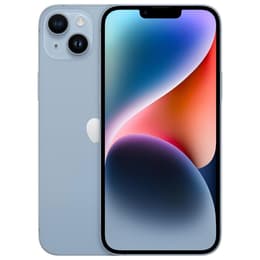
iPhone 14 Plus
Starting at

Refurbished price:A$486.00

Versus A$1,249.00 new

See options

Ratings

The Google Pixel 9, released in August 2024, and the iPhone 14 Plus, launched in October 2022, represent distinct approaches to the large-screen smartphone experience. While both devices offer robust performance and capable camera systems, the Pixel 9 integrates Google's latest advancements in artificial intelligence and a higher display refresh rate, whereas the iPhone 14 Plus emphasizes a streamlined iOS ecosystem and established safety features. Both operate on their respective proprietary operating systems, Android for the Pixel and iOS for the iPhone.

Scores

Durability

The longevity of a smartphone is influenced by its release date and the manufacturer's commitment to software updates, impacting its practical lifespan.

  • Release Timeline: The Google Pixel 9, having been released in August 2024, benefits from a more recent launch compared to the iPhone 14 Plus, which debuted in October 2022. This two-year difference means the Pixel 9 starts with more current hardware and software. [2, 7, 14, 15, 20, 24, 26, 28, 30]
  • Software Support: Google has committed to providing seven years of OS updates, security patches, and Pixel Drop features for the Pixel 9. [8, 14, 22] In contrast, Apple typically offers 5-6 years of major iOS updates for its devices, meaning the iPhone 14 Plus will likely receive fewer future OS versions than the Pixel 9. [5, 11, 12, 15, 17, 34, 35]
  • Repairability and Durability: Both devices feature robust designs. The iPhone 14 Plus incorporates a Ceramic Shield front cover and an aluminum frame, offering notable durability and IP68 water and dust resistance. [1, 3, 5, 13, 18, 34, 39] The Pixel 9 also boasts IP68 dust and water resistance and uses Corning Gorilla Glass Victus 2 for screen protection. [8, 20, 23, 25]

Release year

2024

2022

Compatible with latest Update

Yes

Yes

Operating system

Android

iOS

Foldable

No

No

Performance

Performance in daily use is shaped by the device's internal components, affecting app responsiveness, multitasking, and battery efficiency.

  • Processing Power: The Pixel 9 is equipped with a current-generation processor designed by Google, which enhances app loading speeds and overall system responsiveness, particularly for AI-driven tasks. [6, 8, 9, 14, 22, 25, 28] The iPhone 14 Plus utilizes a previous-generation processor that still delivers smooth performance for most applications and gaming. [1, 3, 5, 12, 17, 19, 31, 34, 39]
  • Multitasking and Storage: The Pixel 9 comes with 12GB of RAM, providing ample capacity for extensive multitasking and demanding applications. [6, 8, 9, 14, 22, 29] The iPhone 14 Plus features 6GB of RAM, which handles typical user scenarios and app switching effectively within the iOS environment. [5, 15, 17, 19, 31, 36] Both devices offer storage options starting at 128GB, with the iPhone 14 Plus also offering a 512GB option. [1, 3, 5, 6, 8, 14, 15, 17, 29, 31]
  • Battery Behavior: The Pixel 9 houses a 4700 mAh battery, providing extended usage times, with reviews noting it can last through a full day for many users. [8, 14, 22, 29] The iPhone 14 Plus features a 4325 mAh battery, known for its strong endurance, often allowing heavy users to get through a full day without needing to recharge. [5, 17, 19, 31, 34, 36]

Memory (GB)

12 GB

6 GB

Screen quality

The display is a primary interface for smartphone interaction, with differences in technology and specifications influencing the visual experience.

  • Display Technology and Size: The Google Pixel 9 features a 6.3-inch OLED display, offering deep blacks and vibrant colors. [6, 8, 14, 21, 23, 25, 28] The iPhone 14 Plus comes with a larger 6.7-inch Super Retina XDR OLED display, also providing excellent contrast and color accuracy. [1, 3, 4, 5, 10, 12, 13, 27, 31, 34, 35, 36, 39]
  • Resolution and Clarity: The Pixel 9's display has a resolution of 1080 x 2424 pixels, resulting in sharp images and text. [6, 8, 14, 21, 23, 25, 28] The iPhone 14 Plus offers a higher resolution of 2778 x 1284 pixels, contributing to its detailed visual output. [1, 3, 4, 5, 10, 12, 13, 27, 31, 34, 35, 36, 39]
  • Brightness and Refresh Rate: The Pixel 9's screen supports a 120Hz refresh rate for smoother scrolling and animations, with a peak brightness of up to 2700 nits for excellent outdoor visibility. [8, 14, 21, 23, 25, 28] The iPhone 14 Plus has a 60Hz refresh rate and reaches a peak HDR brightness of 1200 nits, providing clear viewing in various lighting conditions. [1, 3, 4, 5, 10, 12, 13, 27, 31, 34, 35, 36, 39]

Resolution

1080 x 2424

1284 x 2778

Screen type

OLED

Super Retina XDR OLED

Audiovisual

Camera capabilities are a significant factor for many users, with both devices offering advanced systems for photography and videography.

  • Rear Camera System: The Pixel 9 features a dual-camera setup with a 50MP wide-angle main sensor and a 48MP ultra-wide-angle lens, capable of 8x Super Res Zoom and enhanced low-light performance through computational photography. [8, 14, 25, 29] The iPhone 14 Plus also has a dual-camera system, comprising a 12MP main sensor with sensor-shift optical image stabilization and a 12MP ultra-wide lens, utilizing features like Photonic Engine for improved image quality. [1, 3, 4, 10, 12, 16, 17, 19, 31, 34, 35, 39]
  • Front Camera and Video: For selfies, the Pixel 9 includes a 10.5MP front camera with autofocus. [8, 29] The iPhone 14 Plus features a 12MP TrueDepth front camera with autofocus and Retina Flash. [1, 3, 10, 12, 16] Both phones are capable of recording 4K video at 60 frames per second with their main cameras. [8, 10, 16, 31, 34] The iPhone 14 Plus also offers Cinematic mode and Action mode for advanced video capture. [1, 3, 4, 7, 10, 16, 31, 34, 35]
  • Audio Experience: Both devices provide a good audio experience for media consumption and calls. The Pixel 9 includes dual stereo speakers. [14] The iPhone 14 Plus also offers quality speaker output. [34]

Main camera

50 megapixels

12 megapixels

Front camera

10.5 megapixels

12 megapixels

Miscellaneous

Beyond core features, practical elements like connectivity, ports, and physical design contribute to the overall user experience.

  • Connectivity and Ports: Both the Google Pixel 9 and iPhone 14 Plus support 5G connectivity, Wi-Fi 6, and Bluetooth 5.3 for modern wireless communication. [1, 3, 5, 8, 10, 12, 14, 17, 19, 23, 25, 31, 32, 34, 38] The Pixel 9 features a USB Type-C port, while the iPhone 14 Plus uses a Lightning port. [8, 19, 23, 31]
  • Biometrics and Sensors: The Pixel 9 incorporates an in-display ultrasonic fingerprint sensor for secure unlocking and also supports Face Unlock. [8, 14, 23, 25] The iPhone 14 Plus relies on Face ID for biometric authentication. [3, 5, 12, 34] The iPhone 14 Plus also includes advanced safety features like Crash Detection and Emergency SOS via satellite. [13, 18, 26, 32, 34, 35]
  • Design and Handling: The Pixel 9 measures 152.8 x 72 x 8.5 mm and weighs 198 grams, offering a compact feel for a modern smartphone. [6, 8, 14, 25] The iPhone 14 Plus is slightly larger at 160.8 x 78.1 x 7.8 mm and weighs 203 grams, providing a substantial feel with its larger display. [1, 3, 5, 13, 15, 33, 34]

Weight

198 oz

203 oz

Screen size (in)

6.3

6,7

Network

5G

5G

SIM card

Physical SIM + eSIM

Physical SIM + eSIM

Carrier compatibility

Unlocked

Unlocked

User feedback for the Google Pixel 9 often highlights its compact form factor, robust performance, and the advanced capabilities of its camera system, particularly its computational photography features. Users also frequently praise Google's commitment to seven years of software updates, ensuring long-term usability. Common criticisms, though less frequent, sometimes revolve around the learning curve for new AI features or specific software optimizations. [22]

The iPhone 14 Plus is generally lauded for its large, vibrant display and impressive battery life, which many users find lasts a full day even with heavy use. Its integration into the Apple ecosystem and the inclusion of safety features like Crash Detection and Emergency SOS via satellite are also frequently mentioned as strong points. Some users have noted the 60Hz display as a point of comparison with newer Android devices, and the presence of the traditional notch design. [18, 34, 36]

Users prioritizing the latest software innovations, extensive AI capabilities, a high refresh rate display, and a longer software support window may find the Google Pixel 9 well-suited to their needs. Conversely, users who value a larger display, established safety features, and a familiar, integrated ecosystem may lean towards the iPhone 14 Plus. Both devices offer a quality-assured refurbished option, providing a sustainable choice for consumers.
See all articles

Our recent comparisons