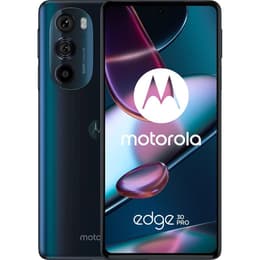

Google Pixel 8a vs Motorola Edge 30 Pro

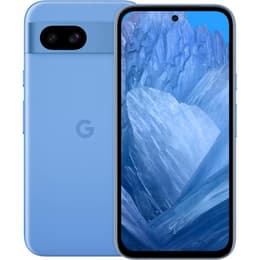
Google Pixel 8a
Google Pixel 8a
Starting at

Refurbished price:A$464.00

Versus A$938.69 new

See options
Motorola Edge 30 Pro
Starting at

Refurbished price:A$291.72

Versus A$2,709.00 new

See options

The Google Pixel 8A, released in May 2024, and the Motorola Edge 30 Pro, launched globally in March 2022, are distinct smartphones operating on the Android platform. While both offer a comprehensive smartphone experience, they cater to different user priorities through their design philosophies and feature sets. The Pixel 8A emphasizes software longevity and AI-driven camera capabilities, whereas the Edge 30 Pro focuses on raw processing power and a larger display for immersive media consumption.

Scores

Durability

When considering the long-term usability of these devices, their release timelines and software support policies are key differentiators.

  • Release Timeline: The Google Pixel 8A is a more recent device, having been released in May 2024. The Motorola Edge 30 Pro was launched earlier, in March 2022. This difference in release year impacts their expected software support windows.
  • Software Longevity: The Pixel 8A offers an extended software commitment from Google, promising seven years of operating system and security updates, ensuring support until at least May 2031. This provides a longer period of up-to-date features and security. The Motorola Edge 30 Pro, being an older device, typically receives fewer major Android version updates and security patches compared to the Pixel 8A's extended policy.
  • Physical Durability: The Pixel 8A features Corning Gorilla Glass 3 on its front display and an IP67 rating for dust and water resistance, indicating protection against immersion. The Motorola Edge 30 Pro uses Gorilla Glass 3 on the front and Gorilla Glass 5 on the back, with an IP52 rating for splash resistance, offering a different level of protection against environmental elements. [2, 6, 32, 34, 38, 40]

Release year

2024

2022

Compatible with latest Update

Yes

Yes

Operating system

Android

Android

Foldable

No

No

Performance

The performance of a smartphone is crucial for daily tasks, from app usage to demanding applications.

  • Processing Power: The Motorola Edge 30 Pro is equipped with a processor known for its high-end performance, capable of handling intensive gaming and complex applications smoothly. The Google Pixel 8A features a processor designed by Google, which integrates advanced AI capabilities for tasks like image processing and voice commands, providing a responsive experience for everyday use and AI-centric features. [4, 6, 23, 30, 39, 41]
  • Multitasking and Storage: Both devices offer ample RAM for efficient multitasking, with the Edge 30 Pro available with up to 12GB and the Pixel 8A with 8GB. The Edge 30 Pro provides more storage options, including up to 512GB, while the Pixel 8A offers up to 256GB. Neither device supports expandable storage via a microSD card. [2, 4, 6, 11, 21, 24, 30, 33, 39, 40, 41, 42]
  • Battery Performance: The Motorola Edge 30 Pro houses a larger 4800 mAh battery, supporting 68W wired fast charging and 15W wireless charging, along with 5W reverse wireless charging. The Pixel 8A has a 4492 mAh battery, supporting 18W wired charging and 7.5W wireless charging. User reports for the Pixel 8A sometimes mention average battery life and slower charging speeds compared to some competitors. [2, 14, 18, 21, 23, 24, 33, 38, 39, 40, 41, 42]

Memory (GB)

8 GB

8 GB

Screen quality

The display is a primary interface for user interaction, influencing media consumption and overall visual experience.

  • Display Technology and Size: The Motorola Edge 30 Pro features a larger 6.7-inch pOLED display, offering an expansive viewing area. The Google Pixel 8A comes with a more compact 6.1-inch OLED display. Both utilize OLED technology, known for deep blacks and vibrant colors. [1, 5, 6, 8, 10, 12, 13, 16, 20, 21, 23, 32, 39, 40]
  • Resolution and Refresh Rate: Both phones offer a Full HD+ resolution (1080x2400 pixels), providing clear and sharp visuals. The Edge 30 Pro boasts a higher 144Hz refresh rate for exceptionally smooth scrolling and animations, particularly beneficial for gaming. The Pixel 8A features a 120Hz refresh rate, also delivering a fluid visual experience. [1, 5, 8, 10, 11, 12, 13, 16, 20, 21, 23, 32, 38, 39, 40]
  • Brightness and Clarity: The Pixel 8A offers a peak brightness of up to 2000 nits, making it highly visible in bright outdoor conditions. The Edge 30 Pro typically reaches around 700 nits, with HDR10+ support for enhanced contrast in compatible content. [1, 5, 8, 10, 12, 13, 16, 20, 21, 39]

Resolution

1080 x 2400

1080 x 2400

Screen type

OLED

OLED

Audiovisual

Camera capabilities are a significant factor for many users, and both devices offer distinct photographic strengths.

  • Rear Camera System: The Google Pixel 8A features a dual rear camera setup with a 64MP main sensor with optical image stabilization (OIS) and a 13MP ultrawide lens. The Motorola Edge 30 Pro offers a triple rear camera system, including a 50MP main sensor with OIS, a 50MP ultrawide lens that also functions for macro photography, and a 2MP depth sensor. [1, 2, 4, 7, 8, 18, 23, 29, 30, 33, 34, 39, 40, 41]
  • Front Camera and Video: For selfies, the Pixel 8A has a 13MP ultrawide front camera, while the Edge 30 Pro features a high-resolution 60MP front camera. Both devices are capable of recording 4K video from their main rear cameras, with the Edge 30 Pro also supporting 8K video recording. The Pixel 8A's video recording can go up to 4K at 60fps on the rear and 4K at 30fps on the front. [1, 2, 4, 7, 8, 17, 18, 22, 29, 34, 39, 41, 42]
  • Computational Photography: The Pixel 8A leverages Google's advanced computational photography and AI features, such as Magic Editor and Best Take, to enhance image quality and offer unique editing capabilities. The Edge 30 Pro provides a Pro mode for manual controls and various shooting modes. [7, 17, 18, 22, 29, 42]

Main camera

64 megapixels

50 megapixels

Front camera

13 megapixels

60 megapixels

Miscellaneous

Beyond core features, several practical elements contribute to the overall user experience and device utility.

  • Connectivity and Ports: Both smartphones support 5G connectivity, Wi-Fi 6E, and Bluetooth (v5.3 for Pixel 8A, v5.2 for Edge 30 Pro). They both utilize a USB-C port for charging and data transfer, with the Edge 30 Pro's port supporting USB 3.1 and DisplayPort 1.4. Neither device includes a 3.5mm headphone jack. [2, 4, 5, 6, 11, 21, 24, 25, 31, 34, 39, 40, 41]
  • Biometric Security: The Google Pixel 8A features an in-display fingerprint sensor and face unlock for secure access. The Motorola Edge 30 Pro incorporates a side-mounted fingerprint reader and face unlock. [4, 24, 34, 40, 42]
  • Design and Handling: The Pixel 8A has a more compact form factor, weighing 188g, with a plastic back and aluminum frame. The Edge 30 Pro is larger and slightly heavier at 196g, featuring a glass back and a plastic frame. The Pixel 8A's design includes more rounded corners and a matte finish on the back. [2, 6, 8, 13, 21, 23, 24, 25, 32, 34, 38, 40, 41]

Weight

188 oz

196 oz

Screen size (in)

6.1

6,7

Network

5G

5G

SIM card

Physical SIM + eSIM

Dual Physical SIM

Carrier compatibility

Unlocked

Unlocked

The Google Pixel 8A and Motorola Edge 30 Pro offer distinct advantages, making them suitable for different user preferences. The Pixel 8A stands out for its exceptional software longevity, with seven years of updates, and its advanced AI-driven camera features that enhance photography and editing. Users often praise its computational photography capabilities, which can produce impressive results even with its hardware. However, some users have noted concerns regarding potential overheating during intensive tasks, slower charging speeds, and noticeable display bezels. [14, 15, 19, 26, 27, 35, 36, 37, 38]

The Motorola Edge 30 Pro, while an older model, offers a larger display with a higher refresh rate for a smoother visual experience, a powerful processor for demanding applications, and very fast wired charging. Its camera system, particularly the high-resolution front camera and 8K video recording, appeals to those prioritizing raw specifications. User feedback generally highlights its smooth performance and immersive display. Some criticisms include its plastic frame, which might feel less premium to some, and its more limited software update policy compared to newer devices. [4, 6, 16, 23, 29, 30, 32, 33]

Users prioritizing long-term software support, a compact design, and advanced AI camera features may find the Google Pixel 8A well-suited to their needs. Conversely, users who value a larger, ultra-smooth display, top-tier processing power for gaming and heavy use, and rapid charging capabilities might lean towards the Motorola Edge 30 Pro. Both devices represent quality-assured refurbished options, providing an eco-friendly alternative for consumers seeking reliable technology.

See all articles

Our recent comparisons