
Google Pixel 8 vs Motorola Razr 40

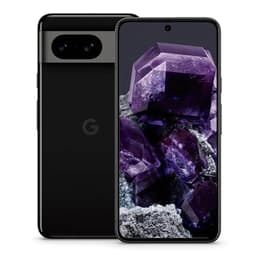
Google Pixel 8
Google Pixel 8
Starting at

Refurbished price:A$463.00

Versus A$1,245.00 new

See options
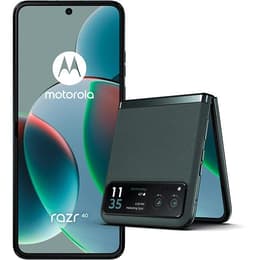
Motorola Razr 40
Motorola Razr 40
See options

Ratings

The Google Pixel 8, released in October 2023, is a traditional Android smartphone known for its advanced computational photography and artificial intelligence features. In contrast, the Motorola Razr 40, launched in June 2023, is a foldable Android smartphone that prioritizes a compact, clamshell design. While both devices offer a modern Android experience, they cater to different user preferences through their distinct form factors and core strengths.

Scores

Durability

The practical lifespan and software support differ significantly between these two devices, influencing their long-term usability.

  • Software Updates: The Google Pixel 8 offers an industry-leading commitment of seven years of Android OS updates, security updates, and feature drops from its release date. The Motorola Razr 40 launched with Android 13, and while Motorola typically provides fewer major OS updates than Google, some sources indicate it may receive up to three major Android upgrades.
  • Physical Durability: The Pixel 8 features Gorilla Glass Victus on both its front and back, coupled with an aluminum frame and an IP68 rating for dust and water resistance, suggesting robust protection against environmental elements. The Razr 40, as a foldable, has a more complex build with a plastic front when opened, a plastic back, an aluminum frame, and a stainless steel hinge. Its cover screen is protected by Gorilla Glass Victus, and it has a water-repellent coating with an IP52 rating, offering less comprehensive water and dust protection than the Pixel 8. While the Razr 40's hinge has been praised for its durability and ability to hold at various angles, its cover screen has shown susceptibility to damage under pressure in some tests.
  • Expected Lifespan: Users prioritizing extended software support and high-level environmental protection will find the Pixel 8 better suited for long-term use. The Razr 40's unique foldable design offers portability but comes with inherent durability considerations for its moving parts and a shorter software update commitment.

Release year

2023

2023

Compatible with latest Update

Yes

Yes

Operating system

Android

Android

Foldable

No

Yes

Performance

Performance and battery behavior are key differentiators, with each device offering a distinct experience based on its internal components and design.

  • Processing Power: The Google Pixel 8 is powered by a current-generation processor designed for efficient handling of everyday tasks and advanced on-device machine learning features. It provides a smooth user experience for general navigation and app usage, though it may experience warmth during extended periods of graphic-intensive gaming. The Motorola Razr 40 features a processor that capably handles daily activities like web browsing, messaging, and video consumption. However, it is not designed for demanding applications or heavy gaming, where users might notice slower performance compared to devices with more powerful chipsets.
  • Multitasking and Storage: Both devices typically come with 8GB of RAM, allowing for competent multitasking. The Pixel 8 is available with 128GB or 256GB of internal storage, while the Razr 40 offers 128GB or 256GB options, with some configurations including 12GB of RAM. The Razr 40's flash memory is noted to be slower than some higher-end alternatives.
  • Battery Life: The Pixel 8, equipped with a 4575 mAh battery, generally provides reliable all-day power for most users, with typical screen-on-time ranging from 8 to 10 hours under mixed usage. Heavy users might need to charge it more frequently. The Razr 40, with its 4200 mAh battery, can last one to two days with lighter usage, which is notable for a foldable device. However, intensive use, such as prolonged gaming or video recording, may require charging before the end of a full day. Both support wired charging, with the Pixel 8 offering 27W and the Razr 40 offering 30W, and both support wireless charging.

Memory (GB)

8 GB

8 GB

Screen quality

The display experience is a primary distinction, with the Pixel 8 offering a traditional flat screen and the Razr 40 featuring a unique foldable design with two displays.

  • Main Display Technology: The Google Pixel 8 features a 6.2-inch OLED display with a resolution of 1080x2400 pixels, providing clear and vibrant visuals. The Motorola Razr 40's main internal display is a larger 6.9-inch foldable LTPO AMOLED panel with a resolution of 1080x2640 pixels, offering rich colors and deep blacks.
  • Brightness and Refresh Rate: The Pixel 8's display can reach a peak brightness of 2000 nits, ensuring excellent visibility even in bright outdoor conditions, and features an adaptive refresh rate of 60Hz to 120Hz for smooth scrolling and responsiveness. The Razr 40's main display offers a peak brightness of 1400 nits and boasts a higher adaptive refresh rate of up to 144Hz, which can drop as low as 1Hz for power efficiency, particularly beneficial during gaming.
  • Secondary Display and Form Factor: A key feature of the Razr 40 is its 1.5-inch AMOLED cover display, which shows notifications and essential information without needing to open the phone. The Pixel 8 has a conventional flat screen design. While the Razr 40's foldable screen has a noticeable crease, users generally report it is not a significant distraction during use.

Resolution

1080 x 2400

1080 x 2640

Screen type

OLED

Foldable LTPO AMOLED

Audiovisual

Both smartphones offer capable camera systems, but they excel in different areas, reflecting their manufacturers' distinct approaches to mobile photography.

  • Rear Camera Systems: The Google Pixel 8 features a dual-camera setup with a 50MP main sensor (f/1.7) and a 12MP ultrawide sensor (f/2.2) with autofocus and macro capabilities. It is renowned for its computational photography, delivering consistently excellent photos with accurate exposure, good detail, and pleasing color reproduction, even in challenging low-light conditions. The Motorola Razr 40 also has a dual-camera system, comprising a 64MP main sensor (f/1.7) with optical image stabilization and a 13MP ultrawide sensor (f/2.2) with autofocus. In good lighting, it produces colorful and well-lit images, though some reviews note that sharpness and detail can be less refined compared to high-end smartphones, and low-light performance can be inconsistent.
  • Front Camera and Video: The Pixel 8 includes a 10.5MP front-facing camera (f/2.2) capable of 4K video recording at up to 60 frames per second, with strong stabilization. It also offers AI-powered features like Best Take and Audio Magic Eraser for enhanced photo and video editing. The Razr 40 is equipped with a 32MP selfie camera (f/2.4) and supports 4K video recording at 30 frames per second. While its selfie camera can produce bright images, some users have noted issues with skin tone accuracy and edge detection in portraits.
  • Audio Experience: Both devices feature stereo speakers, providing a more immersive audio experience for media consumption. The Pixel 8's Audio Magic Eraser feature can also enhance video sound quality by reducing background noise.

Main camera

50 megapixels

64 megapixels

Front camera

10.5 megapixels

32 megapixels

Miscellaneous

Beyond core features, several practical elements contribute to the overall user experience and differentiate these two smartphones.

  • Connectivity and Ports: The Google Pixel 8 supports advanced wireless standards including Wi-Fi 6e/7 and Bluetooth 5.3, offering fast and reliable connections. It features a USB-C 3.2 port for data transfer and charging. The Motorola Razr 40 supports Wi-Fi 6E and Bluetooth 5.3. However, it uses a USB-C 2.0 port, which offers slower data transfer speeds compared to the Pixel 8's port. Neither device includes a traditional 3.5mm headphone jack.
  • Biometric Security: The Pixel 8 incorporates an optical in-display fingerprint sensor for convenient and secure unlocking. The Razr 40 utilizes a side-mounted fingerprint sensor, often integrated into the power button, which some users find to be very fast and intuitive. Both devices also support face unlock.
  • Design and Handling: The Pixel 8 has a compact and refined design, measuring 150.5 x 70.8 x 8.9 mm and weighing 187g, making it comfortable for one-handed use. Its build materials include Gorilla Glass Victus on the front and back with an aluminum frame. The Razr 40's foldable design allows it to be significantly more compact when closed (88.2 x 74 x 15.8 mm) and expands to 170.8 x 74 x 7.4 mm when unfolded. It weighs 188.6g and features a combination of plastic, aluminum, and a stainless steel hinge, often with a vegan leather finish on the back for a tactile feel.

Weight

187 oz

189 oz

Screen size (in)

6.2

6,9

Network

5G

5G

SIM card

Physical SIM + eSIM

Dual Physical SIM + eSIM

Carrier compatibility

Unlocked

Unlocked

The Google Pixel 8 and Motorola Razr 40 offer distinct smartphone experiences, each with its own set of advantages and considerations for different user needs. The Pixel 8 is frequently praised for its exceptional camera capabilities, particularly its computational photography and AI-powered editing features, which consistently produce high-quality images and videos. Users also appreciate its long-term software support, bright display, and compact, comfortable design. Common criticisms include its performance not always matching the absolute fastest flagship processors and its battery life, while improved, not being class-leading. Some users have also noted that it can get warm during intensive tasks.

The Motorola Razr 40, on the other hand, is lauded for its unique foldable form factor, offering a sleek and portable design that appeals to those seeking a compact device. Its internal display is often highlighted for its quality and minimal crease, and its battery life is considered good for a flip phone. However, users frequently point out its weaker processing power compared to traditional flagships, making it less suitable for heavy gaming or demanding applications. Its camera performance, while capable in good lighting, may not consistently match the output of high-end devices, and its software update policy is less extensive than the Pixel 8's. The smaller external screen, compared to some other foldables, is also a point of discussion.

Users prioritizing a top-tier camera experience, long-term software support, and a traditional, compact smartphone design will find the Google Pixel 8 well-suited to their needs. Its focus on AI and computational photography makes it an excellent choice for those who value advanced imaging features. Conversely, users who prioritize a highly portable and stylish device with a unique foldable form factor may prefer the Motorola Razr 40. It is ideal for individuals who primarily use their phone for communication, social media, and media consumption, and who appreciate the novelty and convenience of a clamshell design. Both devices represent quality-assured options, and considering a refurbished model can be an eco-friendly alternative for either choice.

See all articles

Our recent comparisons