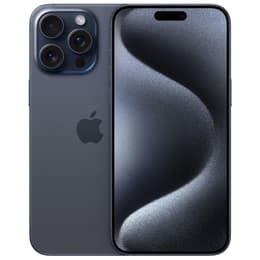
Google Pixel 8 vs iPhone 15 Pro Max

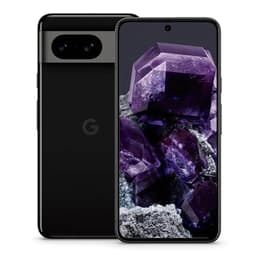
Google Pixel 8
Google Pixel 8
Starting at

Refurbished price:A$465.00

Versus A$1,245.00 new

See options
iPhone 15 Pro Max
iPhone 15 Pro Max
Starting at

Refurbished price:A$1,012.00

Versus A$2,199.00 new

See options

Ratings

The Google Pixel 8, released in October 2023, and the iPhone 15 Pro Max, launched in September 2023, represent flagship smartphones from their respective manufacturers. While both devices offer advanced mobile experiences, they cater to different user preferences through their distinct operating systems and hardware philosophies. The Pixel 8 runs on Android, emphasizing AI-driven features and computational photography, whereas the iPhone 15 Pro Max operates on iOS, focusing on a powerful ecosystem, robust performance, and a refined user interface. A key differentiator lies in their camera systems and overall performance capabilities.

Scores

Durability

When considering the long-term usability of these devices, both the Google Pixel 8 and the iPhone 15 Pro Max offer substantial software support, though with different approaches.

  • Software Longevity: The Google Pixel 8 is notable for its commitment to seven years of OS and security updates, extending support until at least October 2030. This is a significant pledge in the Android ecosystem, aiming to provide extended software relevance. The iPhone 15 Pro Max typically receives iOS updates for five to six years from its release, with Apple historically providing consistent and timely updates across its device lineup.
  • Repairability: The iPhone 15 Pro Max received a repairability score of 4 out of 10 from iFixit, indicating challenges for independent repairs due to software limitations and part requirements. While specific iFixit scores for the Pixel 8 are less prominent, Google's extended support commitment suggests a focus on device longevity, which often correlates with repair considerations.
  • Practical Lifespan: Users can expect both devices to remain functional and secure for many years. The Pixel 8's seven-year update policy means it will receive new Android versions until 2030, allowing users to keep the device for an extended period without missing out on new features or security patches. The iPhone 15 Pro Max, despite its lower repairability score, benefits from Apple's ecosystem and robust build quality, ensuring a practical lifespan that often exceeds its direct software support window.

Release year

2023

2023

Compatible with latest Update

Yes

Yes

Operating system

Android

iOS

Foldable

No

No

Performance

Both the Google Pixel 8 and the iPhone 15 Pro Max deliver strong performance, though they approach processing power and efficiency from different perspectives.

  • Processing Capabilities: The iPhone 15 Pro Max features a current-generation processor designed for demanding applications and graphics-intensive tasks, offering smooth performance for gaming and complex workflows. Real-world speed tests have shown the iPhone 15 Pro Max to be very fast, handling multiple applications and heavy usage without noticeable slowdowns. The Google Pixel 8 is powered by a processor that emphasizes artificial intelligence and machine learning tasks, contributing to its advanced computational photography and smart features. While capable of handling everyday tasks and most applications smoothly, its raw performance in some benchmarks may differ from the iPhone's.
  • Multitasking and Responsiveness: The iPhone 15 Pro Max comes with 8GB of RAM, contributing to its ability to manage numerous open applications and switch between them fluidly. The Pixel 8 also features 8GB of RAM, providing a responsive experience for typical smartphone usage and multitasking. Both devices offer a high level of system responsiveness, ensuring quick app launches and smooth navigation.
  • Battery Behavior: The iPhone 15 Pro Max is equipped with a 4422 mAh battery, providing substantial endurance for a full day of heavy use. Users often report excellent battery life, capable of lasting through extended periods of activity. The Google Pixel 8 has a 4575 mAh battery, and while it offers improved battery life compared to its predecessor, user experiences suggest it provides adequate power for a typical day, though heavy users might need to charge it more frequently.

Memory (GB)

8 GB

8 GB

Screen quality

The display quality on both the Google Pixel 8 and the iPhone 15 Pro Max offers vibrant visuals and smooth interactions, with some key differences in their specifications.

  • Display Technology and Clarity: The iPhone 15 Pro Max features a 6.7-inch Super Retina XDR OLED display with a resolution of 2796 by 1290 pixels, resulting in a pixel density of approximately 460 ppi. This OLED technology provides deep blacks and vibrant colors. The Google Pixel 8 has a 6.2-inch OLED display with a resolution of 1080 x 2400 pixels, offering a pixel density of around 428 ppi. Both displays deliver excellent clarity for viewing content.
  • Brightness and Refresh Rate: The iPhone 15 Pro Max boasts ProMotion technology, offering an adaptive refresh rate up to 120Hz, and can reach a peak brightness of 2000 nits for outdoor visibility and HDR content. The Pixel 8 also features a 120Hz refresh rate, a significant upgrade from previous models, and can achieve a peak brightness of 2000 nits, making it suitable for use in bright conditions.
  • Viewing Experience: The larger screen size of the iPhone 15 Pro Max provides a more expansive viewing area, which can be beneficial for media consumption and multitasking. The Pixel 8's slightly smaller display offers a more compact form factor, which some users may find easier for one-handed use.

Resolution

1080 x 2400

1290 x 2796

Screen type

OLED

LTPO Super Retina XDR OLED

Audiovisual

Both the Google Pixel 8 and the iPhone 15 Pro Max are equipped with advanced camera systems designed to capture high-quality photos and videos, each with its own strengths.

  • Main Camera System: The iPhone 15 Pro Max features a versatile triple-camera system, including a 48MP main sensor, a 12MP ultrawide lens, and a 12MP telephoto lens with 5x optical zoom. Its main camera excels in capturing detailed images with good dynamic range, and it offers enhanced low-light performance. The Google Pixel 8 comes with a dual-camera setup, featuring a 50MP main sensor and a 12MP ultrawide lens. Pixel phones are renowned for their computational photography, producing consistently good photos in various conditions, particularly in daylight.
  • Low-Light and Video Performance: The iPhone 15 Pro Max delivers strong low-light photography and video recording, with features like Night mode and improved sensor-shift optical image stabilization contributing to sharper results. Its video recording capabilities are highly regarded, offering stable and detailed footage even in challenging lighting. The Pixel 8 has made strides in video quality, with improvements in low-light video performance, though some users note that it may still lag behind competitors in very challenging low-light video scenarios. For still photography, the Pixel 8's Night Sight feature continues to produce impressive results in dim environments.
  • Additional Features: The iPhone 15 Pro Max includes features like Cinematic mode for video, ProRes video recording, and an upgraded front camera with autofocus. The Pixel 8 leverages its AI capabilities for features like Magic Eraser and Audio Magic Eraser, enhancing photo and video editing directly on the device.

Main camera

50 megapixels

48 megapixels

Front camera

10.5 megapixels

12 megapixels

Miscellaneous

Beyond their core functionalities, the Google Pixel 8 and iPhone 15 Pro Max offer distinct practical elements that influence daily use.

  • Connectivity and Ports: The iPhone 15 Pro Max has transitioned to a USB-C port, offering faster data transfer speeds and broader compatibility with accessories. It supports 5G, Wi-Fi 6E, and Bluetooth 5.3. The Google Pixel 8 also features a USB Type-C port and supports 5G, Wi-Fi 7, and Bluetooth 5.3, providing advanced wireless connectivity options.
  • Biometric Security and Design: The iPhone 15 Pro Max relies on Face ID for secure facial recognition. Its build incorporates a titanium frame, contributing to a lighter yet durable design, and it carries an IP68 rating for dust and water resistance. The Pixel 8 utilizes an optical under-display fingerprint sensor for biometric authentication. It features a glass front and back with an aluminum frame and also boasts an IP68 rating for dust and water resistance.
  • Physical Characteristics: The iPhone 15 Pro Max is a larger device, weighing 221 grams and measuring 159.9 x 76.7 x 8.3 mm. The Google Pixel 8 is more compact and lighter, at 187 grams and dimensions of 150.5 x 70.8 x 8.9 mm. These differences impact handling and pocketability, with the Pixel 8 offering a more manageable size for some users.

Weight

187 oz

221 oz

Screen size (in)

6.2

6.7

Network

5G

5G

SIM card

Physical SIM + eSIM

Physical SIM + eSIM

Carrier compatibility

Unlocked

Unlocked

Connector

USB-C

USB-C (USB 3)

The Google Pixel 8 and iPhone 15 Pro Max each present a compelling package, appealing to different user priorities based on their strengths and design philosophies.

Users frequently praise the iPhone 15 Pro Max for its exceptional performance, robust camera system, and long-lasting battery life, often highlighting its seamless integration within the Apple ecosystem. Some common criticisms, however, include its larger size and its repairability score, which suggests challenges for independent repairs. Conversely, the Google Pixel 8 receives acclaim for its advanced AI features, computational photography prowess, and Google's industry-leading commitment to seven years of software updates. User feedback sometimes points to its battery life being good but not outstanding for heavy use, and its video performance, while improved, may not always match the iPhone in very low-light conditions.

Users prioritizing raw processing power, a highly refined user experience, and top-tier video recording capabilities, especially in varied lighting, may find the iPhone 15 Pro Max well-suited to their needs. Its larger display and extensive camera features make it a strong contender for content creators and those who consume a lot of media. On the other hand, users who value cutting-edge AI features, a more compact form factor, and an extended software support timeline will likely lean towards the Google Pixel 8. Its focus on smart features and computational photography makes it an excellent choice for those who want an intelligent device that continually evolves with software updates. Both devices are available as quality-assured refurbished options, providing an eco-friendly alternative for consumers.

See all articles

Our recent comparisons