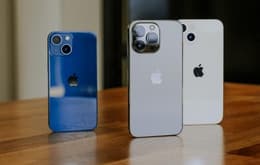
Google Pixel 7a vs iPhone 13 mini

Google Pixel 7a
Google Pixel 7a
Starting at

Refurbished price:A$337.00

Versus A$749.00 new

See options
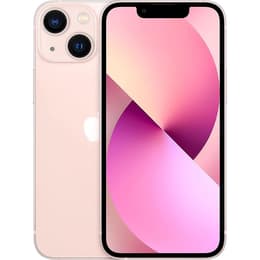
iPhone 13 mini
iPhone 13 mini
Starting at

Refurbished price:A$369.00

Versus A$1,049.00 new

See options

Ratings

The Google Pixel 7a, released in May 2023, and the iPhone 13 Mini, launched in September 2021, represent distinct approaches to compact smartphone design. While the Pixel 7a operates on the Android platform, offering Google's software experience, the iPhone 13 Mini runs on iOS, providing Apple's ecosystem. Key differences between these two devices include their display refresh rates, camera specifications, and overall physical dimensions.

Scores

Durability

When considering the long-term usability of these devices, several factors come into play, including their release timelines, software support, and repairability.

  • Release Timeline and OS Support: The Google Pixel 7a, being released in May 2023, benefits from a more recent launch, offering a longer period of guaranteed Android OS updates and security patches from Google. It shipped with Android 13 and is compatible with current Android 16, with beta support for Android 17, and is expected to receive 3 years of OS updates and 5 years of security updates. The iPhone 13 Mini, released in September 2021, shipped with iOS 15 and is compatible with iOS 18, and the current public release of iOS 26, indicating Apple's strong commitment to long-term software support for its devices.
  • Repairability: The Google Pixel 7a initially received a repairability score of 4/10 from iFixit, which was later uprated to 5/10 after Google provided service manuals. The iPhone 13 Mini initially scored 5/10 on iFixit's repairability scale, which was later improved to 6/10 with the iOS 15.2 update, partly due to improvements in Face ID repair processes. Both devices feature an IP rating for dust and water resistance, with the Pixel 7a rated IP67 and the iPhone 13 Mini rated IP68, allowing for submersion in deeper water for longer periods.
  • Expected Practical Lifespan: Given their respective software support policies, both devices are designed for several years of practical use. The Pixel 7a's newer release date provides a slight edge in terms of future OS updates, while the iPhone 13 Mini's robust iOS support ensures continued functionality and security for an extended period.

Release year

2022

2021

Compatible with latest Update

Yes

Yes

Operating system

Android

iOS

Foldable

No

No

Performance

The performance of a smartphone is crucial for daily tasks, from app usage to multitasking and gaming. Both the Pixel 7a and iPhone 13 Mini offer capable internal components for smooth operation.

  • Processor Capabilities: The Google Pixel 7a is equipped with a current-generation processor designed by Google, which handles demanding applications and multitasking efficiently. The iPhone 13 Mini features Apple's A15 Bionic chip, known for its strong performance in various tasks, ensuring a responsive user experience.
  • Storage and Multitasking: The Pixel 7a comes with 8GB of RAM and 128GB of internal storage, which is not expandable. The iPhone 13 Mini offers 4GB of RAM and storage options of 128GB, 256GB, or 512GB, also without expandable storage. The Pixel 7a's higher RAM can contribute to smoother multitasking with many applications open simultaneously.
  • Battery Behavior: The Pixel 7a houses a 4385 mAh battery, supporting 18W wired and 7.5W wireless charging. Some users have reported concerns regarding rapid battery drain and overheating during average use with the Pixel 7a. The iPhone 13 Mini has a 2406 mAh battery, which, while smaller in capacity, is optimized by its operating system and processor for efficient power usage, often lasting a full day for typical users.

Memory (GB)

8 GB

4 GB

Screen quality

The display is a primary interface for any smartphone, influencing everything from media consumption to daily interactions.

  • Display Technology and Resolution: Both devices feature OLED displays, offering deep blacks and vibrant colors. The Google Pixel 7a has a 6.1-inch OLED display with a 2400x1080 (FHD+) resolution. The iPhone 13 Mini features a smaller 5.4-inch Super Retina XDR OLED display with a 2340x1080 resolution, resulting in a higher pixel density due to its compact size.
  • Refresh Rate and Brightness: The Pixel 7a offers a smoother visual experience with a 90Hz refresh rate. In contrast, the iPhone 13 Mini has a standard 60Hz refresh rate. For brightness, the iPhone 13 Mini can reach up to 800 nits typical brightness and 1200 nits peak brightness for HDR content.
  • Screen Size and Viewing Experience: The Pixel 7a's larger 6.1-inch screen provides more screen real estate for content viewing and browsing. The iPhone 13 Mini's 5.4-inch display caters to users who prefer a more compact device for one-handed use and pocketability.

Resolution

1080 x 2400

1080 x 2340

Screen type

OLED

Super Retina XDR OLED

Audiovisual

Both smartphones offer capable camera systems, each with its own strengths in photography and video recording.

  • Rear Camera System: The Google Pixel 7a features a dual-camera setup with a 64MP main wide-angle camera with optical image stabilization (OIS) and a 13MP ultrawide camera with a 120-degree field of view. The iPhone 13 Mini also has a dual 12MP camera system, consisting of a main wide-angle camera with sensor-shift OIS and an ultrawide camera with a 120-degree field of view.
  • Photography Performance: The Pixel 7a is known for its computational photography, producing high-resolution images with good color and detail, even in low light using Night Sight. The iPhone 13 Mini delivers consistent photo quality with accurate colors and good dynamic range, and its Portrait mode offers advanced bokeh effects.
  • Video Recording Quality: The Pixel 7a can record 4K video at up to 60 frames per second (fps) with its main camera, and 4K at 30fps with its ultrawide and front cameras. The iPhone 13 Mini supports HDR video recording with Dolby Vision up to 4K at 60fps across both its rear and front cameras, and includes Cinematic mode for shallow depth-of-field video effects.
  • Audio and Selfie Cameras: The Pixel 7a has a 13MP ultrawide front camera. The iPhone 13 Mini features a 12MP TrueDepth front camera. Both devices offer stereo speakers for media consumption.

Main camera

64 megapixels

12 megapixels

Front camera

13 megapixels

12 megapixels

Miscellaneous

Beyond core performance and display, several practical features contribute to the overall user experience of a smartphone.

  • Connectivity and Ports: Both devices support 5G connectivity and modern Wi-Fi standards. The Google Pixel 7a uses a USB-C 3.2 port for charging and data transfer. The iPhone 13 Mini utilizes Apple's proprietary Lightning port.
  • Biometrics and Sensors: The Pixel 7a features an under-display fingerprint sensor for secure unlocking, though some users have reported inconsistencies. It also includes standard sensors like an accelerometer, gyroscope, and compass. The iPhone 13 Mini relies on Face ID for biometric authentication and includes an Ultra Wideband chip for spatial awareness.
  • Design and Handling: The Pixel 7a measures 152 mm in height, 72.9 mm in width, and 9 mm in depth, weighing 193.5 grams. It features a glass back and an aluminum frame. The iPhone 13 Mini is significantly more compact and lighter, with dimensions of 131.5 mm in height, 64.2 mm in width, and 7.65 mm in depth, weighing 141 grams. It has a glass front with Ceramic Shield for durability and an aluminum frame.
  • Build Materials and Durability Features: Both phones offer robust builds. The Pixel 7a has Gorilla Glass 3 for screen protection, while the iPhone 13 Mini features Apple's Ceramic Shield front cover, which is designed for enhanced drop resistance.

Weight

212 oz

140 oz

Screen size (in)

6.1

5,4

Network

5G

5G

SIM card

Physical SIM + eSIM

Physical SIM + eSIM

Carrier compatibility

Unlocked

Unlocked

Connector

USB-C

Lightning

The Google Pixel 7a and iPhone 13 Mini cater to users with different priorities, reflecting their distinct operating systems and design philosophies. User feedback for the Pixel 7a often praises its camera capabilities and the clean Android experience, but some concerns have been raised regarding its fingerprint scanner, potential for overheating, and battery performance for heavy users. The iPhone 13 Mini is frequently lauded for its compact size, premium build, and consistent performance within the iOS ecosystem, though its 60Hz display and battery life for intensive use are sometimes noted as areas for consideration.

Users prioritizing a larger screen with a higher refresh rate and Google's AI-driven camera features may find the Pixel 7a well-suited to their needs. Its more recent release also offers a longer runway for software updates. Conversely, individuals who value a highly compact form factor, the seamless integration of the iOS ecosystem, and strong video recording capabilities may lean toward the iPhone 13 Mini. Both devices offer reliable performance for everyday tasks, but their differences in size, operating system, and specific feature sets will guide a purchasing decision.

For those looking for a more sustainable choice, considering a quality-assured refurbished option for either device can provide an eco-friendly alternative.
See all articles

Our recent comparisons