
Google Pixel 7 vs Motorola Edge 30 Pro

Google Pixel 7
Google Pixel 7
Starting at

Refurbished price:A$348.00

Versus A$879.00 new

See options
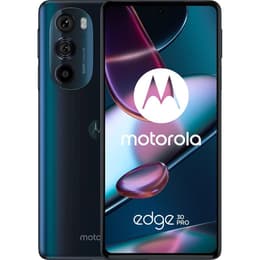
Motorola Edge 30 Pro
Starting at

Refurbished price:A$291.72

Versus A$2,709.00 new

See options

The Google Pixel 7, released in October 2022, and the Motorola Edge 30 Pro, launched in March 2022, are both Android smartphones that offer distinct approaches to the user experience. While the Pixel 7 emphasizes advanced computational photography and a streamlined software experience, the Edge 30 Pro focuses on raw performance and a high refresh rate display. Both devices run on the Android operating system, providing access to a wide ecosystem of applications and services.

Scores

Durability

When considering the long-term usability of these devices, their release timelines and software support policies are key factors.

  • Software Longevity: The Google Pixel 7 was released in October 2022 and is expected to receive major Android operating system upgrades up to Android 16, along with five years of security updates. This provides a longer period of official software support compared to many other Android devices. The Motorola Edge 30 Pro, released earlier in March 2022, is guaranteed to receive two major Android operating system upgrades, taking it up to Android 14, and three years of security updates.
  • Practical Lifespan: Users prioritizing extended software support and the latest Android features will find the Pixel 7 offers a longer practical lifespan in terms of receiving new functionalities and security patches. The Edge 30 Pro's update policy, while adequate for many, means it will reach its end-of-life for major OS updates sooner.
  • Repairability: Both devices are designed with modern smartphone construction, which typically involves specialized tools and expertise for repairs. Information on specific repairability scores is not consistently available, but general trends suggest that components like batteries and screens are replaceable by trained technicians.

Release year

2022

2022

Compatible with latest Update

Yes

Yes

Foldable

No

No

Performance

The performance of a smartphone is crucial for daily tasks, from launching applications to managing multiple processes simultaneously.

  • Processing Power: The Google Pixel 7 is powered by Google's Tensor G2 chip, which is designed to optimize artificial intelligence and machine learning tasks, contributing to a smooth and responsive user experience, especially with Google's software features. The Motorola Edge 30 Pro features a high-end processor from its release year, which delivers fast and fluid performance for demanding applications and multitasking.
  • Multitasking and Responsiveness: Both devices handle everyday applications and multitasking with ease. The Pixel 7's integrated hardware and software optimization ensures a consistent and fluid experience across its interface and applications. The Edge 30 Pro's powerful processor allows for quick app loading and efficient background process management, with users often noting its snappy feel.
  • Battery Behavior: The Pixel 7 is equipped with a 4355 mAh battery, which typically provides enough power for a full day of moderate to heavy use, though very heavy users might consider a top-up. The Motorola Edge 30 Pro has a larger 4800 mAh battery, and while it generally offers solid all-day battery life, some users have reported that its powerful processor and high refresh rate display can lead to more frequent charging for heavy usage scenarios.

Memory (GB)

8 GB

8 GB

Screen quality

The display is a primary interface for smartphone interaction, and both devices offer vibrant viewing experiences with distinct characteristics.

  • Display Technology and Size: The Google Pixel 7 features a 6.3-inch AMOLED display, known for its deep blacks and vibrant color reproduction. The Motorola Edge 30 Pro offers a larger 6.7-inch P-OLED display, also providing rich colors and good contrast.
  • Refresh Rate and Smoothness: The Pixel 7's display has a 90Hz refresh rate, which contributes to smooth scrolling and a fluid visual experience during general use. The Edge 30 Pro stands out with a higher 144Hz refresh rate, offering an even smoother visual flow, particularly noticeable in fast-paced content like gaming or rapid scrolling.
  • Brightness and Clarity: The Pixel 7's screen can reach a peak brightness of 1400 nits, ensuring good visibility even in bright outdoor conditions. Both phones offer a Full HD+ resolution (1080 x 2400 pixels), providing clear and sharp visuals for everyday viewing.

Resolution

1080 x 2400

1080 x 2400

Screen type

AMOLED

OLED

Audiovisual

Both smartphones offer capable camera systems, though they approach photography with different strengths and features.

  • Rear Camera System: The Google Pixel 7 features a dual-camera setup with a 50-megapixel main sensor and a 12-megapixel ultrawide lens. It is highly regarded for its computational photography, producing detailed images with accurate colors and strong low-light performance. The Motorola Edge 30 Pro includes a triple-camera system with a 50-megapixel main sensor, a 50-megapixel ultrawide sensor, and a 2-megapixel depth sensor.
  • Photography Performance: The Pixel 7 excels in point-and-shoot scenarios, leveraging its software to deliver consistent and high-quality results across various lighting conditions, including impressive night mode capabilities. The Edge 30 Pro's camera performs well in good lighting, with its 50MP ultrawide offering versatility, but some users note that its low-light performance and overall image processing may not match the Pixel 7's capabilities.
  • Video Recording and Front Camera: Both devices are capable of recording high-resolution video. The Pixel 7 offers strong 4K video quality with good stabilization. The Edge 30 Pro can record up to 8K video at 30 frames per second, and its ultrawide camera supports 1080p video. For selfies, the Pixel 7 has a 10.8-megapixel front camera, while the Edge 30 Pro features a high-resolution 60-megapixel front camera.

Main camera

50 megapixels

50 megapixels

Front camera

10.8 megapixels

60 megapixels

Miscellaneous

Beyond core specifications, several practical elements contribute to the overall user experience of these smartphones.

  • Connectivity and Ports: Both the Pixel 7 and Motorola Edge 30 Pro support 5G connectivity and modern Wi-Fi standards, including Wi-Fi 6E, for fast wireless data transfer. They both utilize a USB-C port for charging and data transfer, reflecting current industry standards. Neither device includes a traditional 3.5mm headphone jack.
  • Biometric Security: The Pixel 7 incorporates an under-display fingerprint sensor for secure unlocking. The Edge 30 Pro features a side-mounted fingerprint sensor, often integrated into the power button, which some users find to be very fast and accurate. Both also offer face recognition capabilities.
  • Build Materials and Durability: The Pixel 7 features a glass front and back protected by Corning Gorilla Glass Victus, encased in an aluminum frame, and boasts an IP68 rating for dust and water resistance. The Edge 30 Pro has a glass front (Gorilla Glass 3) and back (Gorilla Glass 5) but uses a plastic frame, and it carries an IP52 rating, indicating splash resistance rather than full water immersion protection.

Weight

212 oz

196 oz

Screen size (in)

6.3

6,7

SIM card

Physical SIM + eSIM

Dual Physical SIM

Carrier compatibility

Unlocked

Unlocked

User feedback for the Google Pixel 7 often highlights its exceptional camera performance, particularly its computational photography capabilities that deliver impressive results in various conditions, including low light. Users also appreciate its clean Android experience and the long-term software support provided by Google. Some common criticisms include the under-display fingerprint sensor's occasional inconsistency and battery life that, while generally good, may not be outstanding for very heavy users.

The Motorola Edge 30 Pro is frequently praised for its powerful processing performance, offering a very fast and smooth experience for demanding applications and gaming. Its 144Hz display is also a significant draw for users who prioritize visual fluidity. However, user sentiment often points to its camera system as being less competitive than some rivals, especially in challenging lighting, and its software update policy is shorter than some other brands. Some users have also noted that the plastic frame can feel less premium compared to devices with metal frames, and battery life can be inconsistent under heavy load.

Users prioritizing a top-tier camera experience, consistent software updates, and a compact form factor may find the Google Pixel 7 well-suited to their needs. Its focus on intelligent software features makes it a strong contender for those who value ease of use and high-quality photography without extensive manual adjustments. Conversely, users who prioritize raw processing power, a larger display with a very high refresh rate, and fast wired charging might lean towards the Motorola Edge 30 Pro. It offers a robust performance foundation for gaming and intensive tasks.

For those considering either device, exploring quality-assured refurbished options can provide an eco-friendly alternative, allowing access to these capable smartphones while contributing to a more sustainable consumption model.


See all articles

Our recent comparisons