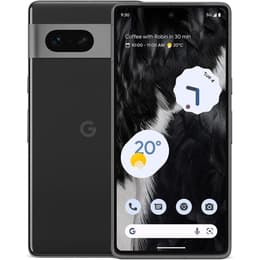
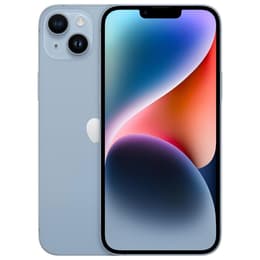

Google Pixel 7 vs iPhone 14 Plus

Google Pixel 7
Google Pixel 7
Starting at

Refurbished price:A$348.00

Versus A$879.00 new

See options
iPhone 14 Plus
iPhone 14 Plus
Starting at

Refurbished price:A$486.00

Versus A$1,249.00 new

See options

Ratings

The Google Pixel 7 and the iPhone 14 Plus, both released in 2022, represent distinct approaches to the modern smartphone experience. While the Pixel 7 operates on Google's Android platform, the iPhone 14 Plus runs on Apple's iOS, offering users different ecosystems and interface philosophies. Key differentiators include their display technologies, camera systems, and overall design, catering to varied user preferences.

Scores

Durability

When considering the long-term usability of these devices, their release timelines and software support are important factors.

  • Release and Software Support: The Google Pixel 7 was released in October 2022 and is expected to receive up to five major Android OS upgrades and five years of security updates from its launch date. The iPhone 14 Plus, launched slightly earlier in October 2022, typically receives iOS updates for approximately five to six years, potentially offering a slightly longer period of software support.
  • Physical Durability: Both devices feature an IP68 rating for dust and water resistance, indicating a high level of protection against environmental elements. The iPhone 14 Plus incorporates Apple's Ceramic Shield on the front, designed for enhanced drop protection, while the Pixel 7 uses Corning Gorilla Glass Victus for its front and back.
  • Repairability: The Pixel 7 has a repairability score of 6 out of 10, with screen replacements being relatively straightforward, though battery removal can be complex due to strong adhesive and the USB-C port being soldered to the motherboard. The iPhone 14 Plus has seen improvements in its design to make it more repair-friendly compared to previous iPhone models.

Performance

The performance of a smartphone is crucial for daily tasks, from app usage to demanding applications.

  • Processing Power: The Google Pixel 7 is powered by Google's Tensor G2 processor, designed to handle demanding apps and multitasking smoothly, with a focus on AI and machine learning tasks. The iPhone 14 Plus features the A15 Bionic chip, which was also used in the previous generation's Pro models, providing robust performance for a wide range of applications and gaming.
  • Memory and Storage: The Pixel 7 comes with 8GB of RAM, supporting efficient multitasking and app management. It is available with 128GB or 256GB of internal storage. The iPhone 14 Plus includes 6GB of RAM and offers more storage options, including 128GB, 256GB, and 512GB. Neither device supports expandable storage.
  • Battery Performance: The iPhone 14 Plus is noted for its extended battery life, with many users reporting it can comfortably last more than a full day, and some reviews suggesting up to three days of normal use. The Pixel 7, while featuring a substantial battery capacity, has received mixed feedback on its real-world battery endurance, with some users finding it sufficient for a full day and others needing more frequent charging, especially with heavy use.

Memory (GB)

8 GB

6 GB

Screen quality

The display is a primary interface for smartphone interaction, and both devices offer distinct viewing experiences.

  • Display Technology and Size: The Google Pixel 7 features a 6.3-inch OLED display, offering vibrant colors and deep blacks. The iPhone 14 Plus boasts a larger 6.7-inch Super Retina XDR OLED display, providing an expansive viewing area. Both OLED panels deliver excellent contrast and color accuracy.
  • Resolution and Clarity: The Pixel 7 has a resolution of 2400 x 1080 pixels, resulting in a pixel density of 416 ppi. The iPhone 14 Plus offers a resolution of 2778 x 1284 pixels, with a pixel density of 458 ppi, contributing to sharp text and images across its larger screen.
  • Refresh Rate and Brightness: The Pixel 7 features a 90Hz refresh rate, which provides a smoother scrolling and animation experience compared to the iPhone 14 Plus's standard 60Hz refresh rate. In terms of brightness, the iPhone 14 Plus offers a typical maximum brightness of 800 nits and a peak HDR brightness of 1200 nits, ensuring good visibility even in bright conditions.

Audiovisual

Both the Google Pixel 7 and iPhone 14 Plus are recognized for their camera capabilities, though they excel in different aspects.

  • Rear Camera Systems: The Pixel 7 features a dual-camera setup with a 50MP main sensor and a 12MP ultrawide lens. It is highly praised for its computational photography, producing detailed, sharp images with excellent color reproduction, particularly in low-light conditions. The iPhone 14 Plus also has a dual-camera system, consisting of a 12MP main camera with a larger sensor and sensor-shift optical image stabilization, alongside a 12MP ultrawide camera. It delivers consistent image quality, with improved low-light performance compared to its predecessors. The iPhone 14 Plus does not include a telephoto lens.
  • Front Camera and Video Recording: The Pixel 7 is equipped with a 10.8MP ultrawide front camera, capable of recording 4K video at 60 frames per second, and offers good selfie quality even in challenging lighting. The iPhone 14 Plus features a 12MP TrueDepth front camera with autofocus, enhancing clarity for selfies and video calls. Both devices offer strong video recording capabilities, with the Pixel 7 supporting 4K 30fps and the iPhone 14 Plus offering 4K Dolby Vision video recording at various frame rates, along with an Action mode for enhanced stabilization.
  • Audio Experience: Both smartphones provide a good audio experience for media consumption and calls. The Pixel 7 features stereo speakers, while the iPhone 14 Plus also offers stereo sound, contributing to an immersive experience for videos and music.

Miscellaneous

Beyond core features, several practical elements contribute to the overall user experience of these smartphones.

  • Connectivity and Ports: Both the Google Pixel 7 and iPhone 14 Plus support 5G connectivity, along with modern Wi-Fi and Bluetooth standards, ensuring fast and reliable wireless communication. The Pixel 7 uses a USB-C port for charging and data transfer, while the iPhone 14 Plus retains Apple's proprietary Lightning port.
  • Biometric Security: The Pixel 7 incorporates an under-display optical fingerprint scanner for secure unlocking, complemented by face unlock functionality. The iPhone 14 Plus relies solely on Face ID, Apple's facial recognition system, for biometric authentication.
  • Design and Handling: The Pixel 7 measures 155.6 x 73.2 x 8.7 mm and weighs 197g, offering a more compact form factor. The iPhone 14 Plus is larger at 160.8 x 78.1 x 7.8 mm and weighs 203g, providing a bigger screen experience in a relatively light body for its size. The Pixel 7 features a Gorilla Glass Victus front and back with an aluminum frame, while the iPhone 14 Plus has a Ceramic Shield front, glass back, and an aluminum design.

Screen size (in)

6.3

6,7

SIM card

Physical SIM + eSIM

Physical SIM + eSIM

Carrier compatibility

Unlocked

Unlocked

User feedback for the Google Pixel 7 often highlights its exceptional camera capabilities and the clean Android experience as major praise points. Many users appreciate its computational photography features, which consistently deliver high-quality images. However, common criticisms include inconsistent battery life for heavy users and a fingerprint sensor that some find unreliable. Some users also report the device can run warm during strenuous tasks.

The iPhone 14 Plus is frequently praised for its impressive battery life, often cited as one of the best in Apple's lineup, and its large, vibrant display, which enhances media consumption. Users also value the consistent performance and long-term software support characteristic of Apple devices. A frequent criticism is the 60Hz refresh rate, which some users find less smooth compared to competitors, and the absence of a telephoto camera.

Users prioritizing a large display and extended battery life for media consumption and general use may find the iPhone 14 Plus well-suited to their needs. Its consistent performance and long software support make it a reliable choice for those embedded in the Apple ecosystem. Conversely, individuals who value cutting-edge computational photography, a slightly smoother display experience with a 90Hz refresh rate, and the flexibility of the Android operating system might lean towards the Google Pixel 7. Both devices offer a quality-assured refurbished option, providing an eco-friendly alternative for consumers.
See all articles

Our recent comparisons