
Galaxy Z Fold5 vs Motorola Edge 30 Pro

Galaxy Z Fold5
Galaxy Z Fold5
Starting at

Refurbished price:A$759.00

Versus A$1,194.95 new

See options
Motorola Edge 30 Pro
Starting at

Refurbished price:A$289.72

Versus A$2,709.00 new

See options

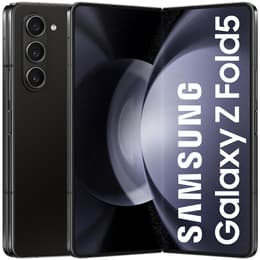
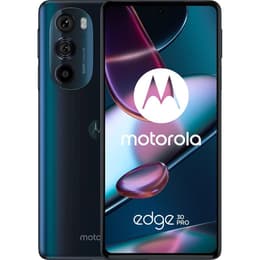
The Samsung Galaxy Z Fold5 (2023) and the Motorola Edge 30 Pro (2022) represent distinct approaches to the modern smartphone experience. While the Galaxy Z Fold5 offers a unique foldable design that transforms from a traditional smartphone into a tablet-like device, the Motorola Edge 30 Pro provides a more conventional, high-performance slab phone experience. Both run on the Android operating system, but they cater to different user priorities through their form factors and feature sets.

Scores

Durability

When considering the longevity of these devices, several factors come into play, including their release timelines and expected software support.

  • Release Timeline: The Samsung Galaxy Z Fold5 was released in August 2023, making it a more recent device compared to the Motorola Edge 30 Pro, which launched in February 2022.
  • Software Support: The Galaxy Z Fold5 is expected to receive four major Android OS updates and five years of security updates, offering a longer software lifespan. The Motorola Edge 30 Pro, having launched earlier, typically receives fewer major OS updates, with an expectation of two major OS updates and three years of security updates, though it has been updated to Android 14.
  • Build Materials: The Galaxy Z Fold5 features an Armor Aluminum frame and Gorilla Glass Victus 2 on its cover screen and back, contributing to its durability. The Motorola Edge 30 Pro uses a glass front (Gorilla Glass 3) and back (Gorilla Glass 5) with a plastic frame, offering a different level of material robustness.

Release year

2023

2022

Compatible with latest Update

Yes

Yes

Operating system

Android

Android

Foldable

Yes

No

Performance

Both devices are equipped with powerful internal components, but their performance profiles reflect their respective release years and design philosophies.

  • Processing Power: The Galaxy Z Fold5 features a current-generation processor designed for demanding tasks, ensuring smooth operation for heavy apps, multitasking, and intensive gaming. The Motorola Edge 30 Pro, while still capable, uses a previous-generation processor that handles everyday applications and multitasking effectively, though it may show its age with future very heavy workloads.
  • Storage and RAM: The Galaxy Z Fold5 offers storage options up to 1TB with faster UFS 4.0 technology, paired with 12GB of RAM, providing ample space and efficient data handling for power users. The Motorola Edge 30 Pro comes with storage options up to 512GB, utilizing UFS 3.1, and typically 8GB or 12GB of RAM, which is sufficient for most users' needs.
  • Battery Behavior: The Galaxy Z Fold5 has a 4400 mAh battery, which generally provides a full day of use for moderate users, though heavy usage might require a top-up. The Motorola Edge 30 Pro features a larger 4800 mAh battery, often lasting a full day for most users under typical conditions.

Memory (GB)

12 GB

8 GB

Screen quality

The display experience is a primary differentiator between these two smartphones, with the Galaxy Z Fold5 offering a unique foldable panel.

  • Display Technology and Size: The Galaxy Z Fold5 features a 7.6-inch foldable Dynamic AMOLED 2X main display and a 6.2-inch Dynamic AMOLED 2X cover display, both offering vibrant colors and deep blacks. The Motorola Edge 30 Pro has a single 6.7-inch OLED display, known for its rich contrast and color reproduction.
  • Resolution and Brightness: The Z Fold5's main screen boasts a high resolution of 2176 x 1812 pixels, while its cover screen is 2316 x 904 pixels, with both reaching a peak brightness of up to 1750 nits for excellent outdoor visibility. The Edge 30 Pro offers a 1080 x 2400 pixel resolution and a refresh rate of 144Hz, with typical peak brightness around 700 nits, which is suitable for most indoor and outdoor conditions.
  • Refresh Rate: Both displays on the Galaxy Z Fold5 offer an adaptive 120Hz refresh rate for smooth scrolling and responsiveness. The Motorola Edge 30 Pro stands out with a 144Hz refresh rate, providing an exceptionally fluid visual experience.

Resolution

1812x2176

1080 x 2400

Screen type

Foldable Dynamic AMOLED 2X

OLED

Audiovisual

Both devices offer versatile camera systems, though their configurations and strengths vary.

  • Rear Camera Systems: The Galaxy Z Fold5 features a triple rear camera setup with a 50 MP wide lens (with optical image stabilization), a 10 MP telephoto lens (with 3x optical zoom and OIS), and a 12 MP ultrawide lens, providing a comprehensive range for various photographic situations. The Motorola Edge 30 Pro also has a triple rear camera system, including a 50 MP wide lens (with OIS), a 50 MP ultrawide lens that doubles as a macro camera, and a 2 MP depth sensor.
  • Front-Facing Cameras: For selfies and video calls, the Z Fold5 includes a 10 MP camera on its cover display and a 4 MP under-display camera on the main foldable screen. The Edge 30 Pro boasts a high-resolution 60 MP front camera, capable of capturing detailed self-portraits.
  • Video Capabilities: Both smartphones are capable of recording video at up to 8K resolution at 30 frames per second, offering high-quality video capture.

Main camera

50 megapixels

50 megapixels

Front camera

4 megapixels

60 megapixels

Miscellaneous

Beyond the core specifications, several practical elements contribute to the overall user experience of these devices.

  • Connectivity and Ports: Both phones support 5G and Wi-Fi 6E for fast wireless connectivity. The Galaxy Z Fold5 uses a USB-C 3.2 port, while the Motorola Edge 30 Pro features a USB-C 3.1 port with DisplayPort 1.4 support, allowing for external display output. Neither device includes a traditional 3.5mm headphone jack.
  • Biometrics and Features: Both smartphones offer side-mounted fingerprint sensors and face recognition for secure unlocking. The Galaxy Z Fold5 supports an optional S Pen for enhanced productivity on its large inner screen. The Motorola Edge 30 Pro features the 'Ready For' platform, which allows users to connect their phone to an external display for a desktop-like experience.
  • Physical Characteristics: The Galaxy Z Fold5 is a heavier device at 253 grams due to its foldable mechanism and larger battery, and its dimensions change significantly between folded and unfolded states. The Motorola Edge 30 Pro is lighter at 196 grams and has a more conventional slab phone form factor.

Weight

253 oz

196 oz

Screen size (in)

7.6

6,7

Network

5G

5G

SIM card

Physical SIM + eSIM

Dual Physical SIM

Carrier compatibility

Unlocked

Unlocked

User feedback for the Samsung Galaxy Z Fold5 often highlights its innovative foldable design, which provides a large, immersive screen for media consumption and multitasking, making it a strong choice for productivity-focused individuals. Its robust performance and extended software support are also frequently praised. Some common criticisms include its weight and thickness when folded, as well as the visible crease on the inner display.

The Motorola Edge 30 Pro is generally lauded for its smooth 144Hz display, capable performance for its release year, and a clean Android software experience. Its battery life is also a frequent positive point. However, some users have noted inconsistencies in camera performance under challenging lighting conditions and the use of a plastic frame.

Users prioritizing a cutting-edge, versatile device for productivity and media consumption with a tablet-like experience may find the Galaxy Z Fold5 well-suited to their needs. Its longer software support also appeals to those seeking extended device longevity. Conversely, users who prefer a traditional smartphone form factor with a very smooth display, solid performance for everyday tasks, and a strong battery life might lean towards the Motorola Edge 30 Pro. Both devices offer distinct advantages, and choosing between them depends on whether a user values the unique foldable experience and long-term software commitment, or a more conventional, high-refresh-rate display and robust battery in a lighter package. For those considering either device, exploring quality-assured refurbished options can be an eco-friendly alternative.

See all articles

Our recent comparisons