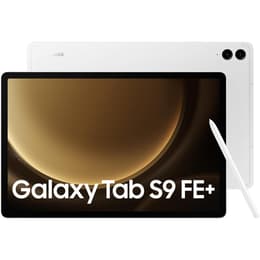
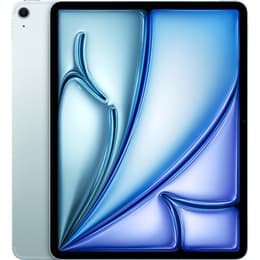

Galaxy Tab S9 FE+ (12.4", 2023) vs iPad Air 6 (2024, M2 series)

Galaxy Tab S9 FE+ (12.4", 2023)
Starting at

Refurbished price:A$738.00

Versus A$974.00 new

See options
iPad Air 6 (2024, M2 series)
Starting at

Refurbished price:A$980.00

Versus A$1,779.00 new

See options

The Samsung Galaxy Tab S9 FE+ (Fan Edition Plus), released in October 2023, and the Apple iPad Air (M2 Series), launched in May 2024, represent distinct approaches to the tablet experience. While both offer large displays and stylus support, they differ significantly in their operating systems, core processing power, and ecosystem integration. The Galaxy Tab S9 FE+ runs on Android with Samsung's One UI, emphasizing versatility and customization, whereas the iPad Air operates on iPadOS, known for its streamlined performance and integration within the Apple ecosystem.

Scores

Durability

When considering the long-term usability of these tablets, their respective release dates and software support policies are key factors.

  • Release Timeline: The Galaxy Tab S9 FE+ was released in October 2023, making it a slightly older device compared to the iPad Air (M2 Series) which launched in May 2024. This difference in release date can influence the duration of future software support.
  • Software Longevity: Samsung generally provides four generations of Android OS updates for its Tab S series tablets, including the S9 FE+. Apple typically offers a longer software support window for its iPads, often extending to seven to ten years of security updates and several major iPadOS versions. This suggests the iPad Air (M2 Series) may receive functional updates for a longer period, potentially offering a more extended practical lifespan for users who prioritize the latest software features.
  • Repairability: The iPad Air (M2) received a repairability score of 3 out of 10 from iFixit, noting difficulties with battery removal and the use of adhesive. Samsung's Galaxy Tab S9 series (which the FE+ is part of) generally has a modular design with some accessible components, though screen removal can be delicate. Neither device is designed for easy user repair, often requiring professional service for significant issues.

Release year

2023

2024

Compatible with latest Update

Yes

Yes

Operating system

Android

iPadOS

Performance

The performance of these tablets is largely dictated by their internal components and how their respective operating systems optimize these resources.

  • Processor Capabilities: The iPad Air (M2 Series) is equipped with a powerful processor that delivers substantial performance for demanding applications, complex multitasking, and graphic-intensive tasks. Users report smooth operation even with professional-grade software. The Galaxy Tab S9 FE+ features a capable processor that handles everyday tasks, web browsing, and video streaming smoothly. While it performs well for general use, some users have noted occasional stutters during heavy multitasking or with very demanding applications.
  • Storage Options: The iPad Air (M2 Series) offers a wider range of internal storage configurations, starting from 128GB and going up to 1TB, providing ample space for large files and numerous applications. The Galaxy Tab S9 FE+ comes with 128GB or 256GB internal storage, but it includes a microSD card slot, allowing users to expand storage by up to 1TB. This offers flexibility for users who prefer expandable storage.
  • Battery Behavior: Both tablets are designed to offer a full day of typical use. The iPad Air (M2 Series) is rated for up to 10 hours of web surfing or video playback on Wi-Fi. The Galaxy Tab S9 FE+ has a larger battery capacity, with some tests indicating it can last longer for web surfing, potentially up to 18 hours under moderate brightness. However, real-world usage varies based on tasks and settings.

Memory (GB)

8 GB

8 GB

Screen quality

The visual experience on these tablets is shaped by their display technology, resolution, and refresh rates.

  • Display Technology: The Galaxy Tab S9 FE+ features a 12.4-inch IPS LCD panel. The iPad Air (M2 Series) also uses an IPS LCD, which Apple refers to as a Liquid Retina display, available in 11-inch and 13-inch sizes. While both are high-quality LCDs, the iPad Air's display is noted for its anti-reflective coating.
  • Resolution and Clarity: The Galaxy Tab S9 FE+ offers a resolution of 2560 x 1600 pixels, providing clear and crisp visuals for text and images. The 11-inch iPad Air (M2) has a 2360 x 1640 pixel resolution, and the 13-inch model features a 2732 x 2048 pixel resolution, both delivering sharp detail.
  • Refresh Rate and Brightness: The Galaxy Tab S9 FE+ supports a 90Hz refresh rate, which contributes to smoother scrolling and animations compared to standard 60Hz displays. The iPad Air (M2 Series) maintains a 60Hz refresh rate. For brightness, the iPad Air (M2) offers up to 500 nits (11-inch) or 600 nits (13-inch), while the Galaxy Tab S9 FE+ provides sufficient brightness for indoor use, though it may be less optimal in direct sunlight.

Resolution

1600 x 2560

2360 x 1640

Screen type

IPS LCD

Liquid Retina display

Pixel density

250ppp

264ppp

Audiovisual

Both tablets include camera systems suitable for video calls, document scanning, and casual photography, though they are not typically their primary function.

  • Camera System Capabilities: The Galaxy Tab S9 FE+ features a dual rear camera setup with an 8MP wide lens and an 8MP ultrawide lens, along with a 12MP ultrawide front camera. The iPad Air (M2 Series) has a single 12MP wide rear camera and a 12MP ultrawide front camera.
  • Photography Performance: For everyday photography, the Galaxy Tab S9 FE+'s rear cameras perform adequately in well-lit conditions, but may struggle with detail and color accuracy in low light. The iPad Air (M2)'s rear camera is capable of capturing 4K video and offers good performance for general use.
  • Video and Communication: A notable difference is the placement of the front camera. The iPad Air (M2 Series) has moved its 12MP ultrawide front camera to the longer, landscape edge, which is more natural for video calls when the tablet is used horizontally. This camera also supports Center Stage, which keeps the user in frame during calls. The Galaxy Tab S9 FE+ also has a 12MP ultrawide front camera that performs well for video calls. Both devices offer stereo speakers for media consumption and clear audio during calls.

Miscellaneous

Beyond core performance and display, several practical features contribute to the overall user experience of these tablets.

  • Connectivity Options: Both tablets offer Wi-Fi 6 and Bluetooth 5.3 for wireless connectivity. The iPad Air (M2 Series) also supports Wi-Fi 6E for potentially faster wireless speeds. Both models are available with optional 5G cellular connectivity.
  • Port Types: The Galaxy Tab S9 FE+ uses a USB-C 2.0 port. The iPad Air (M2 Series) features a USB-C port that supports USB 3 (up to 10 Gb/s) for faster data transfer and DisplayPort capabilities.
  • Useful Sensors and Authentication: The Galaxy Tab S9 FE+ includes an IP68 rating for dust and water resistance, a feature not typically found on tablets. It uses a fingerprint sensor for biometric authentication. The iPad Air (M2 Series) also integrates a Touch ID fingerprint sensor into its power button for secure unlocking.
  • Dimensions and Handling: The Galaxy Tab S9 FE+ has a 12.4-inch screen and weighs around 627-628 grams. The iPad Air (M2 Series) comes in 11-inch (around 462-467 grams) and 13-inch (around 617-618 grams) variants, offering different size and weight profiles. The iPad Air is generally thinner at 6.1mm compared to the Tab S9 FE+'s 6.5mm.

Weight

920 oz

462 oz

Screen size (in)

12.4

11

Network

Wi-Fi

Wi-Fi + 5G

Carrier compatibility

Without SIM Port

Unlocked

The Samsung Galaxy Tab S9 FE+ and the Apple iPad Air (M2 Series) cater to different user preferences and priorities within the tablet market. Users often praise the Galaxy Tab S9 FE+ for its inclusive S Pen, expandable storage via microSD, and its IP68 rating, which adds a layer of durability not commonly seen in tablets. Some users, however, have noted that its performance, while generally smooth for everyday tasks, can show occasional slowdowns with intensive multitasking or demanding applications. The iPad Air (M2 Series) is frequently lauded for its powerful processor, delivering exceptional performance for a wide range of tasks, from creative work to gaming. Its streamlined iPadOS experience and robust app ecosystem are also strong points. A common point of discussion for the iPad Air is its 60Hz display, which some users accustomed to higher refresh rates on other devices might notice.

Users prioritizing a versatile Android ecosystem with expandable storage and a bundled stylus may find the Galaxy Tab S9 FE+ well-suited to their needs. Its larger screen size in a single configuration also offers a consistent viewing experience. Conversely, users who require top-tier processing power for demanding applications, prefer the iPadOS ecosystem, and value a longer software update commitment may lean toward the iPad Air (M2 Series). The availability of two screen sizes for the iPad Air also provides more choice for those with specific portability or viewing preferences. Both tablets offer quality-assured refurbished options, providing an eco-friendly alternative for consumers looking to make a sustainable choice.


See all articles

Our recent comparisons