
Samsung
Compare models
Differences at a glance
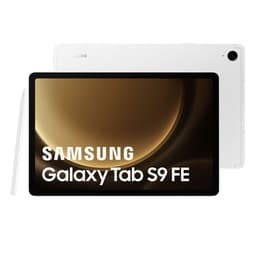
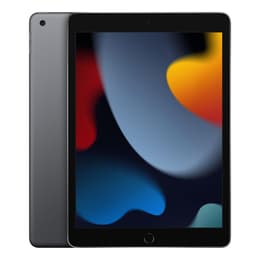
The Samsung Galaxy Tab S9 FE, released in October 2023, and the Apple iPad (9th Generation), launched in September 2021, are both popular tablets designed for a range of daily tasks. While they share a common purpose, these devices primarily differ in their operating systems and the ecosystems they belong to, with the Tab S9 FE running Android and the iPad running iPadOS. The Galaxy Tab S9 FE also includes a stylus as a standard accessory, a feature not bundled with the iPad.
Colour
Storage
The longevity of a tablet is significantly influenced by its release date and the manufacturer's commitment to software support. The Galaxy Tab S9 FE, being a more recent device from 2023, generally benefits from a longer expected period of software updates and security patches from Samsung, which helps maintain its compatibility with newer applications and ensures ongoing security. The iPad (9th Gen), released in 2021, has already received several years of iPadOS updates and will continue to do so for a considerable time, though its update cycle will naturally conclude sooner than the newer Samsung model. In terms of physical resilience, the Tab S9 FE offers an IP68 rating for dust and water resistance, providing an additional layer of protection against environmental elements. The iPad (9th Gen) does not carry an official IP rating.
Release year
Compatible with latest Update
Operating system
Both tablets are engineered to handle common daily tasks efficiently, though they employ different hardware architectures to achieve their performance. The Galaxy Tab S9 FE is equipped with an Exynos 1380 processor that capably manages multitasking, web browsing, and a variety of applications, including moderate gaming. Users can expect smooth transitions between apps and responsive interactions. The iPad (9th Gen) features an A13 Bionic chip, known for its strong performance, which translates to quick app launches and fluid operation, particularly within its optimized app ecosystem. While both devices offer sufficient power for most users, the iPad's processor is generally recognized for its efficiency in handling demanding applications and graphics-intensive tasks, supported by 3GB of RAM. The Tab S9 FE offers 6GB or 8GB of RAM.
The visual experience on these tablets is largely defined by their display technology, resolution, and refresh rate. The Galaxy Tab S9 FE features a 10.9-inch LCD display with a WUXGA+ resolution (2304 x 1440 pixels) and a 90Hz refresh rate, providing a smoother visual experience, especially when scrolling through content or playing games. This higher refresh rate contributes to a more fluid feel. The iPad (9th Gen) comes with a 10.2-inch Retina IPS LCD display with a 2160 x 1620 pixel resolution and a standard 60Hz refresh rate. Both offer clear and vibrant visuals suitable for media consumption and productivity, but the Tab S9 FE's slightly larger screen and higher refresh rate offer a subtle enhancement in visual fluidity. Both displays provide adequate brightness for indoor use, with the Tab S9 FE offering features like Vision Booster for improved outdoor visibility.
Resolution
Screen type
Pixel density
Tablet cameras are commonly used for video calls, document scanning, and casual photography, and both devices offer capable systems for these purposes. The Galaxy Tab S9 FE includes an 8-megapixel rear camera and a 12-megapixel ultrawide front camera, which is well-suited for video conferencing and capturing wider group selfies. Its video recording capabilities extend to UHD 4K at 30fps. The iPad (9th Gen) also features an 8-megapixel Wide rear camera and a 12-megapixel Ultra Wide front camera with Apple's Center Stage feature, which automatically keeps subjects in frame during video calls. Both tablets deliver clear images in well-lit conditions and perform adequately in lower light for casual shots. For audio, both offer clear microphone quality for calls and decent speaker output for media consumption.
Beyond core features, connectivity, physical design, and additional functionalities contribute to the overall user experience. The Galaxy Tab S9 FE supports Wi-Fi 6 and Bluetooth 5.3, and offers optional 5G connectivity for fast mobile data access. It features a USB-C 2.0 port for charging and data transfer, and notably, it includes the S Pen stylus in the box, enhancing its productivity and creative potential. The iPad (9th Gen) supports Wi-Fi 5 (802.11ac) and Bluetooth 4.2, and offers optional LTE cellular connectivity, though it uses the Lightning port for charging and data. Its accessory ecosystem includes the first-generation Apple Pencil, which is sold separately. In terms of design, the Tab S9 FE has an IP68 rating, while both tablets offer a comfortable build for extended use, with the Tab S9 FE weighing around 523-524g and the iPad (Wi-Fi model) weighing 487g.
Weight
Screen size (in)
Network
Carrier compatibility
User feedback often highlights the strengths of both the Galaxy Tab S9 FE and the iPad (9th Gen) for different use cases. Users frequently praise the Galaxy Tab S9 FE for its vibrant display with a smoother 90Hz refresh rate and the inclusion of the S Pen, making it a compelling option for those who enjoy drawing, note-taking, or precise navigation right out of the box. Its Android operating system and customizable interface are also often cited as positives. Some users, however, occasionally mention that its processor, while capable, might not match the raw power of some higher-end tablets for extremely demanding tasks. The iPad (9th Gen) is consistently lauded for its robust performance, particularly for its ability to handle a wide range of applications smoothly, and the extensive app ecosystem optimized for iPadOS. Its long-standing software support and integration within the Apple ecosystem are also strong points. A common point of discussion for the iPad is the standard 60Hz display and the separate purchase required for the Apple Pencil.
Users prioritizing a tablet with an included stylus for creative work or note-taking, along with a smoother display experience and Android's flexibility, may find the Galaxy Tab S9 FE well-suited to their needs. Its IP68 rating also adds a layer of reassurance for those who might use their tablet in varied environments. Conversely, users who value strong overall performance for a wide array of applications, a highly optimized operating system, and access to a vast app library, particularly within the Apple ecosystem, may lean toward the iPad (9th Gen). Both devices offer a quality-assured refurbished option, providing an eco-friendly alternative for consumers looking to make a sustainable choice.