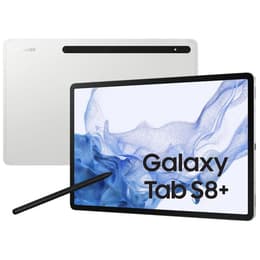

Galaxy Tab A (8.4", 2020) vs Galaxy Tab S8 (11.0", 2022)

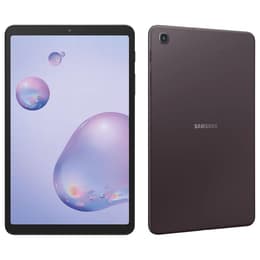
Galaxy Tab A (8.4", 2020)
See options
Galaxy Tab S8 (11.0", 2022)
Starting at

Refurbished price:A$632.00

Versus A$639.00 new

See options

The Samsung Galaxy Tab A 8.4 (2020) and the Samsung Galaxy Tab S8 (2022) are Android tablets from different generations, each designed to cater to distinct user needs. Released two years apart, these devices showcase advancements in tablet technology, particularly in performance, display quality, and overall feature set. While the Tab A 8.4 focuses on portability and essential media consumption, the Tab S8 aims for a more premium, productivity-oriented experience with enhanced capabilities.

Scores

Durability

When considering the long-term usability of these tablets, their release timelines and software support are key factors. The Galaxy Tab S8, being a newer device, benefits from a longer expected period of software updates and security patches.

  • Release Timeline: The Galaxy Tab A 8.4 was released in March 2020, while the Galaxy Tab S8 followed in February 2022. This two-year difference means the Tab S8 has a natural advantage in terms of its remaining software support lifecycle.
  • Software Longevity: The Tab A 8.4 launched with Android 9.0 Pie and was upgradeable to Android 10 or 11, indicating that its major operating system updates have likely concluded. In contrast, the Tab S8 launched with Android 12 and is expected to receive updates up to Android 15 or even 16, offering a significantly extended period of modern features and security.
  • Practical Lifespan: The Tab S8's more robust build, including an aluminum frame and back, alongside its superior internal components, suggests a device better equipped to handle future software demands and daily wear compared to the Tab A 8.4's plastic construction.

Release year

2020

2022

Compatible with latest Update

No

Yes

Operating system

Android

Android

Performance

The performance capabilities of these two tablets reflect their different market positions and release years, with the newer model offering a substantial upgrade in processing power and multitasking efficiency.

  • Processing Power: The Galaxy Tab A 8.4 is equipped with a processor suitable for everyday tasks like web browsing, email, and light media consumption. The Galaxy Tab S8, however, features a significantly more powerful processor, enabling smooth handling of demanding applications, graphic-intensive games, and efficient multitasking.
  • Multitasking and Responsiveness: With 3GB of RAM, the Tab A 8.4 can manage a few applications simultaneously, but heavy multitasking may lead to slower performance. The Tab S8, typically offering 8GB or 12GB of RAM, provides a much more fluid experience for switching between numerous apps and running complex software without slowdowns.
  • Battery Behavior: The Tab A 8.4's 5000 mAh battery generally provides around 10-13 hours of video playback, making it suitable for extended media consumption. The Tab S8, with its 8000 mAh battery, offers comparable or slightly better battery life in web surfing and video playback tests, often lasting over 12 hours, despite powering a larger, higher-resolution display.

Memory (GB)

3 GB

8 GB

Processor

Exynos 7904

Snapdragon 8 Gen 1

Screen quality

The visual experience differs considerably between these two tablets, primarily due to advancements in display technology and size over the two-year gap.

  • Display Technology and Resolution: The Galaxy Tab A 8.4 features an 8.4-inch TFT LCD with a resolution of 1920 x 1200 pixels, offering clear visuals for reading and standard video content. The Galaxy Tab S8 steps up with an 11-inch TFT LCD display, boasting a higher 2560 x 1600 pixel resolution, which translates to sharper images and more detailed content.
  • Refresh Rate and Brightness: The Tab A 8.4 has a standard 60Hz refresh rate, providing a smooth enough experience for general use. The Tab S8 significantly enhances fluidity with a 120Hz refresh rate, making scrolling, gaming, and animations appear noticeably smoother. The Tab S8 also offers higher brightness levels, improving visibility in various lighting conditions.
  • Viewing Experience: The smaller screen of the Tab A 8.4 is ideal for portability and single-user media consumption. The larger 11-inch display of the Tab S8 provides a more expansive and immersive viewing experience, better suited for productivity, split-screen multitasking, and enjoying high-definition content.

Resolution

1200 x 1920

1600x2560

Pixel density

270ppp

280ppp

Audiovisual

The camera systems on these tablets reflect their primary intended uses, with the Tab S8 offering more advanced capabilities for photography and video conferencing.

  • Rear Camera System: The Galaxy Tab A 8.4 includes a single 8-megapixel rear camera, suitable for basic document scanning and casual photography in good lighting. The Galaxy Tab S8 features a dual-camera setup on the rear, comprising a 13-megapixel wide lens and a 6-megapixel ultrawide lens, providing more versatility for capturing different scenes.
  • Front Camera and Video Quality: For video calls and selfies, the Tab A 8.4 has a 5-megapixel front-facing camera, capable of 1080p video recording. The Tab S8 significantly upgrades this with a 12-megapixel ultrawide front camera, which is better suited for group video calls and offers superior clarity. It also supports 4K video recording for both front and rear cameras, a notable improvement for content creation and high-quality video conferencing.
  • Audio Experience: The Tab A 8.4 comes with dual speakers, which are adequate for personal listening. The Tab S8 features quad AKG speakers with Dolby Atmos support, delivering a richer, more immersive audio experience for media consumption and video calls.

Miscellaneous

Beyond core specifications, several practical elements differentiate these two tablets, impacting their usability and overall experience.

  • Connectivity and Ports: Both tablets offer Wi-Fi and Bluetooth connectivity. The Tab A 8.4 supports Wi-Fi 802.11ac and Bluetooth 5.0, with some models offering 4G LTE. The Tab S8 features more advanced Wi-Fi 6E and Bluetooth 5.2, along with optional 5G connectivity, providing faster and more stable wireless connections. Both include a USB-C port for charging and data transfer, but the Tab A 8.4 retains a 3.5mm headphone jack, which is absent on the Tab S8.
  • Security and Input: The Tab A 8.4 relies on traditional PIN/pattern security. The Tab S8 offers a side-mounted fingerprint sensor for convenient and secure unlocking. A significant differentiator is the inclusion of the S Pen with the Tab S8, offering precise input for note-taking, drawing, and navigation, a feature not supported by the Tab A 8.4.
  • Design and Portability: The Tab A 8.4 is smaller and lighter at 309g, making it highly portable. The Tab S8 is larger and heavier at around 503-507g, but its aluminum construction provides a more premium and durable feel compared to the Tab A 8.4's plastic build.

Weight

309 oz

507 oz

Screen size (in)

8.4

11.0

Network

Wi-Fi

Wi-Fi + 5G

Carrier compatibility

Without SIM Port

Unlocked

Connector

USB Type-C

USB Type-C

User feedback for the Galaxy Tab A 8.4 (2020) often highlights its compact size and affordability as key advantages, making it a practical choice for basic tasks and media consumption on the go. Some users have noted its adequate screen clarity for its class and the convenience of a headphone jack. However, common criticisms include its modest performance, which can lead to sluggishness with more demanding applications, and some reports of inconsistent Wi-Fi performance.

The Galaxy Tab S8 (2022) generally receives praise for its powerful performance, vibrant 120Hz display, and the versatility offered by the included S Pen. Users appreciate its capability for gaming, productivity, and creative work, often citing its robust build quality and immersive audio. Some common concerns, however, include the LCD panel not being as vibrant as AMOLED displays found in its larger siblings (Tab S8+ and S8 Ultra), and the Android tablet ecosystem still having fewer optimized professional apps compared to some competitors.

Users prioritizing extreme portability, a traditional headphone jack, and a device primarily for light browsing and media consumption may find the Galaxy Tab A 8.4 well-suited to their needs. Conversely, those who require a powerful tablet for demanding applications, gaming, creative tasks, or extensive multitasking, and value a larger, high-refresh-rate display with S Pen functionality, will likely lean towards the Galaxy Tab S8. Both models offer a quality-assured refurbished option, providing an eco-friendly alternative for consumers.
See all articles

Our recent comparisons