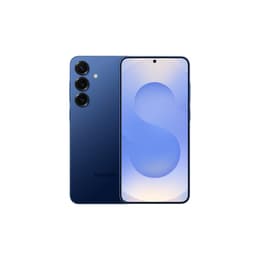


Compare models
Galaxy S25+ vs Google Pixel 7a
- 1-year warranty
- Free standard shipping
- Free 30-day returns
Differences at a glance
The Samsung Galaxy S25 Plus and the Google Pixel 7a are distinct Android smartphones, catering to different segments of the market. The Pixel 7a, released in May 2023, is known for its camera capabilities and software experience. The Galaxy S25 Plus, launched in February 2025, represents a more recent flagship offering from Samsung, featuring advanced hardware and a comprehensive feature set. While both operate on the Android platform, they offer differing approaches to design, performance, and user experience.
Available Models
Colour
Storage (GB)
Scores
Durability
When considering the long-term usability of these devices, their release timelines and software support policies are key factors.
- Release Timeline: The Google Pixel 7a was released in May 2023, making it an older model compared to the Samsung Galaxy S25 Plus, which launched in February 2025. This age difference inherently impacts their remaining support cycles.
- OS Support: The Galaxy S25 Plus is designed for extended longevity, offering seven years of operating system upgrades and seven years of security updates, with support expected to continue until 2032. In contrast, the Pixel 7a receives five years of OS and security updates, with support concluding in May 2028.
- Repairability: The Galaxy S25 Plus has shown improvements in repairability, with an iFixit score of 5 out of 10, noting features like easier battery removal and camera swaps, though adhesive use remains. The Pixel 7a also holds an iFixit repairability score of 5 out of 10, a rating it achieved after Google provided service manuals.
Release year
2025
2023
Operating system
Android
Android
Foldable
No
No
Performance
Performance is a significant differentiator, with the Galaxy S25 Plus featuring more recent and powerful internal components compared to the Pixel 7a.
- Processor Capabilities: The Galaxy S25 Plus is equipped with a current-generation processor, enabling it to handle demanding applications, intensive multitasking, and graphic-heavy games with fluidity. The Pixel 7a utilizes a previous-generation processor, which provides smooth performance for everyday tasks and most applications, but may show limitations with the most graphically intensive games or very heavy multitasking.
- RAM and Storage: The Galaxy S25 Plus comes with 12 GB of RAM across all models, supporting robust multitasking and app management. It offers storage options of 256 GB or 512 GB. The Pixel 7a includes 8 GB of RAM and 128 GB of internal storage, which is not expandable.
- Battery Behavior: The Galaxy S25 Plus features a 4900 mAh battery, often providing extended usage of 24 to 36 hours for many users. The Pixel 7a has a 4385 mAh battery, which generally offers a full day of moderate use, though heavy users may find themselves charging more frequently.
Screen quality
The visual experience on both devices is shaped by their display technologies and specifications.
- Display Technology and Resolution: The Galaxy S25 Plus features a 6.7-inch Dynamic AMOLED 2X display with a QHD+ resolution of 1440 x 3120 pixels, offering sharp details and vibrant colors. The Pixel 7a has a 6.1-inch OLED display with an FHD+ resolution of 1080 x 2400 pixels, providing clear visuals suitable for general use.
- Brightness and Refresh Rate: The Galaxy S25 Plus can reach a peak brightness of 2600 nits, ensuring good visibility even in bright outdoor conditions, and features an adaptive refresh rate that scales from 1 Hz to 120 Hz for smooth scrolling and power efficiency. The Pixel 7a offers a 90 Hz refresh rate for a smooth experience, but its brightness levels may require maximum adjustment for comfortable outdoor viewing.
- Screen Protection: The Galaxy S25 Plus incorporates Gorilla Glass Victus 2 for enhanced durability. The Pixel 7a uses Gorilla Glass 3 for screen protection.
Resolution
1440x3120
1080 x 2400
Audiovisual
Both smartphones offer capable camera systems, though with different configurations and strengths.
- Rear Camera System: The Galaxy S25 Plus is equipped with a versatile triple-camera setup, including a 50 MP wide-angle main sensor, a 12 MP ultra-wide lens with a 120-degree field of view, and a 10 MP telephoto lens capable of 3x optical zoom. This allows for a range of photographic styles, from expansive landscapes to detailed close-ups. The Pixel 7a features a dual-camera system with a 64 MP wide-angle main sensor with optical image stabilization and a 13 MP ultra-wide lens with a 120-degree field of view.
- Photography Performance: The Pixel 7a is frequently praised for its excellent camera quality, particularly its ability to produce crisp, detailed photos with natural colors and good dynamic range, even in challenging lighting conditions. The Galaxy S25 Plus offers a dependable camera experience, though some user feedback notes occasional softness in images and struggles with the telephoto lens in low light.
- Video Recording: The Galaxy S25 Plus supports video recording up to 8K resolution at 30 frames per second. The Pixel 7a can record 4K video at 30 or 60 frames per second across all its cameras.
- Front Camera: Both devices feature capable front-facing cameras, with the Galaxy S25 Plus having a 12 MP sensor and the Pixel 7a a 13 MP ultrawide sensor, suitable for selfies and video calls.
Miscellaneous
Beyond core specifications, several practical elements contribute to the overall user experience.
- Connectivity: Both devices support modern connectivity standards, including 5G for fast mobile data. The Galaxy S25 Plus supports Wi-Fi 6E and Bluetooth 5.3. The Pixel 7a also includes Wi-Fi 6E and Bluetooth 5.3.
- Ports and Biometrics: The Galaxy S25 Plus features a USB-C port and an ultrasonic in-screen fingerprint sensor for secure unlocking. The Pixel 7a also uses a USB-C port and includes a fingerprint sensor, though some users have reported occasional issues with its responsiveness. Neither device includes a traditional headphone jack.
- Build Materials and Dimensions: The Galaxy S25 Plus is constructed with a Gorilla Glass Victus 2 back and an aluminum frame, offering an IP68 rating for dust and water resistance. It measures 158.4 x 75.7 x 7.3 mm and weighs 190g. The Pixel 7a uses recycled glass and plastics for its construction and has dimensions of 152 x 72.9 x 9 mm, weighing 193.5g.
- Audio: Both phones feature stereo speakers. The Pixel 7a's speakers are noted to be loud enough for outdoor use, though some users find the sound quality to be thin or 'boxy' in the vocal range.
Weight
190 oz
193 oz
Screen size (in)
6.7
6.1
Network
5G
5G
SIM card
Physical SIM + eSIM
Physical SIM + eSIM
Carrier compatibility
Unlocked
Unlocked
What the community thinks
User feedback for the Google Pixel 7a frequently highlights its exceptional camera performance and the smooth, bloatware-free Android experience as major strengths. Users also appreciate its decent battery life for moderate use and vibrant display. Common criticisms include occasional heating, some reports of fingerprint sensor inconsistencies, and for some, battery life not meeting expectations under heavy usage. The Samsung Galaxy S25 Plus receives praise for its powerful performance, excellent battery life that can last well over a day, and its bright, high-resolution display. Its software experience with One UI 7 is also well-regarded. Some users have noted that while its camera is dependable, it can exhibit softness in images and the telephoto lens may struggle in low-light conditions.
Users prioritizing a cutting-edge display, top-tier processing power for demanding tasks, and a longer software support window may find the Samsung Galaxy S25 Plus to be a more suitable choice. Its robust battery life and premium build also cater to those seeking a flagship experience. Conversely, users who prioritize an exceptional point-and-shoot camera, a clean Android interface, and a more compact form factor might lean towards the Google Pixel 7a. It offers a strong overall experience for everyday use, particularly for photography enthusiasts. Both devices represent solid choices within the Android ecosystem, and considering a quality-assured refurbished option for either model can provide an eco-friendly alternative for consumers.