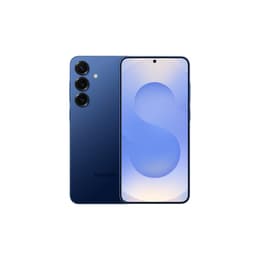


Galaxy S25+ vs Google Pixel 7 Pro

Galaxy S25+
Galaxy S25+
Starting at

Refurbished price:A$919.00

Versus A$1,699.00 new

See options
Google Pixel 7 Pro
Google Pixel 7 Pro
Starting at

Refurbished price:A$520.00

Versus A$1,219.00 new

See options

The Samsung Galaxy S25 Plus, released in February 2025, and the Google Pixel 7 Pro, launched in October 2022, represent different generations of flagship smartphones. While both devices offer premium experiences, the Galaxy S25 Plus benefits from more recent hardware advancements and extended software support. Both run on the Android operating system, but the newer Galaxy model ships with a more current version and a longer update commitment.

Scores

Durability

The practical lifespan of a smartphone is significantly influenced by its release timeline and the duration of software support it receives.

  • Release and Support: The Galaxy S25 Plus, released in early 2025, is promised seven years of OS and security updates, extending its support well into 2032. In contrast, the Pixel 7 Pro, released in late 2022, was initially guaranteed three years of OS updates and five years of security updates, later extended to five years of OS updates, with support concluding around late 2027 for OS and late 2029 for security.
  • Physical Durability: Both devices feature robust construction. The Galaxy S25 Plus utilizes Gorilla Glass Victus 2 for both its front and back panels, alongside an aluminum frame and an IP68 rating for water and dust resistance. The Pixel 7 Pro also incorporates Gorilla Glass Victus for its display and has an IP68 rating, indicating similar protection against environmental elements.
  • Longevity Implications: Users prioritizing the longest possible software longevity and access to the latest Android features will find the Galaxy S25 Plus offers a considerably extended period of support compared to the Pixel 7 Pro.

Release year

2025

2022

Foldable

No

No

Performance

Performance is a key differentiator, with the newer Galaxy S25 Plus featuring a more advanced processing unit.

  • Processing Power: The Galaxy S25 Plus is equipped with a current-generation processor, enabling smooth handling of demanding applications, rapid multitasking, and fluid gaming experiences. The Pixel 7 Pro, powered by its custom-designed processor, delivers capable performance for everyday tasks and leverages its architecture for efficient AI and machine learning operations.
  • System Responsiveness: Users of the Galaxy S25 Plus can expect enhanced responsiveness across the system, with quicker app loading times and more seamless transitions between applications due to its newer hardware and faster storage technology (UFS 4.0). The Pixel 7 Pro, while still responsive, may show its age in direct comparison during intensive workloads or with future, more demanding applications.
  • Memory and Storage: Both devices offer ample RAM, with the Galaxy S25 Plus typically featuring 12 GB of RAM and the Pixel 7 Pro also offering 12 GB options, facilitating efficient multitasking. Storage options for both range from 256 GB to 512 GB, with the Galaxy S25 Plus utilizing faster UFS 4.0 storage compared to the Pixel 7 Pro's UFS 3.1.

Memory (GB)

12 GB

12 GB

Screen quality

Both smartphones offer high-quality displays, providing vibrant visuals and smooth interactions.

  • Display Technology and Clarity: The Galaxy S25 Plus features a 6.7-inch Dynamic LTPO AMOLED 2X display with a QHD+ resolution (3120x1440 pixels), delivering sharp images and vibrant colors. The Pixel 7 Pro also sports a 6.7-inch QHD+ (3120x1440 pixels) LTPO OLED curved-edge display, known for its deep blacks and excellent contrast.
  • Brightness and Refresh Rate: The Galaxy S25 Plus can reach a peak brightness of up to 2600 nits, offering excellent visibility even in bright outdoor conditions, and features an adaptive 120 Hz refresh rate for smooth scrolling and animations. The Pixel 7 Pro also has a 120 Hz variable refresh rate and good brightness levels, ensuring a fluid viewing experience.
  • Viewing Experience: Both displays provide an immersive viewing experience for media consumption and daily use. The Galaxy S25 Plus's higher peak brightness may offer a slight advantage in direct sunlight, while the Pixel 7 Pro's curved edges contribute to a sleek aesthetic.

Resolution

1440x3120

1440 x 3120

Audiovisual

Both devices are recognized for their advanced camera systems, though they approach photography with different strengths.

  • Rear Camera Systems: The Galaxy S25 Plus features a triple rear camera setup, including a 50 MP wide-angle main sensor, a 12 MP ultra-wide camera, and a 10 MP telephoto lens with 3x optical zoom. It supports 8K video recording at 30 fps and incorporates AI-enhanced features like Generative Edit and a Pro Visual Engine. The Pixel 7 Pro also has a triple rear camera system, comprising a 50 MP wide main sensor, a 12 MP ultrawide camera with autofocus and macro capabilities, and a 48 MP telephoto lens offering 5x optical zoom and up to 30x Super Res Zoom. It records 4K video at 30 or 60 fps and is highly regarded for its computational photography features like Night Sight and Cinematic Blur.
  • Front-Facing Camera: For selfies and video calls, the Galaxy S25 Plus is equipped with a 12 MP front-facing camera. The Pixel 7 Pro features a 10.8 MP front-facing camera, also capable of 4K video recording.
  • Photography Focus: The Galaxy S25 Plus offers versatile hardware with advanced AI processing for image enhancement and editing. The Pixel 7 Pro excels in computational photography, leveraging its software to produce detailed and color-accurate images, particularly in challenging lighting conditions and with its zoom capabilities.

Miscellaneous

Beyond core specifications, several practical elements contribute to the overall user experience of these smartphones.

  • Connectivity and Ports: The Galaxy S25 Plus supports dual SIM functionality (Nano-SIM + eSIM) and features a USB 3.1 Gen 1 Type-C port. As a newer device, it likely includes more advanced Wi-Fi and Bluetooth standards. The Pixel 7 Pro also offers dual SIM (Nano-SIM + eSIM) and a USB-C port, with Wi-Fi 6E and Bluetooth 5.2 connectivity.
  • Biometrics and Sensors: Both phones incorporate secure biometric authentication. The Galaxy S25 Plus uses an ultrasonic in-screen fingerprint sensor. The Pixel 7 Pro features an under-display optical fingerprint scanner and includes Google's Titan M2 security module for enhanced data protection.
  • Design and Handling: The Galaxy S25 Plus has dimensions of 158.4 x 75.8 x 7.3mm and weighs 190g, featuring an aluminum frame and glass back. The Pixel 7 Pro is slightly larger and heavier at 162.9 x 76.6 x 8.9 mm and 212g, with a premium build. Both devices offer a premium in-hand feel, though the S25 Plus is marginally lighter and thinner.

Weight

190 oz

212 oz

Screen size (in)

6.7

67

SIM card

Physical SIM + eSIM

Physical SIM + eSIM

Carrier compatibility

Unlocked

Unlocked

User feedback for the Galaxy S25 Plus often highlights its powerful performance, vibrant display, and the utility of its integrated AI features for photography and daily tasks. Some users appreciate the extended software support, viewing it as a significant advantage for long-term ownership. Criticisms, though less frequent for a newer device, sometimes point to the camera hardware being an iterative improvement rather than a revolutionary leap compared to its predecessor.

The Google Pixel 7 Pro is consistently praised for its exceptional camera capabilities, particularly its computational photography, which delivers impressive results in various conditions, including low light and with its Super Res Zoom. Users also value its clean Android experience and the integration of Google's AI features. Some common concerns have revolved around battery life, with heavy camera usage noted to drain the battery more quickly for some users.

For users prioritizing the absolute latest in processing power, a brighter display, and a longer commitment to software updates, the Galaxy S25 Plus presents a compelling option. Its advanced AI features and robust build make it suitable for professionals and power users who demand cutting-edge technology. Conversely, individuals who place a premium on computational photography, a pure Android experience, and a device that excels in image processing will find the Pixel 7 Pro to be an excellent choice. Its camera system remains highly competitive, even against newer models.

Both devices offer distinct advantages, catering to different user preferences. Exploring quality-assured refurbished options for either model can provide an eco-friendly alternative for consumers seeking premium smartphone experiences.

See all articles

Our recent comparisons