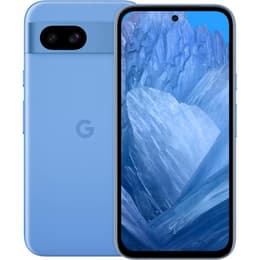

Galaxy S25 vs Google Pixel 8a

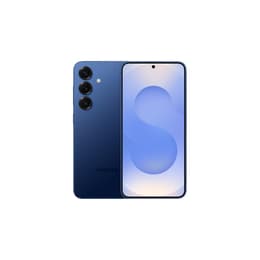
Galaxy S25
Galaxy S25
Starting at

Refurbished price:A$852.00

Versus A$1,399.00 new

See options
Google Pixel 8a
Google Pixel 8a
Starting at

Refurbished price:A$464.00

Versus A$938.69 new

See options

Ratings

The Samsung Galaxy S25, released in February 2025, and the Google Pixel 8A, launched in May 2024, represent distinct approaches to the modern smartphone experience. While both operate on the Android platform, the Galaxy S25 emphasizes cutting-edge hardware and a versatile camera system, whereas the Pixel 8A focuses on optimized software, advanced computational photography, and a user-friendly interface. These differences cater to varying user priorities, from raw performance to seamless software integration.

Scores

Durability

When considering the long-term usability of these devices, their release timelines and software support policies are key factors.

  • Release Timeline: The Google Pixel 8A was released in May 2024, making it nearly a year older than the Samsung Galaxy S25, which debuted in February 2025. This difference in launch date inherently means the Galaxy S25 will receive software updates for a longer period into the future.
  • OS Support Duration: Both Google and Samsung have committed to providing seven years of operating system and security updates for their respective devices. For the Pixel 8A, this support extends until May 2031, while the Galaxy S25 will receive updates until February 2032, offering an additional year of official software longevity.
  • Physical Durability: The Galaxy S25 features Corning Gorilla Glass Victus 2 for enhanced screen protection and an Armour Aluminium frame, alongside an IP68 rating for water and dust resistance. The Pixel 8A utilizes Corning Gorilla Glass 3 and has an IP67 rating, indicating a slightly less robust build against environmental factors.

Release year

2025

2024

Operating system

Android

Android

Foldable

No

No

Performance

Performance is a significant differentiator, with both devices offering capable experiences tailored to their respective designs.

  • Processing Power: The Galaxy S25 is equipped with a current-generation processor optimized for its ecosystem, providing robust performance for demanding applications, intensive gaming, and complex multitasking. The Pixel 8A features Google's Tensor G3 chip, which delivers a smooth experience for everyday tasks, app navigation, and AI-driven features, though it is positioned as an upper mid-range performer compared to the Galaxy S25's flagship-tier capabilities.
  • Multitasking and Responsiveness: With 12 GB of RAM, the Galaxy S25 handles numerous open applications and rapid switching between tasks with ease, maintaining fluidity even under heavy loads. The Pixel 8A, with 8 GB of RAM, offers a responsive experience for typical smartphone usage, though it may show slight limitations when managing a very high number of concurrent, resource-intensive applications.
  • Battery Behavior: The Galaxy S25, despite a smaller 4000 mAh battery, is noted for its excellent battery life, often lasting a full day even with significant use. The Pixel 8A houses a larger 4492 mAh battery, and users generally report it comfortably lasts a full day with moderate usage. The Galaxy S25 supports faster charging speeds compared to the Pixel 8A.

Memory (GB)

12 GB

8 GB

Screen quality

The visual experience on both smartphones is vibrant, though they differ in display technology and protective measures.

  • Display Technology and Clarity: The Galaxy S25 features a 6.2-inch Dynamic AMOLED 2X display, offering deep blacks, vibrant colors, and excellent contrast with a Full HD+ resolution (2340 x 1080 pixels). The Pixel 8A comes with a 6.1-inch OLED display, also providing rich colors and good clarity at a Full HD+ resolution (2400 x 1080 pixels).
  • Brightness and Refresh Rate: The Galaxy S25's display can reach a peak brightness of 2600 nits, ensuring excellent visibility even in bright outdoor conditions. The Pixel 8A offers a peak brightness of 2000 nits, which is also very good for outdoor use. Both devices feature a 120Hz refresh rate, contributing to smoother scrolling and more fluid animations.
  • Screen Protection: The Galaxy S25 is protected by Corning Gorilla Glass Victus 2, offering advanced resistance against scratches and drops. The Pixel 8A uses Corning Gorilla Glass 3, which provides a good level of protection for everyday use.

Resolution

1080x2340

1080 x 2400

Audiovisual

Both devices offer strong camera capabilities, leveraging different hardware and software philosophies to capture images and video.

  • Rear Camera Systems: The Galaxy S25 boasts a versatile triple-camera setup, including a 50 MP wide-angle lens, a 10 MP telephoto lens with 3x optical zoom, and a 12 MP ultra-wide lens, providing flexibility for various photographic scenarios. The Pixel 8A features a dual-camera system with a 64 MP main wide-angle sensor and a 13 MP ultra-wide lens, relying heavily on Google's computational photography for image enhancement.
  • Photography Performance: The Galaxy S25's camera system, enhanced by its 'Next Gen ProVisual Engine,' delivers detailed photos with good dynamic range, and users report improved low-light performance and quick focus. The Pixel 8A is praised for consistently producing pleasing photos with natural colors and excellent detail in most situations, particularly benefiting from its advanced image processing.
  • Video and Audio: Both phones are capable of recording high-quality video. The Galaxy S25 offers a comprehensive video suite, while the Pixel 8A provides solid video performance, often with good stabilization. For audio, the Galaxy S25 features stereo speakers that deliver louder and richer sound, while the Pixel 8A's speakers are suitable for calls and casual listening.

Miscellaneous

Beyond core features, several practical elements contribute to the overall user experience of each device.

  • Connectivity and Ports: Both the Galaxy S25 and Pixel 8A support 5G connectivity, ensuring fast mobile data speeds. They also feature modern Wi-Fi standards (Wi-Fi 7 for S25, Wi-Fi 6E for Pixel 8A) and Bluetooth 5.4, along with a USB-C port for charging and data transfer. Neither device includes a traditional headphone jack.
  • Biometric Security: Both smartphones offer secure biometric authentication. The Galaxy S25 typically uses an in-display ultrasonic fingerprint sensor, while the Pixel 8A employs an optical in-display fingerprint reader. Both also support face recognition for unlocking.
  • Design and Handling: The Galaxy S25 is notably lighter at 162 grams and thinner at 7.2 mm, making it comfortable to hold and use with one hand. The Pixel 8A is slightly heavier at 188 grams and thicker at 8.9 mm, with a matte plastic composite back that users find comfortable and resistant to fingerprints.

Weight

162 oz

188 oz

Screen size (in)

6.2

6.1

Network

5G

5G

SIM card

Physical SIM + eSIM

Physical SIM + eSIM

Carrier compatibility

Unlocked

Unlocked

User feedback indicates that the Samsung Galaxy S25 is frequently praised for its premium build quality, powerful performance, and vibrant display. Many users appreciate its compact size for a flagship device and its excellent battery life, often exceeding expectations for its form factor. Criticisms sometimes point to the charging speed not being as fast as some competitors and that, for some, the generational upgrades might feel incremental.

The Google Pixel 8A receives consistent acclaim for its exceptional camera capabilities, particularly its computational photography, which delivers impressive results in various conditions. Users also highlight its smooth software experience, the inclusion of Google's AI features, and its reliable all-day battery life. Some common observations include the noticeable bezels around the display and slower charging speeds compared to other devices in its category.

Users prioritizing a compact device with top-tier processing power, a highly versatile camera system with optical zoom, and a more robust build will likely find the Galaxy S25 well-suited to their needs. Conversely, individuals who value an outstanding point-and-shoot camera experience, a clean and optimized software interface with advanced AI features, and a slightly larger battery capacity for consistent daily use may lean towards the Pixel 8A. Both devices offer a compelling Android experience, and for those seeking an eco-friendly alternative, quality-assured refurbished options for both models are available, providing a sustainable choice without compromising on functionality.
See all articles

Our recent comparisons