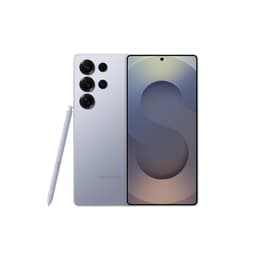
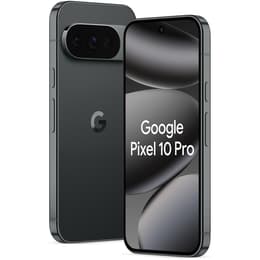

Compare models

Galaxy S25 Ultra vs Google Pixel 10 Pro

  • 1-year warranty
  • Free standard shipping
  • Free 30-day returns
Galaxy S25 Ultra
Starting at

Refurbished price:A$1,020.00

Versus A$2,149.00 new

See options
Google Pixel 10 Pro
Starting at

Refurbished price:A$1,181.00

Versus A$1,230.00 new

See options

Differences at a glance

The Samsung Galaxy S25 Ultra (2025) and the Google Pixel 10 Pro (2025) represent two distinct approaches to the modern flagship smartphone. While both devices deliver high-end mobile computing, they differ primarily in their physical footprint, software ecosystem, and hardware integration. The Galaxy S25 Ultra runs on Samsung's customized interface built over Android, whereas the Pixel 10 Pro utilizes Google's clean software vision with deep artificial intelligence integration. This comparison examines how their practical differences influence daily usability for various user needs.

Available Models

Colour

Storage

Scores

Durability

Both flagships are built for long-term ownership, featuring extended software support windows and robust hardware construction designed to handle years of daily use.

  • Software Support: Both manufacturers provide long-term operating system updates and security patches spanning multiple years, ensuring the devices remain current and secure over time.
  • Build Durability: Each model incorporates scratch-resistant display glass and high-grade frame materials that withstand accidental drops and everyday wear effectively.
  • Repair Ecosystem: Component availability and structured repair pathways mean both devices support practical part replacements, extending their usable lifespan when maintenance is required.

Release year

2025

2025

Operating system

Android

Android

Foldable

No

No

Performance

Equipped with current-generation internal hardware, both smartphones handle demanding applications, intensive multitasking, and gaming smoothly without noticeable stutter or thermal throttling.

  • App Responsiveness: Applications launch instantly, and system navigation remains fluid across both platforms thanks to advanced mobile processors paired with generous random access memory configurations.
  • Multitasking Behavior: Switching between resource-heavy software, navigation tools, and background processes occurs seamlessly, maintaining stable performance during extended multi-window usage.
  • Battery Endurance: Both power management systems deliver reliable all-day battery performance under typical daily usage patterns, supported by efficient charging capabilities.

Screen quality

The viewing experiences differ mainly in scale and panel tuning, with both devices utilizing advanced organic light-emitting diode technology for deep contrast and sharp clarity.

  • Display Technology: Both models feature adaptive refresh rates reaching up to 120Hz, ensuring buttery-smooth scrolling and responsive touch interactions during gaming or web browsing.
  • Outdoor Legibility: High peak brightness levels allow both screens to remain clearly visible and legible even under direct sunlight or bright outdoor environments.
  • Physical Scale: The Galaxy S25 Ultra offers a larger workspace suited for media consumption and note-taking, while the Pixel 10 Pro provides a more compact form factor that is easier to manage with one hand.

Resolution

1440x3120

1280x2856

Audiovisual

Photography and video recording suites on both devices deliver professional-grade results, though their output characteristics and software processing styles diverge.

  • Everyday Photography: Both main camera systems capture crisp, highly detailed images in standard lighting conditions, preserving natural skin tones and accurate colors.
  • Low-Light Capture: Advanced sensor hardware and night processing algorithms allow both phones to produce bright, clear photos in dim environments with minimal visual noise.
  • Video and Audio: Steady video stabilization and clear multi-microphone arrays ensure high-quality media recording and crisp audio output for calls or video playback.

Miscellaneous

Practical daily usability is shaped by connectivity standards, physical dimensions, and integrated biometric security features built into each chassis.

  • Connectivity & Ports: Both flagships support rapid fifth-generation cellular networks, modern Wi-Fi standards, and universal USB-C ports for charging and data transfer.
  • Biometrics: Responsive under-display fingerprint scanners and secure facial recognition options provide fast, reliable device unlocking methods.
  • Handling & Weight: The Galaxy S25 Ultra features a broader frame and includes an integrated stylus for productivity tasks, whereas the Pixel 10 Pro adopts a more rounded, pocket-friendly profile.

Weight

218 oz

213 oz

Screen size (in)

6.9

6.3

Network

5G

5G

SIM card

Physical SIM + eSIM

Physical SIM + eSIM

Carrier compatibility

Unlocked

Unlocked

What the community thinks

User feedback from online communities highlights distinct preferences for each flagship. Owners of the Galaxy S25 Ultra frequently praise its expansive display canvas, inclusion of a dedicated stylus, and strong raw processing capability. Conversely, Pixel 10 Pro users often emphasize the intuitive software layout, integrated conversational assistant features, and comfortable one-handed ergonomics. Users prioritizing maximum screen real estate and productivity tools will find the Galaxy S25 Ultra well-suited to their workflow, while individuals favoring a compact build and clean software interface may prefer the Pixel 10 Pro. For those exploring a quality-assured refurbished option, choosing a professionally tested device serves as an eco-friendly alternative that supports sustainable technology consumption without compromising on reliability or daily performance.


Our recent comparisons