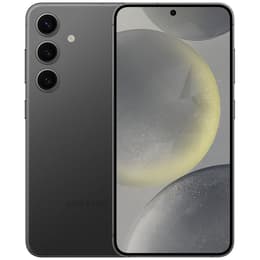


Galaxy S24 vs Google Pixel 7a

Galaxy S24
Galaxy S24
Starting at

Refurbished price:A$622.00

Versus A$1,841.10 new

See options
Google Pixel 7a
Google Pixel 7a
Starting at

Refurbished price:A$337.00

Versus A$749.00 new

See options

Ratings

The Samsung Galaxy S24, released in January 2024, and the Google Pixel 7a, launched in May 2023, are both Android smartphones offering distinct user experiences. While the Galaxy S24 is positioned as a premium flagship device, the Pixel 7a serves as Google's mid-range offering. The primary differentiators lie in their hardware capabilities, software support timelines, and camera philosophies, with both running on the Android operating system.

Scores

Durability

When considering the longevity of these devices, both offer substantial software support, though with different timelines and physical resilience.

  • Software Support: The Galaxy S24 is designed to receive major Android OS updates for approximately seven years, extending its functional life well into the 2030s. This matches the update policy of the Pixel 8 line. The Pixel 7a, released earlier, typically receives five years of OS and security updates, providing support until around 2028.
  • Physical Durability: The Galaxy S24 features Corning Gorilla Glass Victus 2 on both its front and back, along with an IP68 rating for dust and water resistance, offering robust protection. The Pixel 7a uses Corning Gorilla Glass 3 for its display and has an IP67 rating, providing good, but slightly less comprehensive, protection against elements.
  • Repairability: The Galaxy S24 has received high repairability scores, with some assessments giving it a 9/10, noting features like easily removable batteries with pull tabs. The Pixel 7a initially scored a 4/10 on the iFixit repairability scale, later uprated to 5/10 after Google provided service manuals, indicating a fair level of repairability.

Release year

2024

2022

Compatible with latest Update

Yes

Yes

Operating system

Android

Android

Foldable

No

No

Performance

Performance varies between these two devices, reflecting their different market segments and design philosophies.

  • Everyday Responsiveness: The Galaxy S24, equipped with a current-generation processor, handles demanding applications, intensive multitasking, and graphic-heavy games with exceptional smoothness and speed. Users will experience virtually no lag or slowdowns during typical use. The Pixel 7a, while using a slightly older chipset, still performs well for everyday tasks, offering a smooth experience for general use and most applications.
  • Multitasking and Storage: The Galaxy S24 typically comes with 8GB or 12GB of RAM and offers storage options up to 512GB, utilizing UFS 4.0 for faster data access in higher capacities. The Pixel 7a comes with 8GB of RAM and 128GB of non-expandable UFS 3.1 internal storage.
  • Battery Behavior: The Galaxy S24 has a 4000 mAh battery and supports 25W wired fast charging and 15W wireless charging. The Pixel 7a features a 4385 mAh battery and supports 18W wired charging and 7.5W wireless charging. Some user tests suggest the Pixel 7a's battery can offer comparable or slightly longer endurance in mixed use due to software optimization, while the S24 offers faster charging speeds.

Memory (GB)

12 GB

8 GB

Screen quality

The visual experience differs due to the display technologies and specifications employed by each device.

  • Display Technology and Clarity: The Galaxy S24 features a 6.2-inch Dynamic AMOLED 2X display, known for its vibrant colors, deep blacks, and excellent contrast, with a resolution of 2340 x 1080 pixels. The Pixel 7a uses a 6.1-inch OLED panel with a resolution of 2400 x 1080 pixels, which also delivers rich colors and true blacks, offering a good viewing experience.
  • Brightness and Smoothness: The Galaxy S24 boasts a significantly higher peak brightness of 2600 nits, making it exceptionally clear and readable even in direct sunlight. Its adaptive 120Hz refresh rate ensures incredibly smooth scrolling and animations. The Pixel 7a offers HDR support and a 90Hz refresh rate, providing a smooth experience for most users, though its peak brightness is lower.
  • Viewing Experience: The slightly larger screen of the Galaxy S24, combined with its higher peak brightness and smoother refresh rate, generally offers a more immersive and fluid viewing experience, particularly for media consumption and gaming.

Resolution

1080x2340

1080 x 2400

Screen type

Dynamic LTPO AMOLED 2X

OLED

Audiovisual

Both smartphones excel in photography, though with different approaches and capabilities that cater to varying user preferences.

  • Rear Camera System: The Galaxy S24 features a versatile triple-camera setup, including a 50MP main sensor, a 12MP ultrawide, and a 10MP telephoto lens with 3x optical zoom. This allows for excellent detail, wide-angle shots, and clear zoomed-in photos, with advanced optical image stabilization. The Pixel 7a has a dual-camera system with a 64MP main sensor and a 13MP ultrawide lens, relying heavily on Google's computational photography for impressive results, especially in challenging lighting.
  • Photography Performance: The Galaxy S24 generally offers a more versatile and higher-quality camera system, including better low-light performance and more advanced zoom features. The Pixel 7a excels at computational photography, delivering great image clarity and color accuracy, particularly with its AI-powered features like Magic Eraser and Real Tone.
  • Video Recording: The Galaxy S24 supports 8K video recording at up to 30fps and 4K at 30/60fps, with advanced stabilization. The Pixel 7a is capable of recording 4K video at 30 or 60fps.

Main camera

50 megapixels

64 megapixels

Front camera

12 megapixels

13 megapixels

Miscellaneous

Beyond core features, several practical elements differentiate the user experience of these two devices.

  • Connectivity: Both devices support 5G connectivity, ensuring access to the latest mobile network speeds. The Galaxy S24 supports Wi-Fi 6E/7, offering potentially faster and more stable wireless connections, while the Pixel 7a supports Wi-Fi 6E. Both include Bluetooth 5.3 for accessory connections.
  • Ports and Biometrics: Both smartphones utilize a USB-C port for charging and data transfer. The Galaxy S24 employs an ultrasonic in-display fingerprint sensor, known for its speed and security. The Pixel 7a uses an optical in-display fingerprint sensor, which is generally reliable.
  • Design and Handling: The Galaxy S24 features a premium aluminum frame and a more compact design (147 x 70.6 x 7.6 mm, 167g), offering a comfortable in-hand feel. The Pixel 7a also has an aluminum frame but uses a plastic back, contributing to its slightly heavier feel (152 x 72.9 x 9 mm, 193.5g).

Weight

167 oz

212 oz

Screen size (in)

6.2

6.1

Network

5G

5G

SIM card

Physical SIM + eSIM

Physical SIM + eSIM

Carrier compatibility

Unlocked

Unlocked

User feedback often highlights the Galaxy S24's advanced hardware and comprehensive feature set as key praise points, particularly its vibrant display and versatile camera system. Some users appreciate its longer software support commitment. Criticisms, when present, sometimes focus on the regional variations in its processor. For the Pixel 7a, common praise centers on its exceptional computational photography, clean Android experience, and reliable everyday performance. Users often note its strong camera performance for its segment. Some criticisms point to its slower charging speeds and the absence of a telephoto lens.

Users prioritizing a device with the longest possible software support, a highly versatile camera system with optical zoom, and a brighter, smoother display may find the Samsung Galaxy S24 well-suited to their needs. Its robust build and advanced performance capabilities cater to those who demand a premium experience for demanding tasks and media consumption.

Conversely, users who prioritize an excellent point-and-shoot camera experience driven by advanced software, a streamlined Android interface, and solid performance for daily tasks may lean toward the Google Pixel 7a. It offers a compelling package for those who value Google's unique software features and image processing. Both devices are available as quality-assured refurbished options, providing an eco-friendly alternative for consumers.

See all articles

Our recent comparisons