Compare models

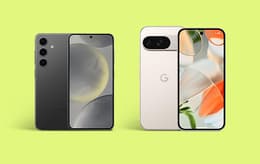
Galaxy S24 FE vs Google Pixel 8

  • 1-year warranty
  • Free standard shipping
  • Free 30-day returns
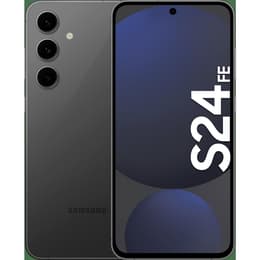
Galaxy S24 FE
Starting at

Refurbished price:A$500.00

Versus A$710.00 new

See options
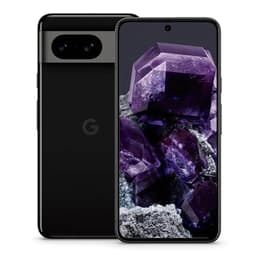
Google Pixel 8
Starting at

Refurbished price:A$410.00

Versus A$1,245.00 new

See options

Differences at a glance

The Samsung Galaxy S24 FE (2024) and the Google Pixel 8 (2023) are popular smartphones offering flagship-adjacent experiences in more accessible packages. While both run on the Android operating system, they approach daily computing and design from different angles. The Samsung model features a larger workspace and distinct ecosystem integrations, whereas the Google device focuses on a compact physical footprint and clean software navigation.

Available Models

Colour

Storage

Scores

Durability

When examining longevity and structural endurance, both devices offer robust build qualities and extended software support windows, though their update timelines and physical dimensions differ.

  • Software Support Duration: The Google Pixel 8 provides a multi-year update commitment spanning seven years from its release, while the Galaxy S24 FE offers a similarly extensive multi-year update schedule matching recent industry standards.
  • Build and Repairability: Both smartphones feature sturdy glass backs and aluminum frames with strong water and dust resistance ratings, supporting standard component replacement procedures through authorized repair channels.
  • Expected Lifespan: Practical longevity for both models remains high, with current-generation processors and sufficient random-access memory ensuring smooth daily operation over several years of regular use.

Release year

2024

2023

Operating system

Android

Android

Foldable

No

No

Performance

Both smartphones deliver reliable daily processing capabilities, though they manage multitasking and power efficiency through different internal architectures and battery capacities.

  • App Loading and Multitasking: Each device handles demanding applications, web browsing, and split-screen multitasking smoothly, though heavy 3D gaming may yield different thermal regulation results depending on the workload.
  • Battery Behavior: The Galaxy S24 FE features a larger battery capacity designed to sustain extended screen-on times, while the Pixel 8 relies on a slightly smaller power cell paired with efficient background resource management.
  • Storage Options: Both models are available in standard storage tiers starting at 128 gigabytes, accommodating typical photo libraries, apps, and local media files without frequent clearing.

Screen quality

Display characteristics vary significantly between the two models in terms of physical sizing, panel technology, and everyday viewing comfort.

  • Display Technology: Both phones utilize vibrant OLED technology with deep black levels and high contrast ratios, ensuring vivid colors for media consumption and text readability.
  • Refresh Rate and Smoothness: Each device supports a fast refresh rate reaching up to 120 hertz, resulting in fluid scrolling through menus, web pages, and supported applications.
  • Size and Handling: The Galaxy S24 FE provides a larger viewing area suited for productivity and video watching, whereas the Pixel 8 offers a more compact panel that improves one-handed reachability.

Resolution

1080x2340

1080 x 2400

Audiovisual

Camera hardware and computational photography processing differ across these devices, providing distinct options for everyday snapshot capture and video recording.

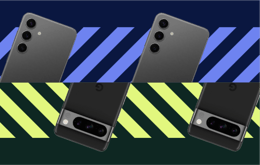
  • Camera System Setup: The Galaxy S24 FE features a versatile triple-lens configuration including a dedicated telephoto zoom lens, while the Pixel 8 utilizes a dual-lens setup focused on primary and ultra-wide shooting.
  • Photography Performance: Both models perform reliably in diverse lighting conditions, with Samsung emphasizing balanced color profiles and Google leveraging automated processing for low-light clarity.
  • Video and Audio: Each smartphone records stable high-resolution video equipped with clear microphone arrays for calls, voice notes, and media recording.

Miscellaneous

Practical daily utility features, physical dimensions, and connectivity options shape how each device fits into travel and professional routines.

  • Physical Dimensions: The Galaxy S24 FE measures larger and heavier due to its expansive screen size, whereas the Pixel 8 presents a lighter, narrower profile that slips easily into pockets.
  • Authentication and Security: Both devices include rapid biometric security options, combining responsive under-display fingerprint sensors with secure facial recognition capabilities.
  • Connectivity Standards: Complete modern connectivity suites are present on both models, offering fifth-generation cellular compatibility, fast Wi-Fi standards, and versatile USB Type-C charging ports.

Weight

213 oz

187 oz

Screen size (in)

6.7

6.2

Network

5G

5G

SIM card

Physical SIM + eSIM

Physical SIM + eSIM

Carrier compatibility

Unlocked

Unlocked

What the community thinks

User feedback from online communities highlights distinct preferences for each device based on physical size and software philosophy. Owners of the Galaxy S24 FE frequently praise its expansive display estate, consistent performance, and versatile multi-lens camera setup that includes dedicated optical zoom. Conversely, Pixel 8 users often emphasize satisfaction with the compact form factor, clean software interface, and reliable everyday photography tools. Common discussions note that the Pixel 8 can run warm during prolonged intensive tasks, while some users find the Galaxy S24 FE slightly bulky for one-handed pocket carry.

Users prioritizing a larger viewing area, versatile zoom capabilities, and a larger battery will find the Galaxy S24 FE well-suited to their daily routines. Meanwhile, users preferring a lighter, more compact physical footprint alongside a streamlined software environment may lean toward the Google Pixel 8. Exploring a quality-assured refurbished option through Back Market can also provide an eco-friendly alternative for acquiring either device while supporting more sustainable consumption habits. Ultimately, the choice depends entirely on whether physical compactness or screen real estate takes priority in daily use.