

Galaxy S23+ vs Google Pixel 9

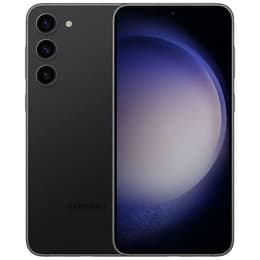
Galaxy S23+
Galaxy S23+
Starting at

Refurbished price:A$539.00

Versus A$1,953.00 new

See options
Google Pixel 9
Google Pixel 9
Starting at

Refurbished price:A$717.00

Versus A$1,349.00 new

See options

Ratings

The Samsung Galaxy S23 Plus, released in February 2023, and the Google Pixel 9, launched in October 2024, represent distinct approaches to the premium Android smartphone experience. While both offer robust performance and advanced camera capabilities, they differentiate themselves through their software philosophies, design aesthetics, and specific feature sets. The Galaxy S23 Plus emphasizes a refined hardware experience with a versatile camera system, whereas the Pixel 9 focuses on deep software integration, artificial intelligence features, and computational photography.

Scores

Durability

When considering the long-term usability of these devices, their respective software support policies and physical durability are key factors.

  • Software Updates: The Google Pixel 9 launched with Android 15 and is committed to receiving seven years of OS and security updates, extending its software longevity until at least October 2031. The Samsung Galaxy S23 Plus, released with Android 13, is guaranteed four major OS updates (up to Android 17) and five years of security updates, with support ending around February 2028.
  • Physical Durability: Both smartphones feature an IP68 rating for dust and water resistance, allowing them to withstand submersion in up to 1.5 meters of water for 30 minutes. They also incorporate Corning Gorilla Glass Victus 2 on both the front and back, providing enhanced protection against drops and scratches.
  • Expected Lifespan: The Pixel 9's extended software support offers a longer period of receiving the latest Android features and security patches, potentially making it a more future-proof option for users who keep their devices for many years.

Release year

2023

2024

Compatible with latest Update

Yes

Yes

Operating system

Android

Android

Foldable

No

No

Performance

Both devices deliver strong performance for daily tasks, but their underlying architectures and optimization priorities differ.

  • Processing Power: The Galaxy S23 Plus is powered by a processor optimized for Galaxy devices, providing smooth operation for demanding applications and graphics-intensive games. The Pixel 9 features Google's Tensor G4 chip, which is specifically designed to enhance on-device artificial intelligence and machine learning tasks, contributing to efficient performance in AI-driven features and overall system responsiveness.
  • Multitasking and Storage: The Galaxy S23 Plus typically comes with 8GB of RAM, while the Pixel 9 offers 12GB of RAM in its base configuration, which can provide a slight advantage in handling numerous applications simultaneously. Both devices offer various storage options, including 256GB and 512GB, with the Galaxy S23 Plus utilizing UFS 4.0 for faster data transfer in its higher storage variants.
  • Battery Performance: The Galaxy S23 Plus houses a 4700 mAh battery, which, combined with its efficient processor, often provides extended usage on a single charge, with some users reporting up to two days of moderate use. The Pixel 9 also features a 4700 mAh battery and is designed for efficient power management, with Google claiming it can last over 24 hours on a single charge.

Memory (GB)

8 GB

12 GB

Screen quality

The visual experience on both smartphones is characterized by vibrant displays, though with differences in size and peak brightness.

  • Display Technology and Size: The Galaxy S23 Plus features a 6.6-inch Dynamic AMOLED 2X display, offering rich colors and deep blacks. The Pixel 9 comes with a slightly more compact 6.3-inch Actua OLED display, also known for its color accuracy and contrast.
  • Resolution and Refresh Rate: Both phones provide a Full HD+ resolution (2340 x 1080 pixels for S23 Plus, 2424 x 1080 pixels for Pixel 9), resulting in sharp visuals. They both support an adaptive refresh rate of up to 120Hz, ensuring smooth scrolling and fluid animations, which can dynamically adjust to conserve battery life.
  • Brightness: The Galaxy S23 Plus can reach a peak brightness of 1750 nits, providing good visibility in bright outdoor conditions. The Pixel 9's Actua display offers a peak brightness of up to 2700 nits, with a full-screen brightness of 1800 nits, which can enhance outdoor readability and HDR content viewing.

Resolution

1080 x 2340

1080 x 2424

Screen type

Dynamic AMOLED 2X

OLED

Audiovisual

Both devices offer advanced camera systems, but they approach photography with different strengths and features.

  • Rear Camera System: The Galaxy S23 Plus features a versatile triple-camera setup, including a 50MP main sensor with optical image stabilization (OIS), a 12MP ultrawide lens, and a 10MP telephoto lens with 3x optical zoom and OIS. This configuration allows for a wide range of photographic scenarios, from expansive landscapes to detailed distant subjects. The Pixel 9 is equipped with a dual-camera system, featuring a 50MP main camera with OIS and a 48MP ultrawide lens. While it lacks a dedicated telephoto lens on the base model, it leverages computational photography for digital zoom capabilities.
  • Photography Features: The Galaxy S23 Plus offers features like Nightography for low-light performance, 8K video recording, and various pro modes for manual control. The Pixel 9 excels in computational photography, offering features such as Night Sight, Astrophotography, Macro Focus, and AI-powered editing tools like Face Unblur and Magic Eraser. Its upgraded ultrawide lens can capture more light and focus closely for macro shots.
  • Front Camera: Both devices feature a 12MP front-facing camera, capable of capturing detailed selfies and supporting high-quality video calls. The Pixel 9's front camera also includes autofocus for sharper selfies.

Main camera

50 megapixels

50 megapixels

Front camera

12 megapixels

10.5 megapixels

Miscellaneous

Beyond core specifications, several practical elements contribute to the overall user experience of each device.

  • Connectivity: Both smartphones support 5G connectivity for fast mobile data. The Galaxy S23 Plus includes Wi-Fi 6E and Bluetooth 5.3. The Pixel 9 offers newer connectivity standards, including Wi-Fi 7 and Bluetooth 5.4, which can provide faster and more stable wireless connections.
  • Ports and Biometrics: Both devices utilize a USB-C port for charging and data transfer. The Galaxy S23 Plus features an ultrasonic in-display fingerprint sensor, while the Pixel 9 uses an optical in-display fingerprint sensor and also offers face unlock.
  • Design and Handling: The Galaxy S23 Plus measures 157.8 x 76.2 x 7.6 mm and weighs 196g, offering a balanced feel in hand. The Pixel 9 is slightly more compact and lighter at 152.8 x 72 x 8.5 mm and 198g, which might appeal to users preferring a smaller device. Both devices feature premium build materials with glass backs and aluminum frames.

Weight

196 oz

198 oz

Screen size (in)

6.6

6.3

Network

5G

5G

SIM card

Physical SIM + eSIM

Physical SIM + eSIM

Carrier compatibility

Unlocked

Unlocked

The Samsung Galaxy S23 Plus and Google Pixel 9 cater to slightly different user preferences within the Android ecosystem. The Galaxy S23 Plus is often praised for its robust and reliable performance, long battery life, and a versatile camera system that includes a dedicated telephoto lens. Users appreciate its bright display and the overall polished user experience provided by Samsung's software. Some common feedback points include its larger size, which might not suit all users, and its software update policy, while good, is not as extended as Google's latest offerings.

The Google Pixel 9, on the other hand, is frequently lauded for its exceptional computational photography capabilities, delivering impressive results even with fewer physical lenses. Its deep integration of artificial intelligence features for various tasks, from call screening to photo editing, is a significant draw. The Pixel 9 also stands out with its industry-leading seven years of software updates, ensuring a prolonged period of new features and security. Users often highlight its clean Android experience and the timely delivery of updates. Some users might find its design less conventional compared to other flagships.

Users prioritizing a comprehensive and versatile camera system with optical zoom and a larger display for media consumption may find the Samsung Galaxy S23 Plus well-suited to their needs. Conversely, those who value cutting-edge AI features, computational photography prowess, a more compact form factor, and the longest possible software support will likely lean towards the Google Pixel 9. Both devices offer a quality-assured refurbished option, providing an eco-friendly alternative for consumers seeking premium smartphone experiences.

See all articles

Our recent comparisons