Galaxy S23 vs iPhone 14 Plus

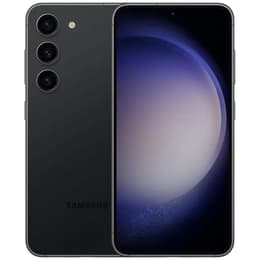
Galaxy S23
Galaxy S23
Starting at

Refurbished price:A$489.00

Versus A$1,349.00 new

See options
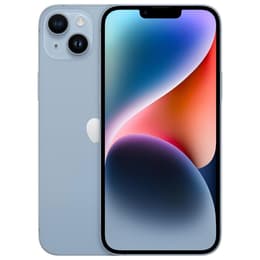
iPhone 14 Plus
iPhone 14 Plus
Starting at

Refurbished price:A$480.00

Versus A$1,249.00 new

See options

Ratings

The Samsung Galaxy S23, released in February 2023, and the iPhone 14 Plus, launched in October 2022, represent distinct approaches to the premium smartphone experience. While the Galaxy S23 operates on Android with Samsung's One UI, the iPhone 14 Plus runs on Apple's iOS platform. Key differentiators include their camera systems, display technologies, and overall ecosystem integration, catering to users with varying preferences for software and hardware.

Scores

Durability

Both the Samsung Galaxy S23 and the iPhone 14 Plus offer robust build quality and are designed for extended use, though their release timelines and software support differ.

  • Release Timeline and Software Support: The iPhone 14 Plus, released in October 2022, typically receives iOS updates for approximately 5-6 years from its launch date. The Galaxy S23, launched in February 2023, generally receives around four to five years of Android operating system updates and an additional year of security updates. This means the iPhone 14 Plus may offer a slightly longer period of major OS updates.
  • Physical Durability: Both devices feature IP68 ratings for water and dust resistance, indicating protection against submersion. The iPhone 14 Plus incorporates a Ceramic Shield front cover, which Apple states offers enhanced drop performance. The Galaxy S23 uses Gorilla Glass Victus 2 on both the front and back for scratch and drop resistance.
  • Repairability: While specific repairability scores can vary, both manufacturers design their devices with certain repair considerations. Users seeking to extend the life of their device can also consider quality-assured refurbished options, which provide a sustainable choice.

Release year

2023

2022

Compatible with latest Update

Yes

Yes

Operating system

Android

iOS

Foldable

No

No

Performance

The performance of these two smartphones is influenced by their respective processors and operating system optimizations, impacting daily responsiveness and handling of demanding applications.

  • Processing Power: The iPhone 14 Plus is equipped with a powerful current-generation processor that handles demanding applications and multitasking smoothly. The Galaxy S23 features a custom-optimized current-generation processor, designed to deliver efficient performance across various tasks, from everyday browsing to intensive gaming.
  • Multitasking and Storage: Both devices offer various storage configurations, with the iPhone 14 Plus available in 128GB, 256GB, and 512GB options, and the Galaxy S23 offering 128GB, 256GB, and 512GB. The amount of RAM in each device is optimized for its operating system to ensure smooth app switching and background process management.
  • Battery Performance: The iPhone 14 Plus is recognized for its extended battery life, often lasting through a full day or more of heavy use, with some reports indicating up to three days of light usage. The Galaxy S23, with its 3900 mAh battery, also offers improved battery endurance compared to its predecessor, providing reliable power for a full day for most users.

Memory (GB)

8 GB

6 GB

Screen quality

The visual experience on both the Galaxy S23 and iPhone 14 Plus is delivered through high-quality displays, each with distinct characteristics.

  • Display Technology and Size: The iPhone 14 Plus features a 6.7-inch Super Retina XDR OLED display, offering deep blacks and vibrant colors. The Galaxy S23 comes with a 6.1-inch Dynamic AMOLED 2X display, also known for its rich colors and contrast. The larger screen of the iPhone 14 Plus provides more screen real estate for media consumption and productivity.
  • Resolution and Brightness: The iPhone 14 Plus has a resolution of 2778 by 1284 pixels at 458 pixels per inch (ppi), with typical brightness up to 800 nits and peak HDR brightness of 1200 nits. The Galaxy S23 offers a sharp display with a high pixel density and can reach high brightness levels, ensuring good visibility in various lighting conditions.
  • Refresh Rate: A notable difference is the refresh rate; the iPhone 14 Plus features a standard 60Hz refresh rate, while the Galaxy S23 offers a smoother 120Hz adaptive refresh rate, which can make scrolling and animations appear more fluid.

Resolution

1080 x 2340

1284 x 2778

Screen type

Dynamic AMOLED 2X

Super Retina XDR OLED

Audiovisual

Both smartphones provide capable camera systems, but they differ in their configurations and photographic strengths.

  • Rear Camera System: The iPhone 14 Plus features a dual-camera setup with a 12MP main sensor (f/1.5, sensor-shift optical image stabilization) and a 12MP ultrawide lens (f/2.4). The Galaxy S23 boasts a triple-camera system, including a 50MP main sensor (f/1.8, OIS), a 12MP ultrawide lens (f/2.2), and a 10MP telephoto lens (f/2.4) with 3x optical zoom. The addition of a dedicated telephoto lens on the S23 provides more versatility for zoomed shots.
  • Photography Features: The iPhone 14 Plus includes features like Photonic Engine for improved low-light performance, Deep Fusion, Smart HDR 4, Cinematic mode for video, and Action mode for stabilized video recording. The Galaxy S23 also excels in various lighting conditions, with its larger main sensor capturing detailed images, and offers 8K video recording at 30fps.
  • Front Camera: Both devices feature 12MP front-facing cameras. The iPhone 14 Plus's front camera includes autofocus and a wider aperture (f/1.9) for better low-light selfies. The Galaxy S23 also has a 12MP front camera, providing clear and detailed self-portraits.

Main camera

50 megapixels

12 megapixels

Front camera

12 megapixels

12 megapixels

Miscellaneous

Beyond core specifications, several practical features and design elements distinguish the Galaxy S23 and iPhone 14 Plus.

  • Connectivity and Ports: Both phones support 5G connectivity and Bluetooth 5.3. The Galaxy S23 features Wi-Fi 6E for faster wireless speeds and a USB-C 3.2 port for charging and data transfer. The iPhone 14 Plus supports Wi-Fi 6 and utilizes Apple's Lightning port. Notably, US models of the iPhone 14 Plus exclusively use eSIM technology, while the Galaxy S23 supports physical SIM cards.
  • Biometrics and Sensors: The iPhone 14 Plus relies on Face ID for secure facial recognition. The Galaxy S23 incorporates an ultrasonic in-display fingerprint scanner for biometric authentication. Both devices include a range of sensors, with the iPhone 14 Plus featuring Crash Detection and Emergency SOS via Satellite for enhanced safety.
  • Design and Handling: The iPhone 14 Plus measures 160.8 x 78.1 x 7.8 mm and weighs 203 grams, featuring an aluminum frame and glass back. The Galaxy S23 is more compact at 146.3 x 70.9 x 7.6 mm and weighs 168 grams, also with an aluminum frame and glass back. The smaller size of the S23 makes it more manageable for one-handed use, while the 14 Plus offers a larger screen experience.

Weight

227 oz

203 oz

Screen size (in)

6.1

6,7

Network

5G

5G

SIM card

Physical SIM + eSIM

Physical SIM + eSIM

Carrier compatibility

Unlocked

Unlocked

Connector

USB-C

Lightning

User feedback for the iPhone 14 Plus frequently highlights its exceptional battery life and large display as primary advantages, making it a strong choice for users who prioritize screen size and endurance without needing the advanced features of the Pro models. Some users note the 60Hz refresh rate as a point of comparison with other devices in its category.

The Samsung Galaxy S23 is often praised for its compact form factor, powerful performance, and versatile camera system, particularly the inclusion of a telephoto lens. Users appreciate its vibrant display and improved battery efficiency. Some discussions revolve around the nuances of its software experience compared to stock Android.

Users prioritizing a large display and industry-leading battery life within the Apple ecosystem may find the iPhone 14 Plus well-suited to their needs. Those who prefer a more compact device with a high refresh rate display, a more versatile camera setup including a telephoto lens, and the Android operating system might lean towards the Galaxy S23. Both devices offer reliable performance for daily tasks and multimedia consumption. For those considering either model, exploring quality-assured refurbished options can provide an eco-friendly alternative.

See all articles

Our recent comparisons