Compare models
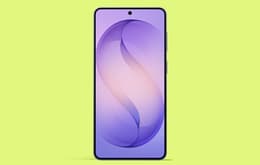
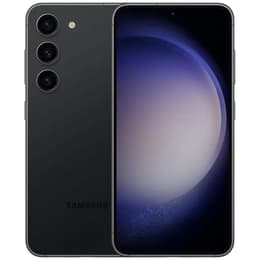
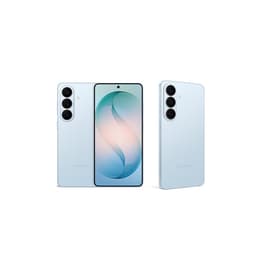
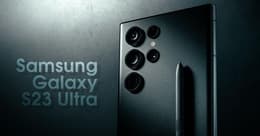
Galaxy S23 vs Galaxy S26
- 1-year warranty
- Free standard shipping
- Free 30-day returns
Differences at a glance
The Samsung Galaxy S23 (2023) and Samsung Galaxy S26 (2026) are compact Android smartphones designed for users seeking reliable daily performance in a pocket-friendly form factor. While the Galaxy S23 established a benchmark for efficient everyday handling, the Galaxy S26 introduces refined processing capabilities, expanded base memory configurations, and updated software support. Both devices run on Android, though the newer model launches with a later operating system version and benefits from advanced internal architecture.
Available Models
Colour
Storage (GB)
Scores
Durability
When examining longevity, the Galaxy S23 and Galaxy S26 differ primarily in their release timelines, software update windows, and physical wear expectations over extended daily use.
- Release timeline and age: The Galaxy S23 has several years of market history behind it, whereas the Galaxy S26 represents a contemporary 2026 release.
- Software longevity: The Galaxy S26 benefits from an extended future update window compared to the older model, ensuring prolonged access to security patches and system features.
- Expected practical lifespan: Both devices offer durable glass-and-aluminum construction, but the newer hardware revision in the Galaxy S26 provides additional headroom for future software demands.
Release year
2023
2026
Operating system
Android
Android
Foldable
No
No
Performance
Performance capabilities between these two generations reflect advancements in processing efficiency, multitasking capacity, and daily power management.
- Processor capabilities: The Galaxy S26 handles demanding applications, intensive multitasking, and modern mobile games with noticeably faster loading times and thermal efficiency than the Galaxy S23.
- RAM and storage: The Galaxy S26 starts with a higher baseline of internal storage and increased RAM capacity to support smoother app switching, while the Galaxy S23 relies on standard configurations common to its release year.
- Battery behavior: The Galaxy S26 features a slightly larger battery capacity paired with an energy-efficient processor, helping it maintain charge through a full day of mixed use more comfortably than the older Galaxy S23 battery capacity.
Screen quality
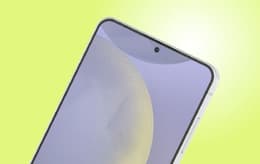
Both smartphones feature vibrant display panels tailored for media consumption, yet subtle adjustments in bezel design and screen dimensions set them apart.
- Display technology: Each device utilizes a high-refresh-rate OLED panel that delivers deep blacks, vivid contrast, and smooth scrolling for everyday navigation.
- Brightness and outdoor use: The Galaxy S26 incorporates improved peak brightness levels and advanced glass protection, making it slightly easier to read under direct sunlight compared to the Galaxy S23.
- Screen size and dimensions: The Galaxy S26 offers a marginally larger screen area within a similarly compact physical footprint, optimizing viewing space without sacrificing pocketability.
Resolution
1080 x 2340
1080x2340
Audiovisual
Photography and media recording capabilities evolve across these generations through refined sensor technology and updated image processing algorithms.
- Camera hardware: Both phones utilize triple-lens rear configurations featuring main, ultra-wide, and telephoto lenses, but the Galaxy S26 applies updated computational processing for sharper details.
- Low-light performance: The Galaxy S26 captures brighter images with reduced visual noise in dim environments, benefiting from modern sensor upgrades and faster shutter response.
- Audio and video output: Built-in stereo speakers on both models deliver clear sound for calls and media, while video stabilization features on the newer model offer smoother motion tracking during handheld recording.
Miscellaneous
Practical daily usability is influenced by connectivity standards, physical dimensions, and hardware sensor configurations.
- Connectivity standards: The Galaxy S26 supports newer wireless networking protocols such as updated Wi-Fi standards and faster cellular data handoffs than the Galaxy S23.
- Physical build: Both models maintain slim profiles and lightweight bodies, though the Galaxy S26 refines edge contours for a more comfortable grip during extended one-handed use.
- Ports and biometrics: Both devices rely on USB Type-C ports for charging and data transfer, alongside responsive under-display fingerprint sensors and facial recognition capabilities.
Weight
167 oz
167 oz
Screen size (in)
6.1
6.3
Network
5G
5G
SIM card
Dual Physical SIM + eSIM
Physical SIM + eSIM
Carrier compatibility
Unlocked
Unlocked
What the community thinks
User feedback and community discussions highlight distinct preferences for each device based on individual priorities. Users often praise the Galaxy S23 for its reliable, compact form factor and established track record as an accessible daily device. Conversely, common praise for the Galaxy S26 focuses on its extended software support window, improved processing speed, and refined battery longevity. Choosing between the two models depends largely on individual expectations for longevity and daily responsiveness.
Users who prioritize a longer software update lifecycle and smoother multitasking performance will find the Galaxy S26 well-suited to their needs. Meanwhile, users looking for a capable, straightforward daily smartphone without modern flagship novelties may lean toward a quality-assured refurbished option like the Galaxy S23 as a sustainable choice. Evaluating personal requirements for battery endurance and software longevity helps determine which device aligns best with everyday usage patterns.