
Compare models
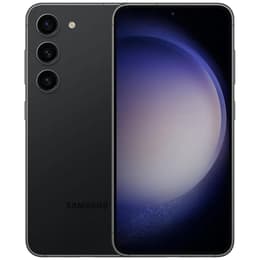
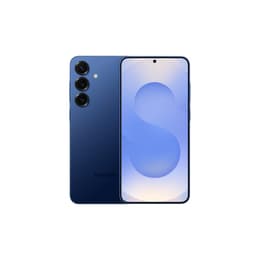
Galaxy S23 vs Galaxy S25+
- 1-year warranty
- Free standard shipping
- Free 30-day returns
Differences at a glance
The Samsung Galaxy S23 (2023) and the Samsung Galaxy S25+ (2025) represent different generations of Samsung's flagship smartphone ecosystem. While both run on the Android operating system paired with Samsung's custom interface, they offer distinct physical sizes, processing capabilities, and feature sets. Choosing between them depends on how you weigh compact handling against expanded screen estate and longevity.
Available Models
Colour
Storage
Scores
Durability
When examining longevity, the Galaxy S23 and Galaxy S25+ differ primarily in their release timelines and intended software support lifecycles.
- Release timeline and age: The Galaxy S23 launched in early 2023, whereas the newer Galaxy S25+ arrived in early 2025, giving the latter a two-year advantage in hardware age.
- Software support duration: The Galaxy S25+ benefits from a longer manufacturer update commitment spanning several more years than its older counterpart, which influences long-term security readiness.
- Repairability and build: Both models feature robust glass-and-aluminum construction with official water-resistance ratings, though finding a quality-assured refurbished option for either model provides a sustainable choice that extends active device lifespans responsibly.
Release year
2023
2025
Operating system
Android
Android
Foldable
No
No
Performance
Daily operation and hardware efficiency vary noticeably due to generational gaps in internal components and memory allocation.
- Multitasking and memory: The Galaxy S25+ incorporates higher random access memory capacity, allowing heavier applications and multiple background browser tabs to remain active simultaneously without reloading compared to the baseline memory found in the Galaxy S23.
- System responsiveness: Both handle demanding games and fast-paced tasks fluidly, but the newer processor generation in the Galaxy S25+ manages complex computational requests and graphic rendering with greater speed and thermal efficiency.
- Battery behavior: The Galaxy S25+ includes a larger physical battery capacity and faster wired charging support, sustaining extended daily use for power users, while the compact Galaxy S23 relies on a smaller cell that suits moderate daily routines.
Screen quality
Visual output and display dimensions set these two devices apart significantly during media consumption and outdoor viewing.
- Display technology and size: The Galaxy S23 utilizes a compact 6.1-inch dynamic display, making it straightforward to operate with one hand, while the Galaxy S25+ scales up to a larger 6.7-inch panel that offers more workspace for reading and viewing media.
- Clarity and resolution: The Galaxy S25+ provides a higher pixel resolution panel for sharper text rendering, whereas the Galaxy S23 maintains standard high-definition clarity suitable for everyday viewing.
- Outdoor visibility: Both models feature adaptive high-refresh-rate technology up to 120Hz for smooth scrolling and robust peak brightness levels that keep screens legible under direct sunlight.
Resolution
1080 x 2340
1440x3120
Audiovisual
Photography and media recording capabilities share similar hardware foundations while benefiting from generational image processing enhancements.
- Camera hardware: Both phones feature versatile triple-lens rear arrays anchored by a 50-megapixel primary sensor, complemented by ultra-wide and telephoto options for varied framing.
- Low-light and video performance: Advanced processing on the Galaxy S25+ yields cleaner low-light clarity and refined stabilization during high-resolution video capture, while the Galaxy S23 remains a capable tool for casual everyday photography and social sharing.
- Audio output: Integrated stereo speakers on both devices deliver clear sound for hands-free calls and media playback, supported by sensitive multi-microphone arrays for noise reduction.
Miscellaneous
Physical dimensions and connectivity standards highlight practical differences in daily handling and future network compatibility.
- Handling and dimensions: The Galaxy S23 measures smaller and lighter, fitting easily into smaller pockets or bags, whereas the Galaxy S25+ has a wider, taller frame designed to accommodate its larger viewing area.
- Connectivity standards: The Galaxy S25+ supports newer wireless networking protocols including Wi-Fi 7 and Bluetooth versions that match modern routers, while the Galaxy S23 relies on standard fifth-generation mobile data and previous-generation wireless links.
- Biometric security: Both devices integrate responsive under-display fingerprint sensors alongside facial recognition capabilities for secure device unlocking.
Weight
167 oz
190 oz
Screen size (in)
6.1
6.7
Network
5G
5G
SIM card
Dual Physical SIM + eSIM
Physical SIM + eSIM
Carrier compatibility
Unlocked
Unlocked
What the community thinks
User feedback from online communities highlights distinct preferences for each model. Owners of the Galaxy S23 frequently praise its pocket-friendly form factor and reliable daily speed, though some note that heavy usage requires midday charging. Conversely, users of the Galaxy S25+ appreciate the generous screen estate, extended software support timeline, and longer battery endurance, though a few find the larger physical footprint less comfortable for single-handed navigation.
Users prioritizing compact dimensions and easy one-handed handling may prefer the Galaxy S23, while users prioritizing expansive screen space, maximum software longevity, and heavier multitasking capabilities will lean toward the Galaxy S25+. Selecting either model as a quality-assured refurbished option provides a sustainable choice that aligns consumer technology needs with environmental responsibility.