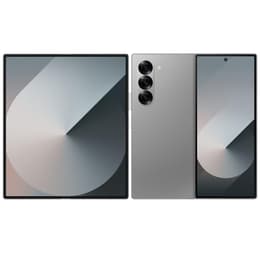

Galaxy S22+ 5G vs Galaxy Z Fold6

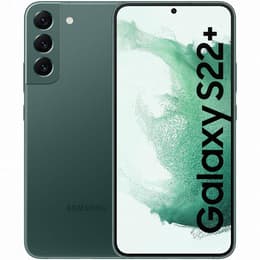
Galaxy S22+ 5G
Galaxy S22+ 5G
Starting at

Refurbished price:A$389.00

Versus A$1,690.00 new

See options
Galaxy Z Fold6
Galaxy Z Fold6
Starting at

Refurbished price:A$1,088.24

Versus A$2,749.00 new

See options

Ratings

The Samsung Galaxy S22 Plus 5G, released in February 2022, represents a traditional high-end smartphone experience, while the Samsung Galaxy Z Fold6, launched in July 2024, offers a distinct foldable design. Both devices operate on the Android platform, but their fundamental form factors and release timelines lead to significant differences in features, performance, and longevity. The S22 Plus provides a conventional smartphone layout, whereas the Z Fold6 transforms from a compact phone into a larger tablet-like display.

Scores

Durability

The expected practical lifespan and software support differ considerably between these two devices due to their respective release dates.

  • Release Timeline and Age: The Galaxy S22 Plus was released in February 2022, making it approximately four years old as of early 2026. The Galaxy Z Fold6, released in July 2024, is a much newer device, having been available for about a year and a half.
  • OS Support Duration: The S22 Plus was promised four major Android OS updates and five years of security updates from its launch. It has received its final major OS update (up to Android 16) and is expected to receive security patches until February 2027, transitioning to a quarterly update schedule in early 2026. In contrast, the Z Fold6 benefits from Samsung's extended support policy, offering seven years of Android OS upgrades and seven years of security updates, extending its support well into 2031.
  • Physical Durability: The S22 Plus features a robust glass and aluminum construction with IP68 dust and water resistance, offering protection against submersion. The Z Fold6, while also featuring an aluminum frame and Gorilla Glass Armor on its cover screen, has an IPX8 water resistance rating, meaning it can withstand submersion but lacks official dust resistance due to its folding mechanism. The foldable display itself also presents different durability considerations compared to a traditional rigid screen.

Release year

2022

2024

Compatible with latest Update

Yes

Yes

Operating system

Android

Android

Foldable

No

Yes

Performance

Performance capabilities are a key differentiator, largely influenced by the generational gap in their internal components.

  • Processing Power: The Galaxy S22 Plus is powered by a processor from early 2022, which capably handles everyday applications and moderate multitasking. The Galaxy Z Fold6, featuring a processor from mid-2024, offers a substantial increase in processing power, resulting in noticeably faster app loading, smoother transitions, and enhanced performance for demanding applications and advanced mobile gaming.
  • Multitasking and Responsiveness: With 8GB of RAM, the S22 Plus provides a responsive experience for typical smartphone usage. The Z Fold6, equipped with 12GB of RAM, is designed for more intensive multitasking, allowing users to run numerous applications simultaneously and switch between them with greater fluidity, particularly benefiting from its larger screen real estate.
  • Storage Options: The S22 Plus was available with 128GB or 256GB of internal storage. The Z Fold6 offers more generous storage configurations, starting at 256GB and extending to 512GB or 1TB, providing ample space for a larger volume of apps, media, and files.
  • Battery Behavior: The S22 Plus includes a 4500 mAh battery, designed to provide a full day of moderate use. The Z Fold6 has a 4400 mAh battery, which powers two displays. While its larger internal display consumes more power, software optimizations and a more efficient processor aim to provide comparable endurance for typical usage patterns, though heavy use of the main screen may require more frequent charging.

Memory (GB)

8 GB

12 GB

Screen quality

The display experience is a primary distinction, with the Z Fold6 offering a unique dual-screen setup compared to the S22 Plus's single, traditional display.

  • Display Technology and Clarity: Both devices feature Dynamic AMOLED 2X displays, known for vibrant colors and deep blacks. The S22 Plus has a 6.6-inch screen with a resolution of 1080 x 2340 pixels. The Z Fold6 offers a 6.3-inch cover display and a 7.6-inch main foldable display, with resolutions of 986 x 2376 pixels and 1856 x 2160 pixels respectively, providing a larger and more immersive viewing area when unfolded.
  • Brightness and Outdoor Visibility: The S22 Plus can reach a peak brightness of 1750 nits, ensuring good visibility in bright outdoor conditions. The Z Fold6 surpasses this with a peak brightness of 2600 nits on both its cover and main displays, offering enhanced clarity and readability even under direct sunlight.
  • Refresh Rate and Smoothness: Both models feature an adaptive 120Hz refresh rate, which allows for smooth scrolling and fluid animations. This technology dynamically adjusts the refresh rate based on content, optimizing battery consumption while maintaining a responsive user experience.
  • Screen Size and Viewing Experience: The S22 Plus provides a standard, expansive smartphone screen. The Z Fold6's foldable design allows for a compact phone experience when closed and transforms into a larger, tablet-like display when opened, offering significantly more screen real estate for productivity, media consumption, and multitasking.

Resolution

1080 x 2340

1856 x 2160

Screen type

Dynamic AMOLED 2X

Foldable Dynamic LTPO AMOLED 2X

Audiovisual

Both smartphones offer versatile camera systems, though the Z Fold6 benefits from newer imaging advancements.

  • Camera System Capabilities: The Galaxy S22 Plus features a triple rear camera setup, including a 50 MP main sensor with optical image stabilization (OIS), a 12 MP ultrawide lens, and a 10 MP telephoto lens with 3x optical zoom. Its front camera is 10 MP. The Galaxy Z Fold6 also comes with a triple rear camera system, mirroring the S22 Plus with a 50 MP main sensor (OIS), a 12 MP ultrawide, and a 10 MP telephoto lens with 3x optical zoom. It includes a 10 MP front camera on the cover display and a 4 MP under-display camera on the main screen.
  • Photography Performance: Both devices are capable of capturing detailed images in various lighting conditions. The S22 Plus delivers consistent performance for everyday photography. The Z Fold6, with its newer image processing capabilities, offers refinements in areas like low-light performance and dynamic range, leading to slightly improved image quality in challenging scenarios.
  • Video Recording Quality: Both phones support high-resolution video recording, including 8K at 24fps and 4K at 30/60fps, with features like OIS and electronic image stabilization (EIS) to ensure stable footage.
  • Audio Experience: Both the S22 Plus and the Z Fold6 are equipped with stereo speakers, providing a rich audio experience for media consumption. Microphone quality on both devices is suitable for clear calls and voice recordings.

Main camera

50 megapixels

50 megapixels

Front camera

10 megapixels

4 megapixels

Miscellaneous

Beyond core features, several practical elements distinguish these two Samsung Galaxy devices.

  • Connectivity Options: Both devices support 5G connectivity for fast mobile data. The S22 Plus features Wi-Fi 6E and Bluetooth 5.2. The Z Fold6, being a newer model, incorporates Wi-Fi 7 and Bluetooth 5.3, offering potentially faster and more stable wireless connections.
  • Port Types and Biometrics: Both smartphones utilize a USB Type-C 3.2 port for charging and data transfer. For security, the S22 Plus uses an under-display fingerprint sensor. The Z Fold6 integrates its fingerprint sensor into the side power button.
  • Weight and Dimensions: The S22 Plus is a relatively slim and light device for its screen size, weighing 195 grams with dimensions of 157.4 x 75.8 x 7.6 mm. The Z Fold6, due to its foldable design, is heavier at 239 grams. Its dimensions are 153.5 x 68.1 x 14.2 mm when folded and 153.5 x 132.6 x 6.1 mm when unfolded, offering a different handling experience.
  • Build Materials: The S22 Plus features a premium build with Gorilla Glass Victus+ on both the front and back, framed by aluminum. The Z Fold6 also uses an aluminum frame and Gorilla Glass Armor for its cover screen, but its main foldable display is protected by a flexible plastic layer.

Weight

227 oz

239 oz

Screen size (in)

6.6

7.6

Network

5G

5G

SIM card

Physical SIM + eSIM

Dual Physical SIM + eSIM

Carrier compatibility

Unlocked

Unlocked

The Samsung Galaxy S22 Plus and Galaxy Z Fold6 cater to different user preferences, each excelling in distinct areas. Users often praise the S22 Plus for its reliable, traditional smartphone experience, robust build, and consistent performance for everyday tasks. Its conventional form factor is familiar and generally perceived as durable for a non-foldable device. Some common criticisms for the S22 Plus, particularly as of early 2026, revolve around its aging processor compared to newer flagships and its approaching end-of-life for major software updates.

The Galaxy Z Fold6, on the other hand, receives acclaim for its innovative foldable design, offering unparalleled screen real estate for productivity and media consumption. Users appreciate the versatility of having both a compact outer display and a large inner display. Its cutting-edge processor and extended software support are also significant advantages. However, some users may express concerns about the long-term durability of the foldable screen and the device's increased weight and thickness when folded compared to traditional smartphones.

Users prioritizing a proven, traditional smartphone experience with a solid camera system and a familiar form factor may find the Galaxy S22 Plus well-suited to their needs, especially as a quality-assured refurbished option. Those who value innovation, a large, immersive display for multitasking and content creation, and a longer period of software support will likely lean towards the Galaxy Z Fold6. The decision ultimately depends on whether a user prefers the established reliability of a conventional flagship or the transformative capabilities of a modern foldable device.

See all articles

Our recent comparisons