Galaxy S21+ 5G vs Oppo Reno 8

Galaxy S21+ 5G
Galaxy S21+ 5G
Starting at

Refurbished price:A$348.00

Versus A$2,005.00 new

See options
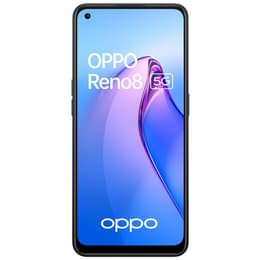
Oppo Reno 8
Oppo Reno 8
Starting at

Refurbished price:A$246.00

Versus A$1,159.00 new

See options

The Samsung Galaxy S21 Plus 5G, released in January 2021, and the Oppo Reno 8, which saw a global rollout starting in July 2022, are both Android smartphones offering distinct experiences. While the Galaxy S21 Plus 5G was positioned as a premium device at its launch, the Oppo Reno 8 targets the upper-mid-range segment. Key differences lie in their display technology, camera configurations, and overall build, catering to varying user preferences.

Scores

Durability

When considering the longevity of these devices, several factors come into play, including their release timelines, software support, and physical resilience.

  • Release Timeline and Software Support: The Galaxy S21 Plus 5G, launched in January 2021, typically receives four major Android operating system updates and five years of security updates from its release. The Oppo Reno 8, released later in July 2022, generally receives two to three major OS updates and three to four years of security updates. This means that while the Reno 8 is a newer device, the Galaxy S21 Plus 5G may offer comparable or even slightly longer remaining major OS update support, depending on when its support cycle concludes relative to the Reno 8's newer starting point. However, the Reno 8 will receive security updates for a longer period from its launch date.
  • Physical Durability: The Galaxy S21 Plus 5G features a robust construction with Gorilla Glass Victus on both its front and back, complemented by an aluminum frame. It also boasts an IP68 rating, indicating significant resistance to dust and water immersion. In contrast, the Oppo Reno 8 uses Gorilla Glass 5 for its front display, a plastic frame, and a glass back. It carries an IP54 rating, offering protection against dust and splashes of water from any direction, but it is not designed for water immersion.
  • Expected Practical Lifespan: Users prioritizing maximum protection against environmental elements and a more premium build might find the Galaxy S21 Plus 5G more aligned with their needs for long-term physical durability. For those who value a device that is newer and will receive security updates for a longer period from its release, the Oppo Reno 8 presents a suitable option, though with less advanced water and dust resistance.

Release year

2021

2022

Operating system

Android

Android

Foldable

No

No

Performance

The performance of a smartphone is crucial for daily tasks, from app usage to demanding multimedia and gaming. Both devices offer capable performance for their respective segments.

  • Processing Power and Responsiveness: The Galaxy S21 Plus 5G is equipped with a processor that handles demanding applications and multitasking smoothly, providing a strong experience for mobile gaming and intensive tasks. The Oppo Reno 8 features a processor designed to manage everyday tasks with ease, and users report it performs well for gaming, often supporting higher graphics settings and frame rates. Both devices offer a responsive user experience for general navigation and app launching.
  • Storage and Multitasking: Both smartphones are available with 128GB or 256GB of internal storage, providing ample space for applications, photos, and media. The Galaxy S21 Plus 5G typically comes with 8GB of RAM, while the Oppo Reno 8 is available in 8GB and 12GB RAM configurations. Higher RAM options in the Reno 8 can contribute to smoother multitasking, allowing more applications to remain active in the background without needing to reload.
  • Battery Performance: The Galaxy S21 Plus 5G houses a 4800 mAh battery, which generally provides sufficient power for a full day of heavy use, with some users experiencing up to two days with lighter usage patterns. The Oppo Reno 8 comes with a 4500 mAh battery, offering solid battery life that reliably lasts through a full day of typical use, and can extend to nearly two days for light users.

Memory (GB)

8 GB

8 GB

Screen quality

The display is a primary interface for smartphone interaction, and both models offer vibrant viewing experiences with some key distinctions.

  • Display Technology and Clarity: The Galaxy S21 Plus 5G features a 6.7-inch Dynamic AMOLED 2X display, offering rich colors, deep blacks, and excellent contrast. The Oppo Reno 8 comes with a 6.43-inch AMOLED display, also providing vibrant visuals. Both displays have a Full HD+ resolution (2400 x 1080 pixels), ensuring sharp text and clear images. The Reno 8, with its slightly smaller screen, has a marginally higher pixel density of 409 ppi compared to the S21 Plus 5G's 394 ppi.
  • Brightness and Refresh Rate: For outdoor visibility, the Galaxy S21 Plus 5G offers a higher peak brightness of 1300 nits, making content easier to view in bright sunlight. The Oppo Reno 8 reaches a peak brightness of 800 nits. The Galaxy S21 Plus 5G features an adaptive 120Hz refresh rate, which provides smoother scrolling and more fluid animations. The Oppo Reno 8 has a 90Hz refresh rate, still offering a noticeably smoother experience than standard 60Hz displays.
  • Viewing Experience: The larger 6.7-inch screen of the Galaxy S21 Plus 5G provides a more expansive canvas for media consumption and multitasking. The 6.43-inch display of the Oppo Reno 8 offers a slightly more compact viewing area, which some users might find easier for one-handed use.

Resolution

1080 x 2400

1080x2400

Audiovisual

Camera capabilities are a significant consideration for many users, and both devices offer distinct photographic strengths.

  • Rear Camera Systems: The Galaxy S21 Plus 5G features a versatile triple-camera setup on its rear, consisting of a 12-megapixel wide-angle lens, a 12-megapixel ultra-wide-angle lens, and a 64-megapixel telephoto lens with 3x hybrid optical zoom. The Oppo Reno 8 also has a triple-camera system, including a 50-megapixel main wide-angle sensor, an 8-megapixel ultra-wide-angle lens, and a 2-megapixel macro lens.
  • Photography Performance: The Galaxy S21 Plus 5G captures detailed images with vibrant colors and impressive dynamic range across various lighting conditions, showing improvements in low-light performance. Its telephoto lens provides effective zoom up to 3x hybrid optical, though quality can diminish beyond that. The Oppo Reno 8's 50-megapixel main sensor performs well, delivering sharp and colorful photos, even in challenging low-light scenarios. However, its ultra-wide and macro lenses are generally considered less capable. Some users have noted that the Reno 8's image processing can sometimes lead to over-processed photos or less precise edge detection in portrait shots.
  • Video Recording and Front Cameras: The Galaxy S21 Plus 5G supports video recording up to 8K resolution at 24 frames per second and 4K at 60 frames per second, with good stabilization features. Its front camera is a 10-megapixel sensor. The Oppo Reno 8 records video up to 4K at 30 frames per second, with electronic image stabilization available at 1080p. It features a higher-resolution 32-megapixel front camera, which generally produces clear selfies.

Miscellaneous

Beyond core features, several practical elements contribute to the overall user experience and daily convenience of a smartphone.

  • Connectivity and Ports: Both devices support 5G connectivity, ensuring access to faster mobile networks where available. The Galaxy S21 Plus 5G includes Wi-Fi 6 and Bluetooth 5.0, while the Oppo Reno 8 features Wi-Fi 6 and a slightly newer Bluetooth 5.3 standard. Both smartphones utilize a USB-C port for charging and data transfer and notably omit a traditional 3.5mm headphone jack.
  • Biometric Security: For secure unlocking, the Galaxy S21 Plus 5G employs an ultrasonic in-display fingerprint sensor, known for its speed and reliability. The Oppo Reno 8 uses an optical in-display fingerprint sensor. Both devices also offer face recognition capabilities.
  • Physical Design and Handling: The Galaxy S21 Plus 5G measures 161.5 x 75.6 x 7.8 mm and weighs 200 grams, offering a substantial feel in hand. The Oppo Reno 8 is slightly more compact and lighter at 160.6 x 73.4 x 7.7 mm and 179 grams, which may appeal to users preferring a less weighty device. The Galaxy S21 Plus 5G features a premium glass and aluminum construction, while the Oppo Reno 8 combines a glass front with a plastic frame and glass back.

Weight

200 oz

200 oz

Screen size (in)

6.7

6,43

Network

5G

5G

SIM card

Physical SIM + eSIM

Dual Physical SIM

Carrier compatibility

Unlocked

Unlocked

The Samsung Galaxy S21 Plus 5G and the Oppo Reno 8 cater to different priorities, reflecting their respective market positions and release timelines. User feedback for the Galaxy S21 Plus 5G often praises its vibrant and bright display, robust build quality with high water resistance, and a versatile camera system, particularly its telephoto capabilities. Some users, however, might find its size substantial. The Oppo Reno 8 is frequently commended for its exceptionally fast charging speeds, reliable battery life for daily use, and a capable main camera that performs well in various conditions. Common criticisms sometimes point to its less impressive secondary cameras and the use of a plastic frame.

Users prioritizing a larger, brighter display with a higher adaptive refresh rate, superior water and dust resistance, and a more comprehensive camera system with optical zoom will likely find the Galaxy S21 Plus 5G well-suited to their needs. This device is a strong choice for those who value a premium build and a former flagship experience. Conversely, users who prioritize rapid charging, a slightly lighter and more compact design, and a strong main camera for everyday photography may lean towards the Oppo Reno 8. It offers a compelling package for those seeking a modern smartphone experience with excellent battery endurance and quick power-ups.

For consumers evaluating these options, considering quality-assured refurbished alternatives can provide an eco-friendly choice, extending the life of these devices and offering a sustainable path to technology ownership.

See all articles

Our recent comparisons