Galaxy S21 5G vs iPhone 14 Plus

Galaxy S21 5G
Galaxy S21 5G
Starting at

Refurbished price:A$318.00

Versus A$1,369.00 new

See options
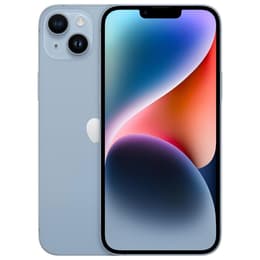
iPhone 14 Plus
iPhone 14 Plus
Starting at

Refurbished price:A$480.00

Versus A$1,249.00 new

See options

Ratings

The Samsung Galaxy S21 5G, released in January 2021, and the iPhone 14 Plus, launched in October 2022, represent distinct approaches to smartphone design and functionality from their respective manufacturers. While both offer robust performance and advanced features, they differ significantly in their operating systems, display technologies, and camera configurations. The Galaxy S21 5G operates on the Android platform, offering a customizable user experience, whereas the iPhone 14 Plus runs on Apple's iOS, known for its integrated ecosystem and streamlined interface.

Scores

Durability

When considering the practical lifespan of these devices, several factors come into play, including their release timelines, software support, and repairability.

  • Release Timeline and Software Support: The Galaxy S21 5G was released in January 2021, while the iPhone 14 Plus followed in October 2022. This difference in launch dates means the iPhone 14 Plus will likely receive software updates for a longer period, as Apple typically provides iOS updates for approximately 5-6 years from a device's release. Samsung also offers several years of Android and security updates for its flagship devices, though the S21 5G, being an older model, is closer to the end of its guaranteed update cycle compared to the iPhone 14 Plus.
  • Repairability: The Galaxy S21 5G has been noted for its relatively good repairability, with some assessments giving it a score of 7.5/10 or 8.2/10, citing ease of disassembly and replaceable parts, though the battery can be challenging to remove due to strong adhesive. The iPhone 14 Plus also features a design that is considered more repair-friendly than some previous iPhone models. Both devices are rated IP68 for water and dust resistance, indicating a similar level of protection against environmental elements.
  • Expected Practical Lifespan: Users can expect both devices to remain functional for several years, with the iPhone 14 Plus potentially offering a slightly longer period of official software support due to its later release. The availability of quality-assured refurbished options for both models further extends their practical lifespan, offering a sustainable choice for consumers.

Release year

2021

2022

Compatible with latest Update

Yes

Yes

Operating system

Android

iOS

Foldable

No

No

Performance

The performance of a smartphone is crucial for daily use, impacting everything from app responsiveness to multitasking capabilities and battery endurance.

  • Processor Capabilities: The iPhone 14 Plus is equipped with a powerful current-generation processor, enabling smooth handling of demanding applications, graphics-intensive games, and efficient multitasking. The Galaxy S21 5G, while featuring a capable processor for its release year, provides a responsive experience for everyday tasks and most applications. Users engaging in heavy gaming or video editing may notice a difference in processing speed and thermal management, with the newer iPhone model offering more headroom for future software demands.
  • Battery Behavior: The iPhone 14 Plus is recognized for its extended battery life, with many users reporting it can comfortably last through a full day of heavy use, and some even achieving multi-day usage on a single charge. The Galaxy S21 5G, with its 4000 mAh battery, generally provides a full day of use for most users, though heavy usage, especially with the 120Hz display enabled, may require more frequent charging.
  • Storage Options and Responsiveness: Both devices offer various internal storage options, typically starting from 128GB, providing ample space for apps, photos, and videos. The overall system responsiveness on both platforms is fluid, with quick app loading times and smooth transitions, though the iPhone 14 Plus's newer hardware may offer a slight edge in sustained peak performance.

Memory (GB)

8 GB

6 GB

Screen quality

The display is a primary interface for smartphone interaction, and both the Galaxy S21 5G and iPhone 14 Plus offer high-quality viewing experiences with distinct characteristics.

  • Display Technology and Resolution: The Galaxy S21 5G features a 6.2-inch Dynamic AMOLED 2X display with a resolution of 1080 x 2400 pixels, offering vibrant colors and deep blacks. The iPhone 14 Plus comes with a larger 6.7-inch Super Retina XDR OLED display, providing a resolution of 1284 x 2778 pixels, also known for its excellent contrast and color accuracy. Both utilize OLED technology, which contributes to their visual quality.
  • Refresh Rate and Brightness: A key difference lies in the refresh rate; the Galaxy S21 5G boasts a 120Hz adaptive refresh rate, resulting in smoother scrolling and more fluid animations. In contrast, the iPhone 14 Plus maintains a standard 60Hz refresh rate. For brightness, the iPhone 14 Plus offers up to 800 nits typical brightness and 1200 nits peak brightness for HDR content, ensuring good visibility in various lighting conditions. The Galaxy S21 5G also offers high peak brightness, making it suitable for outdoor use.
  • Screen Size and Viewing Experience: The iPhone 14 Plus provides a larger screen area at 6.7 inches compared to the Galaxy S21 5G's 6.2 inches, which can enhance the viewing experience for media consumption and productivity tasks. The larger display of the iPhone 14 Plus makes it well-suited for users who prioritize screen real estate.

Resolution

1080 x 2400

1284 x 2778

Screen type

Dynamic AMOLED 2X

Super Retina XDR OLED

Audiovisual

Both smartphones offer capable camera systems, designed to capture high-quality photos and videos, though with different hardware configurations and software processing.

  • Camera System Configuration: The Galaxy S21 5G features a versatile triple-lens rear camera setup, including a 12MP main sensor, a 64MP telephoto lens with 3x hybrid optical zoom, and a 12MP ultrawide lens. The iPhone 14 Plus comes with a dual-camera system, comprising a 12MP main camera with a larger sensor for improved low-light performance and a 12MP ultrawide camera. The iPhone 14 Plus does not include a dedicated telephoto lens.
  • Photography Performance: The Galaxy S21 5G is praised for its sharp photos, effective zoom capabilities up to 10x, and features like Director's View for video recording. The iPhone 14 Plus offers strong performance in various lighting conditions, with its main camera excelling in low-light scenarios due to a larger sensor and faster aperture. Its front-facing camera also benefits from autofocus and a faster aperture.
  • Video Recording and Audio: Both devices are capable of recording high-quality video, with the iPhone 14 Plus supporting 4K Dolby Vision video recording and features like Cinematic mode. The Galaxy S21 5G can record up to 8K video and offers a Pro Video mode for advanced control. Both provide good microphone quality for calls and recording, and their speaker outputs are suitable for media consumption.

Main camera

12 megapixels

12 megapixels

Front camera

10 megapixels

12 megapixels

Miscellaneous

Beyond core features, several practical elements contribute to the overall user experience and device utility.

  • Connectivity Options: Both the Galaxy S21 5G and iPhone 14 Plus support 5G connectivity, ensuring access to faster mobile networks where available. They also feature Wi-Fi 6 and Bluetooth 5.x for robust wireless connections. The iPhone 14 Plus also includes an Ultra Wideband chip for spatial awareness.
  • Port Types and Sensors: The Galaxy S21 5G utilizes a USB-C port for charging and data transfer, a widely adopted standard. The iPhone 14 Plus, however, uses Apple's proprietary Lightning port. For authentication, the Galaxy S21 5G features an in-display ultrasonic fingerprint sensor, while the iPhone 14 Plus relies on Face ID for secure facial recognition.
  • Weight, Dimensions, and Build Materials: The Galaxy S21 5G is more compact and lighter, weighing 169g and measuring 151.7 x 71.2 x 7.9 mm. It features a glass front (Gorilla Glass Victus), an aluminum frame, and a plastic back. The iPhone 14 Plus is larger and heavier at 203g and 160.8 x 78.1 x 7.8 mm, featuring a Ceramic Shield front, glass back, and an aluminum design.

Weight

169 oz

203 oz

Screen size (in)

6.2

6,7

Network

5G

5G

SIM card

Physical SIM + eSIM

Physical SIM + eSIM

Carrier compatibility

Unlocked

Unlocked

Connector

USB-C

Lightning

The Samsung Galaxy S21 5G and iPhone 14 Plus cater to different user preferences, each excelling in specific areas. User sentiment often highlights the iPhone 14 Plus's exceptional battery life and large display as significant advantages, making it a strong contender for those who prioritize extended usage and immersive viewing. Its camera system is praised for its low-light capabilities and video features like Cinematic mode. However, some users note the 60Hz display as a drawback compared to many Android counterparts.

The Galaxy S21 5G, on the other hand, is often appreciated for its 120Hz display, offering a smoother scrolling experience, and its versatile triple-camera setup, including a telephoto lens for optical zoom. Some users, however, have expressed mixed opinions on its camera performance compared to other flagships. Its more compact size and USB-C port are also practical benefits for many.

Users prioritizing a large screen, long battery life, and a streamlined iOS experience with strong camera performance, particularly in low light, may find the iPhone 14 Plus well-suited to their needs. Conversely, those who value a high refresh rate display, a dedicated telephoto camera, a more compact form factor, and the flexibility of the Android ecosystem might lean towards the Galaxy S21 5G. Both devices offer robust performance for daily tasks and media consumption. For those seeking an eco-friendly and quality-assured alternative, considering refurbished options for either model can be a practical and sustainable choice.

See all articles

Our recent comparisons