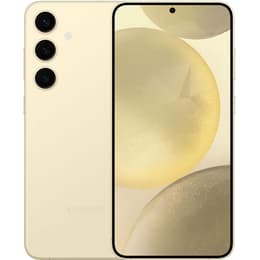

Galaxy S21 5G vs Galaxy S24

Galaxy S21 5G
Galaxy S21 5G
Starting at

Refurbished price:A$318.00

Versus A$1,369.00 new

See options
Galaxy S24
Galaxy S24
Starting at

Refurbished price:A$622.00

Versus A$1,841.10 new

See options

Ratings

The Samsung Galaxy S21 5G, released in January 2021, and the Samsung Galaxy S24, launched in January 2024, represent different generations within Samsung's flagship smartphone series. While both devices offer a premium Android experience, the Galaxy S24 introduces significant advancements in software support, processing capabilities, and display technology. Both run on the Android operating system, but the S24 benefits from a much longer commitment to future updates.

Scores

Durability

The practical lifespan of a smartphone is heavily influenced by its software support and physical durability. The Galaxy S21 5G, released in 2021, has reached the end of its major software update cycle, with its last Android OS update being Android 15 (One UI 7) in the first half of 2025, and security updates concluding in November 2025. In contrast, the Galaxy S24, launched in 2024, comes with an industry-leading commitment of seven years of Android OS and security updates, extending its support until 2031.

  • Software Longevity: The Galaxy S24 offers substantially longer software support, ensuring it receives major Android updates and security patches for seven years from its release, compared to the Galaxy S21 5G's four years of OS updates and five years of security updates.
  • Physical Durability: Both devices feature an IP68 rating for dust and water resistance. The Galaxy S21 5G utilizes Gorilla Glass Victus for screen protection and a plastic back, while the Galaxy S24 upgrades to Gorilla Glass Victus 2 for both the front and back, and incorporates an Armor Aluminum frame, potentially offering enhanced resistance to drops and scratches.
  • Repairability: While specific repairability scores can vary, the Galaxy S21's plastic back can make it somewhat easier to open for repairs compared to glass-backed phones. The Galaxy S24's construction with Gorilla Glass Victus 2 on both sides and an Armor Aluminum frame suggests a robust build, but may present similar repair challenges to other modern glass-sandwich designs.

Release year

2021

2024

Compatible with latest Update

Yes

Yes

Operating system

Android

Android

Foldable

No

No

Performance

When evaluating performance, both the Galaxy S21 5G and Galaxy S24 are designed to handle daily tasks efficiently, but the newer model offers a noticeable upgrade in raw processing power and efficiency.

  • Processing Power: The Galaxy S24 features a significantly newer generation processor, which translates to faster app loading times, smoother multitasking, and more responsive performance in demanding applications and games. The Galaxy S21 5G, while still capable for everyday use, may show its age with more intensive tasks or in future applications.
  • Multitasking and Responsiveness: Both devices come with 8GB of RAM, providing ample capacity for switching between multiple applications. However, the Galaxy S24's more advanced processor architecture and optimized software contribute to a more fluid and immediate user experience overall.
  • Battery Behavior: Both models are equipped with a 4000 mAh battery. User experiences with the Galaxy S21 5G generally report it lasting a full day with moderate use, though heavy usage, especially with a 120Hz display, can lead to more frequent charging. The Galaxy S24, despite having the same battery capacity, benefits from a more power-efficient processor and display technology, which can result in improved battery longevity for many users.

Memory (GB)

8 GB

12 GB

Screen quality

The display is a primary interaction point, and both the Galaxy S21 5G and Galaxy S24 offer high-quality viewing experiences, though the newer model brings enhancements in brightness and adaptive refresh rate.

  • Display Technology and Clarity: Both devices feature a Dynamic AMOLED 2X display with a Full HD+ resolution (1080 x 2400 pixels for S21 5G, 1080 x 2340 pixels for S24), providing vibrant colors and deep blacks. The pixel density is similar, ensuring sharp text and images for typical viewing distances.
  • Brightness and Outdoor Visibility: The Galaxy S24 offers a significantly higher peak brightness of up to 2600 nits, making it considerably easier to view content clearly in bright outdoor conditions compared to the Galaxy S21 5G.
  • Refresh Rate and Smoothness: Both phones feature a 120Hz refresh rate for smooth scrolling and animations. The Galaxy S24, however, introduces an adaptive refresh rate that can scale down to 1Hz, contributing to better power efficiency when static content is displayed. The Galaxy S21 5G's adaptive refresh rate typically ranges from 48Hz to 120Hz.

Resolution

1080 x 2400

1080x2340

Screen type

Dynamic AMOLED 2X

Dynamic LTPO AMOLED 2X

Audiovisual

The camera systems on both the Galaxy S21 5G and Galaxy S24 are capable of capturing high-quality images and videos, with the S24 introducing refinements and a higher resolution main sensor.

  • Rear Camera System: The Galaxy S21 5G features a triple camera setup with a 12 MP main sensor, a 12 MP ultrawide, and a 64 MP telephoto lens with 3x hybrid optical zoom. The Galaxy S24 also has a triple camera system, upgrading to a 50 MP main sensor, a 12 MP ultrawide, and a 10 MP telephoto lens with 3x optical zoom. The S24's larger main sensor generally results in better detail and low-light performance.
  • Photography Performance: Users generally praise the Galaxy S21 5G's camera for its versatility and good results in various conditions, with strong stabilization and natural colors. The Galaxy S24 builds on this with improved image processing, offering more natural photo looks and better color balance, though some users have noted that low-light performance can still be an area for improvement.
  • Video Recording and Audio: Both devices are capable of recording high-resolution video, including 8K. The Galaxy S24 offers enhanced video capabilities and features like Instant Slow-mo. Microphone quality for calls and recording is generally clear on both, and speaker output provides a good experience for media consumption.

Main camera

12 megapixels

50 megapixels

Front camera

10 megapixels

12 megapixels

Miscellaneous

Beyond the core features, several practical elements differentiate these two Galaxy smartphones, impacting daily usability and connectivity.

  • Connectivity Options: Both devices support 5G connectivity. The Galaxy S24 features newer Wi-Fi 6E and Bluetooth 5.3 standards, offering potentially faster and more stable wireless connections compared to the Galaxy S21 5G's Wi-Fi 6 and Bluetooth 5.0.
  • Physical Design and Handling: The Galaxy S21 5G has dimensions of 151.7 x 71.2 x 7.9 mm and weighs 169g. The Galaxy S24 is slightly more compact and lighter at 147 x 70.6 x 7.6 mm and 167g. The S21 5G features a plastic back, while the S24 uses glass on both the front and back, contributing to a different in-hand feel.
  • Ports and Sensors: Both phones utilize a USB-C port for charging and data transfer. Both also feature an in-display fingerprint sensor for secure unlocking. The Galaxy S24 series also incorporates recycled materials in its construction, such as recycled cobalt and rare earth elements, and recycled steel and aluminum in various components, making it a more sustainable choice.

Weight

169 oz

167 oz

Screen size (in)

6.2

6.2

Network

5G

5G

SIM card

Physical SIM + eSIM

Physical SIM + eSIM

Carrier compatibility

Unlocked

Unlocked

The Samsung Galaxy S21 5G and Galaxy S24 both deliver a robust smartphone experience, but cater to slightly different priorities. User feedback for the Galaxy S21 5G often highlights its capable camera system, smooth performance for its time, and comfortable form factor. Some common criticisms have included its battery life under heavy use and the plastic back material compared to its more premium siblings.

For the Galaxy S24, users frequently praise its significantly extended software support, brighter and more efficient display, and overall refined performance. While its camera system is generally well-regarded, some users have expressed mixed opinions on low-light photography and battery life, particularly with the Exynos variant in some regions.

Users prioritizing long-term software updates and a device that will remain current for many years may find the Galaxy S24 to be a more suitable option. Its enhanced display brightness and more efficient processor also appeal to those who spend a lot of time outdoors or demand the snappiest performance. Conversely, users who are content with a device that has reached the end of its major software support but still offers solid performance for everyday tasks, and who might appreciate a more accessible entry point into the Galaxy ecosystem, could consider the Galaxy S21 5G. Both devices are available as quality-assured refurbished options, providing an eco-friendly alternative for consumers.

See all articles

Our recent comparisons