Galaxy S20 FE vs Nokia X30

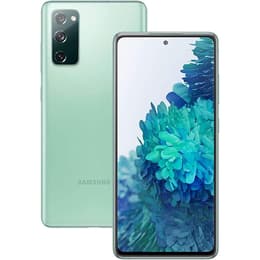
Galaxy S20 FE
Galaxy S20 FE
Starting at

Refurbished price:A$268.29

Versus A$578.00 new

See options
Nokia X30
Nokia X30
Starting at

Refurbished price:A$299.00

Versus A$965.00 new

See options

The Samsung Galaxy S20 FE, released in October 2020, and the Nokia X30, launched in September 2022, are both Android smartphones offering distinct experiences. While the Galaxy S20 FE aimed to deliver a flagship-like experience with a focus on performance and camera versatility from its era, the Nokia X30 emphasizes software longevity, sustainable design, and reliable everyday functionality. Both devices run on the Android operating system, but their update policies and hardware philosophies present different propositions for users.

Scores

Durability

The practical lifespan of a smartphone is significantly influenced by its release timeline, software support, and physical durability. These two devices offer different approaches to longevity.

  • Release Timeline and OS Support: The Galaxy S20 FE, launched in late 2020, originally ran Android 10 and received major OS updates up to Android 13, with security updates expected to conclude around late 2024 or early 2025. In contrast, the Nokia X30, released in late 2022 with Android 12, is promised three major OS upgrades (up to Android 15) and three years of monthly security updates, offering a longer period of official software support.
  • Physical Durability: The Galaxy S20 FE features Gorilla Glass 3 for screen protection and boasts an IP68 rating for dust and water resistance, indicating it can withstand submersion in up to 1.5 meters of freshwater for up to 30 minutes. The Nokia X30 comes with the more advanced Gorilla Glass Victus for enhanced screen durability and an IP67 rating, meaning it is protected against dust and can be submerged in up up to 1 meter of water for 30 minutes.
  • Expected Practical Lifespan: Users prioritizing extended software updates and a newer generation of screen protection might find the Nokia X30 more appealing for long-term use. However, the Galaxy S20 FE's robust build and initial flagship-tier components still offer a durable device, especially as a quality-assured refurbished option.

Release year

2020

2022

Compatible with latest Update

No

No

Operating system

Android

Android

Foldable

No

No

Performance

Performance is a key differentiator, with each device catering to different user expectations regarding speed and responsiveness.

  • Processor Capabilities: The Galaxy S20 FE is equipped with a processor that, at its release, was considered high-tier, capable of handling demanding applications, intensive gaming, and significant multitasking with smooth operation. The Nokia X30 utilizes a mid-range processor, which provides reliable performance for daily tasks, general app usage, and moderate multitasking, though it may not match the raw power for graphically intensive games or very heavy workloads.
  • Storage and RAM: Both devices offer configurations with 6GB or 8GB of RAM, which is sufficient for managing multiple applications simultaneously. The Galaxy S20 FE provides 128GB or 256GB of internal storage and includes a microSD card slot for expandable storage, offering flexibility for users with large media libraries. The Nokia X30 also comes with 128GB or 256GB storage options but does not support microSD card expansion.
  • Battery Behavior: The Galaxy S20 FE houses a 4500 mAh battery, designed to support its more powerful components and vibrant display, often providing a full day of use for many users. The Nokia X30 features a 4200 mAh battery, which, combined with its more power-efficient processor and 90Hz display, typically delivers a full day of usage for average users.

Memory (GB)

6 GB

8 GB

Screen quality

The visual experience on both smartphones is delivered through AMOLED technology, but with notable differences in refresh rate and brightness.

  • Display Technology and Resolution: Both the Galaxy S20 FE and the Nokia X30 feature AMOLED displays, providing vibrant colors and deep blacks. They both offer a Full HD+ resolution of 1080 x 2400 pixels, resulting in sharp and clear visuals for everyday viewing, web browsing, and media consumption.
  • Refresh Rate and Brightness: The Galaxy S20 FE boasts a 120Hz refresh rate, which contributes to exceptionally smooth scrolling and a more fluid user interface experience. It also offers a higher peak brightness of up to 1200 nits, making it highly visible even in bright outdoor conditions. The Nokia X30 features a 90Hz refresh rate, providing a smoother experience than standard 60Hz displays, and has a peak brightness of 700 nits, which is adequate for most indoor and outdoor scenarios.
  • Screen Size and Viewing Experience: The Galaxy S20 FE has a slightly larger 6.5-inch display, while the Nokia X30 offers a 6.43-inch screen. Both sizes provide an immersive viewing experience, with the Galaxy S20 FE offering a marginally larger canvas and a brighter, smoother display for dynamic content.

Resolution

1080 x 2400

1080 x 2400

Screen type

Super AMOLED

AMOLED

Audiovisual

Both smartphones offer capable camera systems, but they are designed with different strengths and features.

  • Rear Camera System: The Galaxy S20 FE features a versatile triple-camera setup on the rear, including a 12 MP wide lens with optical image stabilization (OIS), an 8 MP telephoto lens with 3x optical zoom and OIS, and a 12 MP ultrawide lens. This configuration allows for a wide range of photographic options, including detailed zoomed-in shots. The Nokia X30 comes with a dual-camera system, comprising a 50 MP wide main lens with OIS and a 13 MP ultrawide lens. The higher megapixel count on the X30's main sensor can capture more detail in well-lit conditions.
  • Photography Performance: The Galaxy S20 FE is noted for its strong overall image quality, especially its telephoto capabilities and consistent performance across its lenses. The Nokia X30's main camera performs well in good lighting, producing clear images, and includes features like Night mode 2.0 for improved low-light performance.
  • Video Recording and Front Camera: The Galaxy S20 FE supports video recording up to 4K resolution at 60 frames per second (fps) and features a 32 MP front-facing camera. The Nokia X30 records video at up to 1080p resolution at 30 or 60 fps and has a 16 MP front camera.

Main camera

12 megapixels

50 megapixels

Front camera

32 megapixels

16 megapixels

Miscellaneous

Beyond core features, several practical elements contribute to the overall user experience and device utility.

  • Connectivity Options: Both devices support 5G connectivity, enabling faster mobile data speeds where available. They also include Wi-Fi 6 for enhanced wireless internet performance and Bluetooth for connecting accessories, with the Nokia X30 featuring the slightly newer Bluetooth 5.1 compared to the Galaxy S20 FE's Bluetooth 5.0.
  • Port Types and Sensors: Both smartphones utilize a USB-C port for charging and data transfer and omit a traditional 3.5mm headphone jack. For biometric security, both devices incorporate an under-display optical fingerprint sensor.
  • Build Materials and Handling: The Galaxy S20 FE features a plastic back and an aluminum frame, offering a balance of durability and a comfortable feel. The Nokia X30 emphasizes sustainability with a frame made from 100% recycled aluminum and a back cover made from 65% recycled plastic. In terms of physical dimensions, the Nokia X30 is slightly more compact and lighter at 158.9 x 73.2 x 8 mm and 185g, compared to the Galaxy S20 FE's 159.8 x 74.5 x 8.4 mm and 190g, potentially offering a more manageable feel for some users.

Weight

190 oz

185 oz

Screen size (in)

6.5

6.43

Network

4G

5G

SIM card

Physical SIM

Dual Physical SIM

Carrier compatibility

Unlocked

Unlocked

User feedback for the Samsung Galaxy S20 FE often highlights its strong performance for its generation, versatile camera system with optical zoom, and vibrant 120Hz AMOLED display as key strengths. Some users appreciated its plastic back for perceived durability and less fragility compared to glass. Criticisms sometimes pointed to the regional variations in processors (Exynos vs. Snapdragon) and the plastic build feeling less premium to some.

The Nokia X30 is frequently praised for its commitment to software updates, offering a clean Android experience and extended longevity. Its eco-friendly construction using recycled materials and its compact design are also common points of positive feedback. Some users have noted that its mid-range processor, while capable for daily use, may not satisfy those seeking top-tier gaming or heavy multitasking performance, and its camera system, while good, lacks the telephoto versatility of some competitors.

Users prioritizing robust performance for demanding applications, a highly versatile camera with optical zoom, and a brighter, smoother display may find the Samsung Galaxy S20 FE well-suited to their needs. Conversely, users who value long-term software support, a more compact and sustainably built device, and reliable everyday performance will likely lean towards the Nokia X30. Both devices offer compelling features, and considering a quality-assured refurbished option for either can provide an eco-friendly alternative for consumers.


See all articles

Our recent comparisons