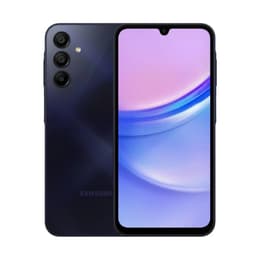


Galaxy A15 5G vs Motorola Edge 30 Neo

Galaxy A15 5G
Galaxy A15 5G
Starting at

Refurbished price:A$257.00

Versus A$329.00 new

See options
Motorola Edge 30 Neo
Starting at

Refurbished price:A$306.00

Versus A$414.00 new

See options

Ratings

The Samsung Galaxy A15 5G, released in late 2023, and the Motorola Edge 30 Neo, launched in late 2022, are both smartphones designed for everyday use. While the Galaxy A15 5G focuses on extended software support and a large battery, the Edge 30 Neo emphasizes a compact design and faster charging capabilities. Both devices run on the Android operating system, offering a familiar user experience with their respective manufacturer's customizations.

Scores

Durability

The practical lifespan of a smartphone is significantly influenced by its release date and the manufacturer's commitment to software updates.

  • Release Timeline: The Samsung Galaxy A15 5G was released in December 2023, making it a newer device compared to the Motorola Edge 30 Neo, which launched in September 2022. This difference in release dates impacts their remaining support windows.
  • OS Support Duration: Samsung has a strong commitment to software longevity for the Galaxy A15 5G, promising four major Android OS updates and five years of security patches. This means the A15 5G is expected to receive updates up to Android 18 and security patches until 2028. In contrast, the Motorola Edge 30 Neo was promised two years of OS updates and three years of security patches from its launch, meaning its major OS updates likely concluded with Android 14, and security updates ended around September 2025.
  • Practical Lifespan: Users prioritizing long-term software support and security will find the Galaxy A15 5G offers a considerably longer practical lifespan due to Samsung's extended update policy. The Edge 30 Neo, while still functional, will receive fewer future software enhancements and security updates.

Release year

2023

2022

Operating system

Android

Android

Foldable

No

No

Performance

Both devices are equipped to handle daily smartphone tasks, but their underlying hardware provides different experiences in demanding situations.

  • Everyday Responsiveness: The Galaxy A15 5G, powered by its current-generation processor, offers reliable performance for common applications, web browsing, and social media. Users generally report a smooth experience for typical daily usage. The Motorola Edge 30 Neo, featuring a slightly older processor, also provides a snappy feel for everyday tasks and UI navigation, partly due to its high screen refresh rate.
  • Multitasking and Demanding Apps: For more intensive use, such as running multiple applications simultaneously or engaging in graphically rich games, the Galaxy A15 5G maintains consistent performance, though some users note occasional slight delays in app loading or unlocking. The Edge 30 Neo handles light gaming and multitasking well, but its performance for high-end games or very demanding applications may be less robust compared to devices with more powerful chipsets.
  • Storage and Battery Behavior: The Galaxy A15 5G offers various storage and RAM configurations, including options up to 256GB storage and 8GB RAM, with expandable storage via microSDXC, providing flexibility for users with large media libraries. It features a substantial 5000 mAh battery, which typically provides extended usage, often lasting through a full day of heavy use. The Motorola Edge 30 Neo comes with 128GB or 256GB of non-expandable storage and 8GB of RAM. Its 4020 mAh battery, while smaller, is complemented by very fast 68W wired charging, allowing for quick power top-ups.

Memory (GB)

8 GB

8 GB

Screen quality

The visual experience on both smartphones is a key differentiator, with each offering distinct display technologies and characteristics.

  • Display Technology and Clarity: The Samsung Galaxy A15 5G features a 6.5-inch Super AMOLED display, known for its deep blacks and vibrant colors, providing a rich viewing experience. It has a resolution of 1080 x 2340 pixels, ensuring clear and sharp visuals for content consumption. The Motorola Edge 30 Neo sports a slightly smaller 6.28-inch P-OLED display with a resolution of 1080 x 2400 pixels, also delivering vibrant colors and good clarity.
  • Brightness and Refresh Rate: The Galaxy A15 5G's display offers a 90Hz refresh rate for smoother scrolling and animations, and a peak brightness of 800 nits in High Brightness Mode, making it adequately visible in various lighting conditions, including outdoors. The Edge 30 Neo excels with a 120Hz refresh rate, providing an even smoother visual experience, and a peak brightness of 1000 nits, which contributes to exceptional outdoor visibility.
  • Viewing Experience: While both offer excellent display quality for their class, the Edge 30 Neo's higher refresh rate and peak brightness may appeal more to users who prioritize fluid motion and outdoor usability. The Galaxy A15 5G's AMOLED panel still delivers a strong visual experience with good color reproduction.

Resolution

1080x2340

1080 x 2400

Audiovisual

The camera systems on these devices are designed for everyday photography, with each offering a different set of capabilities.

  • Rear Camera Setup: The Samsung Galaxy A15 5G features a triple-camera system with a 50 MP main sensor, a 5 MP ultrawide lens, and a 2 MP macro lens. The main camera uses pixel binning to produce 12MP images with good detail and slightly oversaturated colors. The Motorola Edge 30 Neo has a dual-camera setup, including a 64 MP main sensor with Optical Image Stabilization (OIS) and a 13 MP ultrawide lens that also functions for macro shots. The main camera on the Edge 30 Neo is noted for producing natural colors and good detail.
  • Low-Light and Video Performance: In challenging lighting conditions, the Galaxy A15 5G's main camera performs competently, though photos may appear a little too dark with average detail. Video recording on the A15 5G is capped at 1080p at 30 frames per second. The Edge 30 Neo's main camera, with OIS and larger pixels, theoretically offers improved low-light performance and reduced noise. It supports video recording at 1080p at 30 or 60 frames per second, and even 120 frames per second in some modes.
  • Audio and Media Consumption: Both devices offer a satisfactory media consumption experience. The Galaxy A15 5G includes a 3.5mm headphone jack, which is convenient for wired audio accessories. The Edge 30 Neo features stereo speakers with Dolby Atmos certification, providing an immersive audio experience, but it lacks a 3.5mm headphone jack.

Miscellaneous

Beyond core features, several practical elements contribute to the overall user experience and daily convenience of these smartphones.

  • Connectivity and Ports: Both the Galaxy A15 5G and Motorola Edge 30 Neo support 5G connectivity for faster mobile data speeds. The A15 5G includes Wi-Fi 5 (ac) and Bluetooth 5.3, along with a USB-C 2.0 port and a 3.5mm headphone jack. The Edge 30 Neo features Wi-Fi 6 (ax) and Bluetooth 5.1, offering slightly newer Wi-Fi standards, and a USB-C 2.0 port, but it omits the 3.5mm headphone jack.
  • Biometrics and Sensors: The Galaxy A15 5G incorporates a side-mounted fingerprint sensor for secure unlocking. The Edge 30 Neo utilizes an in-display optical fingerprint sensor, which is often considered a more modern placement. Both devices also offer face recognition for unlocking.
  • Design and Handling: The Galaxy A15 5G has dimensions of 160.1 x 76.8 x 8.4 mm and weighs 200g, featuring a glass front and a plastic back and frame. It feels sturdy in hand, though its build is primarily plastic. The Motorola Edge 30 Neo is more compact and lighter at 152.9 x 71.2 x 7.8 mm and 155g, making it comfortable to hold and pocket-friendly. It also features a glass front (Gorilla Glass 3) with a plastic frame and back.

Weight

200 oz

155 oz

Screen size (in)

6.5

6.28

Network

5G

5G

SIM card

Physical SIM

Dual Physical SIM

Carrier compatibility

Unlocked

Unlocked

The Samsung Galaxy A15 5G and Motorola Edge 30 Neo cater to slightly different user preferences, each bringing distinct strengths to the table.

Users frequently praise the Galaxy A15 5G for its impressive software update commitment, ensuring a longer period of security and feature enhancements. Its large battery capacity is also a common highlight, providing extended usage times. Some criticisms point to its plastic build and performance that, while competent for daily tasks, might not satisfy users seeking the fastest experience for demanding applications.

The Motorola Edge 30 Neo is often lauded for its compact and lightweight design, making it easy to handle and carry. Its vibrant P-OLED display with a high refresh rate and very fast wired charging are also frequently mentioned as strong positives. However, a common concern among users is its shorter software update policy compared to some competitors, and its camera performance in challenging conditions is sometimes noted as average.

Users prioritizing long-term software support and maximum battery life may find the Samsung Galaxy A15 5G well-suited to their needs. Its commitment to updates provides peace of mind for several years. Conversely, users who value a compact form factor, a very smooth display, and rapid charging capabilities might lean towards the Motorola Edge 30 Neo. Both devices offer a solid Android experience, and choosing between them often comes down to these specific priorities. For those considering either model, exploring quality-assured refurbished options can be an eco-friendly alternative to extend the life cycle of these devices.


See all articles

Our recent comparisons