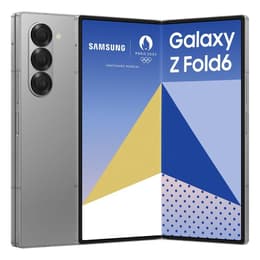

Galaxy S25 Ultra vs Galaxy Z Fold6

Galaxy S25 Ultra
Galaxy S25 Ultra
Starting at

Refurbished price:A$1,106.00

Versus A$2,149.00 new

See options
Galaxy Z Fold6
Galaxy Z Fold6
Starting at

Refurbished price:A$1,088.24

Versus A$2,749.00 new

See options

The Samsung Galaxy S25 Ultra (released February 2025) and the Samsung Galaxy Z Fold6 (released July 2024) represent distinct approaches to premium smartphone design. While the S25 Ultra offers a traditional, high-performance slab experience, the Z Fold6 introduces a unique foldable form factor, transforming from a compact phone into a larger tablet-like display. These devices cater to different user priorities, primarily differing in their display configurations and overall physical design.

Scores

Durability

Both the Galaxy S25 Ultra and the Galaxy Z Fold6 are designed for extended usability, benefiting from Samsung's commitment to long-term software support.

  • Software Longevity: The Galaxy S25 Ultra, launched with Android 15, is guaranteed to receive seven generations of Android OS upgrades and seven years of security updates, extending its software support through 2032. The Galaxy Z Fold6, released with Android 14, also offers seven years of OS and security updates, ensuring a comparable lifespan for software functionality and security.
  • Physical Durability: The S25 Ultra features a robust titanium frame and Gorilla Glass Armor 2 on both its front and back, contributing to its IP68 dust and water resistance. The Z Fold6, with its foldable design, utilizes an enhanced Armor Aluminum frame and Gorilla Glass Victus 2 for its cover screen and back panel, alongside Ultra-Thin Glass for its inner display. It carries an IP48 rating, indicating resistance to dust and water, though some user reports suggest the hinge may be susceptible to dust ingress over time.
  • Repairability Considerations: The traditional design of the S25 Ultra generally offers a more straightforward repair process compared to the complex internal structure of a foldable device. The Z Fold6's foldable screen, while improved, remains a more delicate component than a standard smartphone display.

Release year

2025

2024

Operating system

Android

Android

Foldable

No

Yes

Performance

Both devices are equipped with high-end processors, delivering robust performance for demanding applications and multitasking.

  • Processing Power: Both the Galaxy S25 Ultra and the Galaxy Z Fold6 are powered by the Qualcomm Snapdragon 8 Elite for Galaxy processor, a chipset optimized for Samsung devices. This ensures smooth operation across various tasks, from intensive gaming to complex productivity applications.
  • Multitasking Capabilities: The S25 Ultra typically comes with 12GB or 16GB of RAM, providing ample memory for running numerous applications simultaneously without slowdowns. The Z Fold6 is equipped with 12GB of RAM, which, combined with its large foldable display, facilitates efficient multitasking, allowing users to run multiple apps side-by-side.
  • Storage Options: Both models offer a range of internal storage configurations, including 256GB, 512GB, and 1TB, catering to users with varying storage needs for apps, media, and documents.
  • Battery Behavior: The S25 Ultra houses a 5000mAh battery, which generally provides extended usage, often lasting through a full day of heavy use. The Z Fold6 features a 4400mAh battery, which, despite the dual-screen setup, is optimized to provide reliable power for a full day of mixed usage, though intensive use of the larger inner display may require more frequent charging.

Memory (GB)

12 GB

12 GB

Screen quality

The display experience is a primary differentiator between these two Samsung flagship devices, offering distinct advantages based on user preference.

  • Display Technology and Clarity: The Galaxy S25 Ultra features a 6.9-inch Dynamic LTPO AMOLED 2X display with a resolution of 3120 x 1440 pixels, delivering sharp images and vibrant colors. The Galaxy Z Fold6 offers a dual-screen setup: a 6.3-inch Dynamic AMOLED 2X cover display (2376 x 968 pixels) and a 7.6-inch foldable Dynamic AMOLED 2X main display (2160 x 1856 pixels). Both screens provide excellent clarity and color reproduction.
  • Brightness and Refresh Rate: Both devices boast a 120Hz adaptive refresh rate, ensuring smooth scrolling and responsive interactions. They also achieve a peak brightness of 2600 nits, making them highly visible even in bright outdoor conditions.
  • Viewing Experience: The S25 Ultra provides a large, immersive, traditional smartphone display ideal for media consumption and productivity. The Z Fold6's main foldable screen offers a tablet-like experience, enhancing multitasking, content viewing, and digital note-taking, while its cover screen provides a convenient, compact phone experience.

Resolution

1440x3120

1856 x 2160

Audiovisual

Both smartphones offer advanced camera systems, but with different strengths and capabilities tailored to their respective designs.

  • Rear Camera Systems: The Galaxy S25 Ultra features a versatile quad-camera setup, including a 200MP wide-angle main sensor, a 50MP ultrawide lens, a 10MP telephoto lens with 3x optical zoom, and a 50MP periscope telephoto lens with 5x optical zoom. This configuration provides extensive zoom capabilities and high-resolution imaging. The Galaxy Z Fold6 has a triple rear camera system, comprising a 50MP wide-angle main lens, a 12MP ultrawide lens, and a 10MP telephoto lens with 3x optical zoom.
  • Photography Performance: The S25 Ultra excels in detailed photography, offering enhanced low-light performance and advanced image processing, including a Quad Tele System for flexible optical zoom. The Z Fold6's main camera delivers good image quality with natural colors, though its ultrawide camera may produce noisier results in low light.
  • Video Recording: Both devices support video recording at up to 8K resolution at 30 frames per second from their main cameras, providing high-quality video capture. The S25 Ultra also offers features like 4K 30fps HDR video recording using two cameras simultaneously and log format video.
  • Front-Facing Cameras: The S25 Ultra includes a 12MP front-facing camera. The Z Fold6 features a 10MP front-facing camera on its cover screen and a 4MP under-display camera on its main screen, suitable for video calls and selfies.

Miscellaneous

Beyond core performance, several practical features and design elements distinguish these two premium Samsung smartphones.

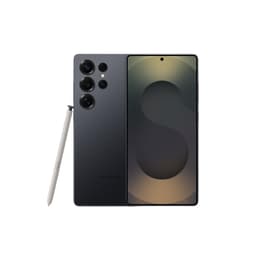
  • S Pen Integration: The Galaxy S25 Ultra features an integrated S Pen, allowing for seamless note-taking, drawing, and various productivity tasks directly on the device. While the S Pen on the S25 Ultra no longer supports Bluetooth-dependent Air Actions, it retains core functionalities like screen-off memos and quick notes. The Galaxy Z Fold6 supports the S Pen Pro and S Pen Fold Edition, but these are external accessories and the device does not have a built-in slot for storage.
  • Connectivity and Ports: Both devices offer modern connectivity options, including 5G, the latest Wi-Fi standards (Wi-Fi 7 for S25 Ultra), and Bluetooth. Both utilize a USB-C port for charging and data transfer, and neither includes a traditional 3.5mm headphone jack.
  • Biometric Security: Both smartphones incorporate advanced biometric security features, including an ultrasonic under-display fingerprint scanner and facial recognition for secure unlocking and authentication.
  • Physical Design and Handling: The S25 Ultra maintains a traditional slab form factor, weighing 218g and measuring 8.2mm thick. Its design emphasizes a premium feel and a large, uninterrupted display. The Z Fold6, at 239g, is slightly heavier and thicker when folded (12.1mm) but becomes very thin when unfolded (5.6mm). Its unique folding mechanism offers a compact phone experience when closed and an expansive tablet experience when open, impacting one-handed use and pocketability.

Weight

218 oz

239 oz

Screen size (in)

6.9

7.6

Network

5G

5G

SIM card

Physical SIM + eSIM

Dual Physical SIM + eSIM

Carrier compatibility

Unlocked

Unlocked

Choosing between the Galaxy S25 Ultra and the Galaxy Z Fold6 depends heavily on individual user priorities and how a device integrates into daily routines. Both are high-performance Android smartphones offering extensive software support and advanced features.

Users frequently praise the Galaxy S25 Ultra for its exceptional camera system, particularly its versatile zoom capabilities and high-resolution sensors, making it a strong choice for photography enthusiasts. Its long-lasting battery life and bright, vibrant display are also commonly highlighted as significant advantages. Some users, however, note the removal of Bluetooth S Pen features as a minor drawback, though core S Pen functionality remains.

The Galaxy Z Fold6 receives acclaim for its innovative foldable design, which offers a unique blend of smartphone portability and tablet-like screen real estate for enhanced productivity and media consumption. Its robust multitasking capabilities are often cited as a major benefit. Criticisms sometimes revolve around the durability of the inner screen and the hinge's susceptibility to dust, as well as the camera system, which, while capable, may not match the specialized capabilities of the S25 Ultra.

Users prioritizing a top-tier camera experience, maximum battery endurance, and a traditional, highly durable smartphone form factor will likely find the Galaxy S25 Ultra better suited to their needs. Conversely, those who value an expansive, adaptable display for multitasking, content creation, or a more immersive viewing experience, and are willing to embrace the unique characteristics of a foldable device, may lean towards the Galaxy Z Fold6. Both devices represent premium offerings, and considering a quality-assured refurbished option can be an eco-friendly alternative for either model.


See all articles

Our recent comparisons