
Galaxy S10 vs Motorola Moto E32

Galaxy S10
Galaxy S10
Starting at

Refurbished price:A$359.00

Versus A$849.00 new

See options
Motorola Moto E32
Motorola Moto E32
See options

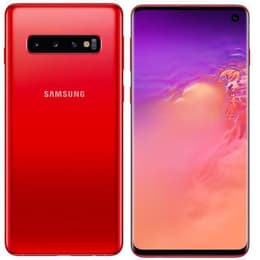
The Samsung Galaxy S10, released in March 2019, was a flagship smartphone known for its premium features and advanced display technology. In contrast, the Motorola Moto E32, launched in May 2022, is an entry-level device designed to offer essential smartphone functionalities at a more accessible point. These two devices cater to different user expectations, with the Galaxy S10 emphasizing high-end performance and camera capabilities, while the Moto E32 focuses on battery longevity and a smooth display experience for everyday tasks. Both run on the Android operating system, though they differ in their initial versions and update trajectories.

Scores

Durability

When considering the long-term usability of these devices, their release timelines and software support are key factors.

  • Release and OS Support: The Galaxy S10 launched in March 2019 with Android 9 Pie and received major updates up to Android 12. The Moto E32, released in May 2022, typically launched with Android 11, potentially receiving one major OS update. This means the Moto E32, being a newer device, may have a slightly longer remaining period of active software support from its manufacturer.
  • Physical Durability: The Galaxy S10 features a more robust build with Gorilla Glass 6 on both the front and back, along with an IP68 rating for significant dust and water resistance. The Moto E32, constructed with a glass front and plastic frame and back, offers an IP52 water-repellent design, providing protection against splashes and dust.
  • Repairability: The Galaxy S10 received a low repairability score of 3 out of 10 from iFixit, indicating challenges in repair due to extensive adhesive use and components like the USB-C port being soldered to the motherboard. Information on the Moto E32's repairability is less formally documented, but entry-level devices often present similar challenges due to their construction.

Release year

2019

2022

Compatible with latest Update

No

No

Operating system

Android

Android

Foldable

No

No

Performance

The performance capabilities of the Galaxy S10 and Moto E32 reflect their different market segments, impacting how they handle various tasks.

  • Processing Power: The Galaxy S10 is equipped with a high-performance processor, enabling it to handle demanding applications, complex multitasking, and graphically intensive games with fluidity. The Moto E32 features an entry-level processor, which is suitable for daily tasks such as browsing, social media, and light applications, but may show limitations with more intensive usage.
  • Memory and Storage: The Galaxy S10 typically comes with 8GB of RAM and offers internal storage options starting from 128GB, with some variants providing up to 1TB. It also supports expandable storage via microSD. The Moto E32 usually includes 4GB of RAM and 64GB of internal storage, which is expandable up to 1TB with a microSD card.
  • Battery Life: The Moto E32 houses a larger 5000 mAh battery, designed to provide extended usage times, often lasting through a full day for many users. The Galaxy S10 has a 3400 mAh battery, which, combined with its more powerful components and higher-resolution display, may require more frequent charging for heavy users. The Moto E32 supports 18W fast charging, while the Galaxy S10 also supports wireless charging and reverse wireless charging.

Memory (GB)

8 GB

4 GB

Screen quality

The visual experience on these two smartphones is distinct, primarily due to differences in display technology and resolution.

  • Display Technology and Resolution: The Galaxy S10 features a 6.1-inch Dynamic AMOLED display with a QHD+ resolution (3040x1440 pixels), offering deep blacks, vibrant colors, and sharp detail. The Moto E32 comes with a larger 6.5-inch IPS LCD screen with an HD+ resolution (1600x720 pixels), providing a clear but less detailed visual experience compared to the S10.
  • Refresh Rate and Brightness: The Moto E32 offers a 90Hz refresh rate, contributing to smoother scrolling and a more responsive feel during navigation. The Galaxy S10 has a standard 60Hz refresh rate. However, the Galaxy S10's Dynamic AMOLED display boasts higher peak brightness levels and HDR10+ support, enhancing visibility in bright conditions and providing a more immersive viewing experience for compatible content.
  • Screen Design: Both devices utilize a punch-hole design for the front camera, maximizing screen real estate. The Galaxy S10 also incorporates an ultrasonic in-display fingerprint sensor, while the Moto E32 has a side-mounted fingerprint sensor.

Resolution

1440 x 3040

720 x 1600

Screen type

Dynamic AMOLED

IPS LCD

Audiovisual

The camera systems on the Galaxy S10 and Moto E32 are designed for different levels of photographic versatility and quality.

  • Rear Camera System: The Galaxy S10 features a versatile triple-camera setup, including a 12MP wide-angle lens with dual aperture and optical image stabilization (OIS), a 12MP telephoto lens with 2x optical zoom and OIS, and a 16MP ultrawide lens. This configuration allows for a range of photographic styles, from detailed close-ups to expansive landscapes. The Moto E32 also has a triple-camera system, typically comprising a 16MP main lens, a 2MP macro lens, and a 2MP depth sensor, offering basic photography options.
  • Photography Performance: The Galaxy S10's camera excels in various lighting conditions, offering strong detail, dynamic range, and color accuracy, particularly benefiting from its OIS for clearer low-light shots. The Moto E32's camera performs adequately in good lighting but may show limitations in challenging conditions, with user reviews often describing its output as modest.
  • Video Recording and Front Camera: The Galaxy S10 supports 4K video recording and features a 10MP front-facing camera capable of detailed selfies. The Moto E32 records video at 1080p and includes an 8MP front camera, suitable for video calls and casual self-portraits.

Main camera

12 megapixels

16 megapixels

Front camera

10 megapixels

8 megapixels

Miscellaneous

Beyond core specifications, several practical elements differentiate the user experience between these two devices.

  • Connectivity: The Galaxy S10 supports Wi-Fi 6 (802.11ax) and Bluetooth 5.0, offering faster and more stable wireless connections. The Moto E32 supports Wi-Fi 802.11 a/b/g/n (Wi-Fi 4/5) and Bluetooth 5.0 or 5.1, providing standard wireless capabilities. Both devices utilize USB-C for charging and data transfer.
  • Audio Features: The Galaxy S10 includes stereo speakers for a more immersive audio experience and retains a 3.5mm headphone jack. The Moto E32 features a single loudspeaker but also includes a 3.5mm headphone jack, catering to users who prefer wired audio.
  • Biometric Security and Design: The Galaxy S10 incorporates an ultrasonic fingerprint sensor embedded within its display, offering a modern and seamless unlocking method. The Moto E32 features a side-mounted fingerprint sensor, which is a common and convenient placement for quick access. The Galaxy S10 has a more compact and lighter design at 149.9 x 70.4 x 7.8mm and 157g, while the Moto E32 is larger and slightly heavier at 163.95 x 74.94 x 8.49mm and 184-185g.

Weight

157 oz

184 oz

Screen size (in)

6.1

6,5

Network

4G

4G

SIM card

Physical SIM

Dual Physical SIM

Carrier compatibility

Unlocked

Unlocked

The Samsung Galaxy S10 and Motorola Moto E32 offer distinct propositions for smartphone users. The Galaxy S10, a former flagship, is frequently praised for its vibrant Dynamic AMOLED display, versatile camera system, and premium build quality. Users often highlight its strong performance for demanding applications and multimedia consumption. However, some common criticisms have included its battery life, particularly for heavy users as the device ages, and the initial challenges with its ultrasonic in-display fingerprint sensor.

The Motorola Moto E32, an entry-level device, is generally well-regarded for its large battery capacity, which provides extended usage, and its 90Hz refresh rate display, offering smoother interactions for its class. Its clean Android user interface is also a point of appreciation among users. Conversely, frequent criticisms point to its more modest camera performance, especially in less-than-ideal lighting, and its processing power, which can feel less responsive with intensive tasks or numerous applications running simultaneously.

Users prioritizing a high-quality display, advanced camera capabilities, and robust performance for gaming or demanding applications may find the Galaxy S10 well-suited to their needs. Its premium design and features, even several years after its release, continue to offer a sophisticated user experience. For those who prioritize extended battery life, a smoother scrolling experience for everyday use, and a more recent software release (even if entry-level), the Moto E32 presents a practical option. It serves well for users seeking essential smartphone functions without the need for high-end specifications. Both devices can be found as quality-assured refurbished options, providing an eco-friendly alternative for consumers.


See all articles

Our recent comparisons