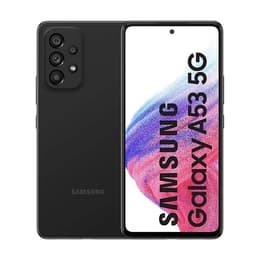
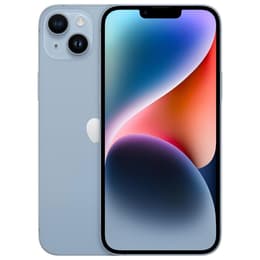

Galaxy A53 5G vs iPhone 14 Plus

Galaxy A53 5G
Galaxy A53 5G
Starting at

Refurbished price:A$268.00

Versus A$991.00 new

See options
iPhone 14 Plus
iPhone 14 Plus
Starting at

Refurbished price:A$480.00

Versus A$1,249.00 new

See options

Ratings

The Samsung Galaxy A53 5G, released in March 2022, and the iPhone 14 Plus, launched in October 2022, represent distinct approaches to modern smartphone design and functionality. While both offer 5G connectivity and large displays, they cater to different user preferences through their respective operating systems and hardware philosophies. The Galaxy A53 5G runs on Android, offering a customisable experience, whereas the iPhone 14 Plus operates on Apple's iOS, known for its integrated ecosystem and streamlined interface. These differences extend to their core specifications, camera capabilities, and overall user experience.

Scores

Durability

When considering the longevity of these devices, both offer substantial software support and physical durability features.

  • Software Updates: The Samsung Galaxy A53 5G is notable for its commitment to software longevity, with Samsung promising four generations of Android OS upgrades and five years of security updates from its release date. The iPhone 14 Plus, being an Apple device, typically receives iOS updates for approximately five to six years from its launch, potentially offering a slightly longer period of active software support due to its later release date.
  • Physical Durability: The Galaxy A53 5G features Corning Gorilla Glass 5 for display protection and boasts an IP67 rating for dust and water resistance, meaning it can withstand submersion in up to one metre of fresh water for 30 minutes. The iPhone 14 Plus offers enhanced protection with its Ceramic Shield front cover and an IP68 rating, allowing for submersion in up to six metres of water for the same duration. Both devices are built to endure daily use, with the iPhone 14 Plus offering a slightly higher degree of water resistance.
  • Expected Lifespan: Given their respective software support policies and robust build qualities, both smartphones are designed for a practical lifespan of several years. Users prioritising the absolute longest software update window might lean towards the iPhone 14 Plus due to Apple's historical support, while the Galaxy A53 5G provides excellent long-term value within the Android ecosystem.

Release year

2022

2022

Compatible with latest Update

Yes

Yes

Operating system

Android

iOS

Foldable

No

No

Performance

The performance of a smartphone significantly impacts daily usability, from launching applications to handling demanding tasks.

  • Processing Power: The Samsung Galaxy A53 5G is powered by an Exynos 1280 processor, which is built on a 5nm process. This processor provides sufficient power for everyday tasks and general smartphone use, with some users finding it performs well, though some reviews noted occasional sluggishness in more demanding scenarios or with heavy multitasking. The iPhone 14 Plus incorporates the A15 Bionic chip, the same processor found in the previous generation's higher-end models. This chip is known for its robust performance, ensuring smooth operation across applications, efficient multitasking, and capable handling of graphics-intensive games.
  • Storage and Responsiveness: The Galaxy A53 5G offers storage options of 128GB or 256GB, coupled with 6GB or 8GB of RAM, and includes a microSD card slot for expandable storage up to 1TB. This flexibility allows users to significantly increase their storage capacity. The iPhone 14 Plus comes with 128GB, 256GB, or 512GB of internal storage and 6GB of RAM, but does not offer expandable storage. For users who frequently manage large files or prefer to keep extensive media libraries on their device, the expandable storage of the A53 5G could be a significant advantage.
  • Real-world Usage: For typical daily activities like web browsing, social media, and communication, both devices offer a responsive experience. However, users engaging in more intensive activities such as high-fidelity mobile gaming or professional-grade video editing may notice the iPhone 14 Plus providing a more consistently fluid and faster experience due to its more powerful processing unit.

Memory (GB)

6 GB

6 GB

Screen quality

The display is a primary interface for any smartphone, and both devices offer large, vibrant screens for media consumption and daily interaction.

  • Display Technology and Size: The Samsung Galaxy A53 5G features a 6.5-inch Super AMOLED display with a Full HD+ resolution (1080x2400 pixels). The iPhone 14 Plus sports a slightly larger 6.7-inch Super Retina XDR OLED display with a resolution of 2778x1284 pixels, resulting in a slightly higher pixel density. Both OLED technologies deliver deep blacks and vibrant colours, enhancing the viewing experience for photos, videos, and general content.
  • Refresh Rate and Brightness: A key difference lies in the refresh rate. The Galaxy A53 5G offers a 120Hz refresh rate, providing smoother scrolling and a more fluid visual experience, particularly noticeable in fast-paced content and user interface navigation. The iPhone 14 Plus maintains a standard 60Hz refresh rate. In terms of brightness, both phones offer good visibility in various lighting conditions. The Galaxy A53 5G can reach up to 800 nits of peak brightness. The iPhone 14 Plus offers a typical brightness of 800 nits and can peak at 1200 nits for HDR content, providing excellent clarity even in bright outdoor environments.
  • Viewing Experience: Users who prioritise an exceptionally smooth visual experience, especially for gaming or rapid content scrolling, may find the 120Hz display of the Galaxy A53 5G more appealing. For those who value a slightly larger screen with high brightness and excellent colour accuracy for HDR content, the iPhone 14 Plus offers a compelling viewing experience.

Resolution

1080 x 2400

1284 x 2778

Screen type

Super AMOLED

Super Retina XDR OLED

Audiovisual

Camera capabilities are a significant factor for many users, and both smartphones offer versatile systems for capturing photos and videos.

  • Rear Camera Systems: The Samsung Galaxy A53 5G features a quad-camera setup on the rear, including a 64MP main sensor with Optical Image Stabilisation (OIS), a 12MP ultrawide lens, a 5MP macro lens, and a 5MP depth sensor. This array provides flexibility for various shooting scenarios, from detailed wide shots to close-ups and portraits. The iPhone 14 Plus comes with a dual-camera system, comprising a 12MP main camera with sensor-shift OIS and a larger sensor for improved light capture, alongside a 12MP ultrawide camera.
  • Photography Performance: In everyday lighting, both phones capture detailed and vibrant images. The Galaxy A53 5G's main camera performs well, and its night mode can deliver brighter, more detailed shots in medium-to-low-light environments. The iPhone 14 Plus, with its larger main sensor and improved image processing, offers strong low-light performance and consistent image quality across its lenses. For selfies, the Galaxy A53 5G has a 32MP front camera, while the iPhone 14 Plus features a 12MP TrueDepth front camera with autofocus, which enhances clarity for self-portraits and video calls.
  • Video Recording and Audio: Both devices are capable of recording 4K video at 30 frames per second (fps). The iPhone 14 Plus extends this capability to 4K at up to 60fps and includes an 'Action mode' for enhanced video stabilisation, making it well-suited for capturing dynamic footage. Both phones feature stereo speakers, with the Galaxy A53 5G supporting Dolby Atmos for an enriched audio experience.

Main camera

64 megapixels

12 megapixels

Front camera

32 megapixels

12 megapixels

Miscellaneous

Beyond the core features, several practical elements contribute to the overall user experience and daily convenience.

  • Connectivity: Both the Samsung Galaxy A53 5G and the iPhone 14 Plus support 5G connectivity, enabling faster mobile data speeds. The Galaxy A53 5G supports Wi-Fi 5 (802.11ac) and Bluetooth 5.1, while the iPhone 14 Plus features the newer Wi-Fi 6 (802.11ax) and Bluetooth 5.3, offering potentially faster and more stable wireless connections.
  • Ports and Biometrics: The Galaxy A53 5G uses a USB-C 2.0 port for charging and data transfer and includes an in-display fingerprint scanner for secure unlocking. The iPhone 14 Plus utilises Apple's proprietary Lightning port and relies on Face ID for biometric authentication. Neither device includes a traditional 3.5mm headphone jack.
  • Design and Additional Features: The Galaxy A53 5G measures 159.6 x 74.8 x 8.1 mm and weighs 189 grams. The iPhone 14 Plus is slightly larger and heavier at 160.8 x 78.1 x 7.8 mm and 203 grams. The iPhone 14 Plus also introduces advanced safety features like Crash Detection and Emergency SOS via satellite, which can be crucial in unforeseen circumstances.

Weight

189 oz

203 oz

Screen size (in)

6.5

6,7

Network

5G

5G

SIM card

Dual Physical SIM

Physical SIM + eSIM

Carrier compatibility

Unlocked

Unlocked

User feedback for the Samsung Galaxy A53 5G often highlights its impressive battery life, vibrant 120Hz AMOLED display, and Samsung's commitment to long-term software updates as significant advantages. Some common criticisms include its processor performance, which can sometimes feel less fluid compared to higher-end devices, and the absence of wireless charging.

For the iPhone 14 Plus, users frequently praise its exceptional battery life, large and bright display, and the reliable performance delivered by its processor. Points of concern often revolve around its 60Hz display refresh rate, which is lower than many competitors in its segment, and the lack of a telephoto camera.

Users prioritising an expansive, smooth display for everyday browsing and social media, coupled with extensive customisation options and expandable storage, may find the Samsung Galaxy A53 5G well-suited to their needs. Its strong battery life and long-term Android support make it a practical choice for those seeking a dependable Android experience.

Conversely, individuals who value a large, bright screen with robust performance for demanding applications and gaming, along with a highly integrated ecosystem and advanced safety features, may lean towards the iPhone 14 Plus. Its consistent camera performance and extended software longevity are also key considerations. Both devices are available as quality-assured refurbished options, providing an eco-friendly alternative for consumers.

See all articles

Our recent comparisons