Galaxy A23 5G vs Motorola Edge 30 Fusion

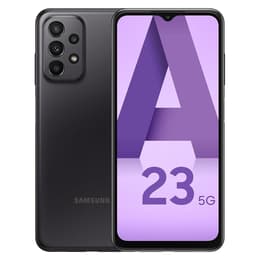
Galaxy A23 5G
Galaxy A23 5G
Starting at

Refurbished price:A$219.00

Versus A$457.00 new

See options
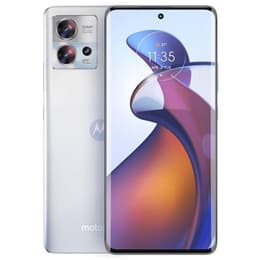
Motorola Edge 30 Fusion
Starting at

Refurbished price:A$257.46

Versus A$1,352.00 new

See options

The Samsung Galaxy A23 5G and the Motorola Edge 30 Fusion are both smartphones released in 2022, offering distinct experiences for users. While the Galaxy A23 5G, launched in August/September 2022, focuses on a robust battery and a large display, the Motorola Edge 30 Fusion, released in September 2022, prioritizes a premium design and a more powerful processor. Both devices operate on the Android platform, providing a familiar software environment, though their approaches to hardware and user experience differ.

Scores

Durability

When considering the long-term usability of these devices, several factors contribute to their expected lifespan.

  • Release Timeline and Software Support: The Samsung Galaxy A23 5G was released in August/September 2022, and shipped with Android 12. It has since received updates, reaching Android 15 by July 2025. The Motorola Edge 30 Fusion, launched in September 2022, also started with Android 12. Samsung typically offers several years of Android version updates and security patches for its A-series, while Motorola generally provides fewer major OS updates but maintains regular security updates.
  • Build Materials and Durability: The Galaxy A23 5G features a plastic frame and back, with a Gorilla Glass 5 front for screen protection. The Edge 30 Fusion presents a more premium construction with a glass front (Gorilla Glass 5), a glass back, and an aluminum frame. It also carries an IP52 rating, indicating splash resistance. Users seeking a device with a more resilient exterior might find the Edge 30 Fusion's materials more appealing, while the Galaxy A23 5G offers a sturdy build for everyday handling.
  • Practical Lifespan: Both phones are expected to offer a practical lifespan of several years, supported by ongoing software maintenance. The Galaxy A23 5G's larger battery capacity may contribute to a longer perceived battery lifespan over time, while the Edge 30 Fusion's more powerful internal components could maintain smoother performance for demanding applications further into its life cycle.

Release year

2022

2022

Compatible with latest Update

Yes

Yes

Operating system

Android

Android

Foldable

No

No

Performance

The performance of these two smartphones varies significantly due to their internal components, impacting how they handle daily tasks and demanding applications.

  • Processor Capabilities: The Motorola Edge 30 Fusion is equipped with a more powerful current-generation processor, allowing it to handle demanding applications, complex multitasking, and graphic-intensive games with greater fluidity. Users may notice quicker app loading times and smoother transitions. The Samsung Galaxy A23 5G features a processor designed for efficient everyday use, capably managing common applications, web browsing, and social media without issues.
  • Multitasking and Storage: The Edge 30 Fusion typically offers higher RAM configurations, which contributes to more seamless multitasking, allowing users to switch between numerous open applications without significant slowdowns. It also provides larger internal storage options, up to 512GB, catering to users with extensive media libraries or many applications. The Galaxy A23 5G offers adequate RAM for typical smartphone usage and includes expandable storage via a microSD card, which is beneficial for users who prefer physical storage expansion.
  • Battery Behavior: The Galaxy A23 5G features a larger battery capacity, which generally translates to extended usage times between charges, making it suitable for users who prioritize long battery life. The Edge 30 Fusion's battery, while smaller, supports faster charging technology, allowing for quicker power replenishment. However, its high refresh rate display and powerful processor can lead to more frequent charging for heavy users.

Memory (GB)

4 GB

8 GB

Screen quality

The visual experience on both devices is shaped by their display technologies and specifications.

  • Display Technology and Clarity: The Motorola Edge 30 Fusion features a 6.55-inch P-OLED display, which delivers deep blacks, high contrast, and vibrant colors, enhancing the viewing experience for multimedia content. The Samsung Galaxy A23 5G comes with a 6.6-inch PLS LCD panel, offering clear visuals and good color reproduction suitable for general use and web browsing.
  • Refresh Rate and Smoothness: The Edge 30 Fusion boasts a higher 144Hz refresh rate, providing exceptionally smooth scrolling and a more responsive feel during interactions and gaming. The Galaxy A23 5G offers a 120Hz refresh rate, which also provides a smooth experience compared to standard displays, making daily navigation and content consumption fluid.
  • Brightness and Viewing Experience: The Edge 30 Fusion's P-OLED display can achieve higher peak brightness levels, making it more comfortable to view content outdoors or in brightly lit environments, and supports HDR10+ for enhanced dynamic range in compatible content. Both phones offer a Full HD+ resolution, ensuring sharp text and images. The Edge 30 Fusion also features a curved display, which contributes to a more immersive viewing experience and a sleek design.

Resolution

1080 x 2408

1080 x 2400

Screen type

PLS LCD

P-OLED

Audiovisual

The camera systems on the Galaxy A23 5G and the Edge 30 Fusion offer different strengths for capturing photos and videos.

  • Main Camera Performance: Both phones feature a 50-megapixel main camera with optical image stabilization (OIS), which helps in reducing blur from handshakes, especially in challenging lighting conditions. The Edge 30 Fusion's main camera generally produces images with good detail and color accuracy, performing well in low-light scenarios. The Galaxy A23 5G's main camera also captures good detail and vibrant colors in well-lit conditions.
  • Versatility and Additional Lenses: The Galaxy A23 5G includes a quad-camera setup with a 5-megapixel ultrawide, 2-megapixel macro, and 2-megapixel depth sensor, offering a range of photographic options. The Edge 30 Fusion has a triple-camera system, featuring a 13-megapixel ultrawide camera that can also function for macro shots due to its autofocus capability, and a 2-megapixel depth sensor. User feedback suggests the ultrawide on the A23 5G can show a drop in quality, while the Edge 30 Fusion's ultrawide, though capable of macro, can sometimes produce softer images.
  • Video Recording and Front Camera: The Edge 30 Fusion offers more advanced video recording capabilities, including up to 8K resolution at 30 frames per second with its main camera, and 4K video from its ultrawide and 32-megapixel front camera. The Galaxy A23 5G records video at Full HD (1080p) at 30 frames per second. For selfies, the Edge 30 Fusion's 32-megapixel front camera with autofocus provides detailed images, while the Galaxy A23 5G has an 8-megapixel front camera.

Main camera

50 megapixels

50 megapixels

Front camera

8 megapixels

32 megapixels

Miscellaneous

Beyond core performance and display, several practical elements differentiate these two smartphones.

  • Connectivity and Ports: Both devices support 5G connectivity for faster mobile data speeds. The Motorola Edge 30 Fusion features newer Wi-Fi 6E and Bluetooth 5.2 standards, offering potentially faster and more stable wireless connections. The Samsung Galaxy A23 5G uses Wi-Fi 5 and Bluetooth 5.1. For physical connections, the Galaxy A23 5G includes a 3.5mm headphone jack, which is absent on the Edge 30 Fusion. Both utilize a USB-C port for charging and data transfer.
  • Biometric Security: The Edge 30 Fusion incorporates an in-display fingerprint sensor for convenient unlocking, alongside face recognition. The Galaxy A23 5G features a side-mounted fingerprint sensor.
  • Design and Handling: The Motorola Edge 30 Fusion is notably slimmer and lighter, with dimensions of 158.5 x 71.2 x 7.5 mm and a weight of 168g, contributing to a more compact and comfortable feel in hand. Its curved glass design also enhances its aesthetic appeal. The Samsung Galaxy A23 5G is slightly larger and heavier at 165.4 x 76.9 x 8.4 mm and 197g.

Weight

197 oz

168 oz

Screen size (in)

6.6

6,55

Network

5G

5G

SIM card

Physical SIM

Dual Physical SIM

Carrier compatibility

Unlocked

Unlocked

Choosing between the Samsung Galaxy A23 5G and the Motorola Edge 30 Fusion depends on individual priorities and usage patterns. Users frequently praise the Motorola Edge 30 Fusion for its premium design, vibrant OLED display with a high refresh rate, and powerful performance for demanding tasks and gaming. However, some users note that its battery life, while decent, may require more frequent charging with heavy use, and its camera system, while capable, might not always match the consistency of some competitors, particularly the ultrawide lens.

The Samsung Galaxy A23 5G is often commended for its long-lasting battery, large display, and the inclusion of a headphone jack, making it a practical choice for everyday communication and media consumption. Criticisms sometimes point to its LCD display technology not offering the same visual punch as OLED, and its processor being more suited for moderate use rather than intensive applications. Some user reviews also mention inconsistencies in camera performance, especially in indoor settings.

Users prioritizing a sleek design, a highly responsive display, and robust performance for gaming or intensive applications may find the Motorola Edge 30 Fusion well-suited to their needs. Conversely, individuals who value extended battery life, a larger screen for general content, expandable storage, and the convenience of a headphone jack may lean towards the Samsung Galaxy A23 5G. Both devices offer a reliable Android experience, and considering a quality-assured refurbished option for either model can be an eco-friendly alternative.

See all articles

Our recent comparisons