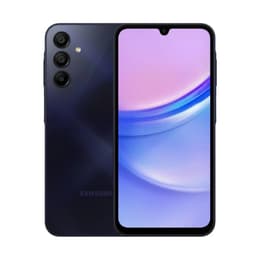

Galaxy A15 5G vs Nokia X30

Galaxy A15 5G
Galaxy A15 5G
Starting at

Refurbished price:A$257.00

Versus A$329.00 new

See options
Nokia X30
Nokia X30
Starting at

Refurbished price:A$299.00

Versus A$965.00 new

See options

The Samsung Galaxy A15 5G, released in December 2023, and the Nokia X30, launched in September 2022, are both Android smartphones designed for everyday use. While the Galaxy A15 5G offers a more recent release and a longer software support commitment, the Nokia X30 distinguishes itself with a focus on sustainable materials and enhanced durability features.

Scores

Durability

When considering the longevity of these devices, their release timelines and software support policies are key differentiators.

  • Release Timeline: The Samsung Galaxy A15 5G was released in December 2023, making it over a year newer than the Nokia X30, which launched in September 2022. This difference in release date inherently provides the Galaxy A15 5G with a longer potential lifespan for receiving future updates.
  • OS Support: Samsung has committed to providing the Galaxy A15 5G with four generations of Android OS upgrades and five years of security updates, extending its support until approximately 2029. In contrast, the Nokia X30 was initially promised three years of OS upgrades and security updates. However, user reports indicate that Android 14 might be its final major OS update, falling short of the initially implied three OS upgrades from its Android 12 launch.
  • Durability Features: The Nokia X30 features an IP67 rating for dust and water resistance, allowing it to withstand submersion in up to 1 meter of water for 30 minutes. It also boasts Gorilla Glass Victus for display protection and an aluminium frame made from recycled materials. The Galaxy A15 5G has a plastic body and a glass front with Dragontrail Pro protection, but lacks an official IP rating.

Release year

2023

2022

Operating system

Android

Android

Foldable

No

No

Performance

Both smartphones are equipped to handle daily tasks, but they differ in their underlying hardware and typical usage experiences.

  • Processor Capabilities: The Samsung Galaxy A15 5G is powered by a MediaTek Dimensity 6100+ processor, which capably manages common applications and general multitasking. The Nokia X30 features a Qualcomm Snapdragon 695 5G processor, offering a smooth experience for everyday use and moderate gaming.
  • System Responsiveness: Users generally report that the Galaxy A15 5G provides reliable performance for its segment, though it may show some lag with demanding applications or extensive multitasking. The Nokia X30 is noted for its generally smooth operation, with apps launching quickly, and it can handle gaming fairly well without significant overheating.
  • Battery Endurance: The Galaxy A15 5G includes a 5000mAh battery, which often provides up to two days of usage on a single charge, and sometimes even three days with lighter use. The Nokia X30 has a 4200mAh battery, typically offering a full day of moderate use. Both support fast charging, with the Galaxy A15 5G at 25W and the Nokia X30 at 33W.

Memory (GB)

8 GB

8 GB

Screen quality

The visual experience on both devices is delivered through vibrant displays, each with specific characteristics.

  • Display Technology and Resolution: Both phones feature AMOLED displays, providing deep blacks and vibrant colors. The Galaxy A15 5G has a 6.5-inch Super AMOLED display with a 2340x1080 (FHD+) resolution. The Nokia X30 offers a slightly smaller 6.43-inch AMOLED display with a 2400x1080 (FHD+) resolution.
  • Refresh Rate and Brightness: Both devices offer a 90Hz refresh rate, contributing to smoother scrolling and animations. The Galaxy A15 5G can reach up to 800 nits of brightness in high brightness mode, making it legible in fairly bright outdoor conditions. The Nokia X30 has a typical brightness of 400 nits and a peak brightness of 700 nits, though some users report it can be challenging to view under direct bright daylight.
  • Viewing Experience: The Galaxy A15 5G features a noticeable bezel around its display and a waterdrop notch for the front camera. The Nokia X30 also has a punch-hole cutout for its front camera and is protected by Gorilla Glass Victus.

Resolution

1080x2340

1080 x 2400

Audiovisual

Photography and videography capabilities vary between these two smartphones, catering to different user expectations.

  • Rear Camera System: The Samsung Galaxy A15 5G features a triple rear camera setup, including a 50-megapixel main sensor, a 5-megapixel ultrawide lens, and a 2-megapixel macro lens. The Nokia X30 has a dual rear camera system, comprising a 50-megapixel main sensor with optical image stabilization (OIS) and a 13-megapixel ultrawide lens.
  • Photography Performance: The Galaxy A15 5G's main camera performs competently in good lighting, with macro shots being a notable strength for its class. The Nokia X30's main camera is praised for its performance in both daylight and low-light conditions, with its Night mode and Dark Vision AI features effectively capturing detail and managing noise.
  • Video Recording and Front Camera: Both phones record video at 1080p resolution at 30fps from their main cameras. The Nokia X30 does not support 4K video recording, which some users might find limiting. For selfies, the Galaxy A15 5G has a 13-megapixel front camera, while the Nokia X30 offers a 16-megapixel front camera.

Miscellaneous

Beyond core features, several practical elements contribute to the overall user experience of each device.

  • Connectivity and Ports: Both smartphones support 5G connectivity. The Galaxy A15 5G includes Wi-Fi 5 (802.11 a/b/g/n/ac) and Bluetooth 5.3, along with a USB-C port and a 3.5mm headphone jack. The Nokia X30 offers Wi-Fi 6 (802.11 a/b/g/n/ac/6) and Bluetooth 5.1, featuring a USB-C 2.0 port but no headphone jack.
  • Biometric Security: The Galaxy A15 5G incorporates a side-mounted fingerprint sensor. The Nokia X30 features an in-display optical fingerprint sensor, along with face unlock capabilities.
  • Build Materials and Handling: The Galaxy A15 5G has a plastic body and frame with a glass front, weighing 200 grams. The Nokia X30 emphasizes sustainability with a frame made from 100% recycled aluminium and a back from 65% recycled plastic, weighing 185 grams. Its dimensions are 158.9 x 73.9 x 7.99 mm, making it slightly more compact than the Galaxy A15 5G at 160.1 x 76.8 x 8.4 mm.

Weight

200 oz

185 oz

Screen size (in)

6.5

6.43

Network

5G

5G

SIM card

Physical SIM

Dual Physical SIM

Carrier compatibility

Unlocked

Unlocked

The Samsung Galaxy A15 5G and Nokia X30 cater to users with distinct priorities, offering a blend of strengths and trade-offs.

Users frequently praise the Galaxy A15 5G for its exceptional battery life, vibrant AMOLED display, and Samsung's commitment to extended software updates. However, some criticisms point to its plastic build, noticeable display bezels, and performance that can occasionally struggle with more demanding tasks. The Nokia X30 is often commended for its robust and sustainable design, including an IP67 rating and recycled materials, as well as its capable main camera, particularly in low-light conditions. Conversely, common concerns include its mono speaker quality, the absence of 4K video recording, and recent uncertainty regarding its promised OS update longevity.

Users prioritizing long-term software support and superior battery endurance for extended usage may find the Samsung Galaxy A15 5G well-suited to their needs. Those who value a more durable build with water and dust resistance, a focus on sustainable materials, and strong low-light photography from the main camera might lean towards the Nokia X30. Both devices offer a compelling option for those seeking quality-assured refurbished alternatives, providing an eco-friendly choice for their next smartphone.


See all articles

Our recent comparisons