
Galaxy A14 vs iPhone 14 Pro Max

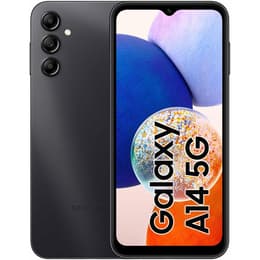
Galaxy A14
Galaxy A14
Starting at

Refurbished price:A$215.00

Versus A$390.00 new

See options
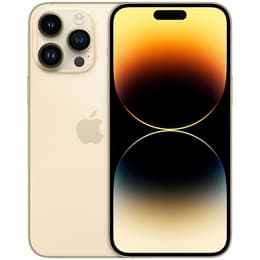
iPhone 14 Pro Max
iPhone 14 Pro Max
Starting at

Refurbished price:A$726.00

Versus A$1,899.00 new

See options

Ratings

The Samsung Galaxy A14, released in early 2023, and the Apple iPhone 14 Pro Max, launched in late 2022, represent distinct approaches to smartphone design and functionality. While both are capable devices, they cater to different user expectations, with the Galaxy A14 offering a more accessible Android experience and the iPhone 14 Pro Max providing a premium iOS ecosystem. Key differentiators lie in their display technology, camera capabilities, and overall performance.

Scores

Durability

When considering the long-term usability of these devices, their respective release timelines and software support policies play a significant role.

  • Release Timeline: The iPhone 14 Pro Max, released in September 2022, benefits from Apple's typically longer software support, often extending to five or more years of major iOS updates. The Galaxy A14, launched in early 2023, is slated to receive two major Android OS updates and four years of security updates, which means support is expected to continue until around 2027.
  • Build Materials and Durability: The iPhone 14 Pro Max features a Ceramic Shield front cover, a textured matte glass back, and a stainless steel frame, contributing to its robust feel and IP68 water and dust resistance. The Galaxy A14 utilizes a glass front, plastic frame, and plastic back, and does not carry an official IP rating for water and dust resistance.
  • Practical Lifespan: Users prioritizing extended software longevity and advanced physical durability may find the iPhone 14 Pro Max better suited for their needs. The Galaxy A14 offers a solid practical lifespan for its segment, particularly for users who typically upgrade their devices within a few years.

Performance

The performance of a smartphone impacts everything from app responsiveness to gaming experiences and multitasking efficiency.

  • Processing Power: The iPhone 14 Pro Max is equipped with a powerful current-generation processor, enabling it to handle demanding applications, complex games, and intensive multitasking with smooth and efficient operation. The Galaxy A14 features a processor that provides solid everyday performance, suitable for general use, social media, and lighter gaming.
  • Storage and Multitasking: The iPhone 14 Pro Max offers various internal storage configurations up to 1TB, paired with ample RAM to ensure smooth transitions between numerous open applications. The Galaxy A14 comes with internal storage options up to 128GB, which can be expanded significantly via a microSD card, providing flexibility for users who need more space for media and files.
  • Battery Behavior: Both devices are designed to offer substantial battery life. The iPhone 14 Pro Max typically provides a full day or more of usage for most users, even with heavy activity. The Galaxy A14, with its large battery capacity, can last up to two days with moderate usage and a full day under heavy use.

Memory (GB)

4 GB

6 GB

Screen quality

The display is a primary interface for any smartphone, influencing everything from media consumption to daily interactions.

  • Display Technology and Clarity: The iPhone 14 Pro Max features a 6.7-inch Super Retina XDR OLED display, known for its deep blacks, vibrant colors, and high contrast. The Galaxy A14 utilizes a 6.6-inch PLS LCD display, which offers good clarity and vibrant colors for its category.
  • Resolution and Brightness: The iPhone 14 Pro Max boasts a high resolution of 2796 x 1290 pixels at 460 pixels per inch, providing sharp visuals. It also achieves high brightness levels, reaching up to 2000 nits for outdoor visibility. The Galaxy A14 has a 1080 x 2408 pixel resolution with approximately 400 pixels per inch, delivering clear images, and a peak brightness of around 500 nits, which can be challenging in direct sunlight.
  • Refresh Rate: The iPhone 14 Pro Max includes ProMotion technology, offering an adaptive refresh rate that can scale from 1Hz to 120Hz for smooth scrolling and responsive interactions. The Galaxy A14 comes with either a 60Hz or 90Hz refresh rate depending on the model, providing a standard or slightly smoother visual experience.

Audiovisual

Camera capabilities are a significant factor for many users, capturing everyday moments and special occasions.

  • Rear Camera System: The iPhone 14 Pro Max features a versatile pro camera system, including a 48MP main sensor with advanced optical image stabilization, a 12MP ultra-wide lens, and a 12MP 3x telephoto lens, complemented by a LiDAR scanner for enhanced depth sensing. The Galaxy A14 typically includes a 50MP main camera, often paired with a 2MP macro and 2MP depth sensor, with some 4G models offering a 5MP ultrawide lens.
  • Photography Performance: The iPhone 14 Pro Max excels in various lighting conditions, offering features like Photonic Engine, Deep Fusion, and Night mode for detailed and well-exposed images, even in low light. The Galaxy A14 performs well in bright daylight, capturing decent detail, but its performance in low-light conditions is more limited due to the absence of a dedicated night mode on some variants and less advanced image processing.
  • Video Recording and Front Camera: The iPhone 14 Pro Max supports 4K video recording at up to 60 frames per second and includes advanced features like Cinematic mode for professional-looking video. Its 12MP front camera offers autofocus and 4K video capabilities. The Galaxy A14 records video at 1080p at 30 frames per second from both its rear and 13MP front cameras.

Miscellaneous

Beyond core performance and display, several practical elements contribute to the overall user experience of a smartphone.

  • Connectivity and Ports: The iPhone 14 Pro Max supports 5G, Wi-Fi 6, and Bluetooth 5.3, and uses a Lightning port for charging and data transfer. The Galaxy A14 (5G model) also supports 5G, Wi-Fi 802.11ac, and Bluetooth 5.1 or 5.2, featuring a USB-C 2.0 port and retaining a 3.5mm headphone jack.
  • Biometric Authentication: The iPhone 14 Pro Max relies on Face ID for secure facial recognition. The Galaxy A14 incorporates a side-mounted fingerprint sensor for convenient unlocking.
  • Design and Handling: The iPhone 14 Pro Max measures 160.7 x 77.6 x 7.85 mm and weighs 240 grams, offering a substantial feel. The Galaxy A14 is slightly larger at 167.7 x 78 x 9.1 mm and weighs around 201-202 grams, making it a sizable device that is still comfortable to hold for many users.

Screen size (in)

6.6

6.7

SIM card

Physical SIM

Physical SIM + eSIM

Carrier compatibility

Unlocked

Unlocked

User feedback for the iPhone 14 Pro Max frequently praises its exceptional display, powerful performance, and versatile camera system, often highlighting its long battery life and the innovative Dynamic Island feature. Common criticisms include its weight and the continued use of the Lightning port. For the Samsung Galaxy A14, users often commend its strong battery life, vibrant screen colors, and solid performance for everyday tasks, along with the inclusion of a headphone jack and expandable storage. Criticisms typically point to its less impressive low-light camera performance and the absence of an ultrawide lens on some 5G variants.

Users prioritizing a premium experience with top-tier performance, advanced camera capabilities, and a long software support window may find the iPhone 14 Pro Max well-suited to their needs. Those who value an accessible Android experience with excellent battery life, expandable storage, and a traditional headphone jack for everyday use will likely lean towards the Galaxy A14. Both devices offer compelling features for their respective audiences, and choosing a quality-assured refurbished option can be an eco-friendly alternative for either model.

See all articles

Our recent comparisons