
Galaxy A14 vs Galaxy A55

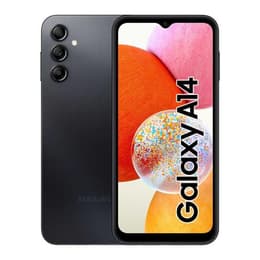
Galaxy A14
Galaxy A14
Starting at

Refurbished price:A$215.00

Versus A$390.00 new

See options
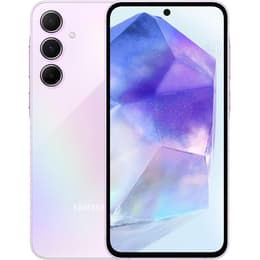
Galaxy A55
Galaxy A55
Starting at

Refurbished price:A$339.00

Versus A$699.00 new

See options

Ratings

The Samsung Galaxy A14, released in early 2023, and the Samsung Galaxy A55, launched in early 2024, are both Android smartphones from Samsung's popular A-series. While they share the same operating system, Android with Samsung's One UI, they cater to different user expectations, with the A14 positioned as an accessible option and the A55 offering a more refined mid-range experience. The primary distinctions lie in their build quality, processing power, and display technology.

Scores

Durability

The longevity of a smartphone is influenced by its physical resilience and the duration of software support it receives. These two devices present different approaches to durability and long-term usability.

  • Release Timeline & Software Support: The Galaxy A14 was released in January/February 2023, while the Galaxy A55 followed in March 2024. This newer release date means the A55 is expected to receive a longer period of major Android operating system updates and security patches, potentially extending its practical lifespan by an additional year compared to the A14, which was promised two major Android updates and four years of security upgrades.
  • Physical Durability: The Galaxy A14 features a plastic construction, and some models carry an IPX2 rating, indicating resistance to light splashes but not full water immersion. In contrast, the Galaxy A55 boasts a more robust design with Corning Gorilla Glass Victus+ on the front, a glass back, and a metal frame, alongside an IP67 rating for dust and water resistance, allowing it to withstand submersion in up to 1 meter of fresh water for up to 30 minutes.
  • Repairability: Both devices demonstrate a commitment to repairability. The Galaxy A14 5G has a repairability score of 8 out of 10, partly due to features like pull tabs for easier battery replacement. The Galaxy A55 achieves an even higher repairability score of 8.5 out of 10, attributed to its design facilitating easier disassembly and better availability of replacement parts.

Release year

2023

2024

Operating system

Android

Android

Foldable

No

No

Performance

The responsiveness and capability of a smartphone are largely determined by its internal components, impacting how smoothly applications run and how efficiently it handles daily tasks.

  • Processing Power: The Galaxy A14 is equipped with processors designed for essential smartphone functions, such as the Exynos 850/1330 or MediaTek Dimensity 700/Helio G80, depending on the specific model and region. The Galaxy A55, on the other hand, integrates a more advanced mid-range processor, the Exynos 1480, which provides a noticeable boost in performance for more demanding applications and multitasking.
  • Memory and Storage: The A14 typically comes with 4GB or 6GB of RAM and 64GB or 128GB of internal storage, suitable for general use and storing a moderate amount of data. The A55 offers more generous configurations, starting with 8GB of RAM and going up to 12GB, paired with 128GB or 256GB of storage, which benefits users who frequently switch between many applications or store large files.
  • Battery Life and Charging: Both devices house a substantial 5000mAh battery, designed to provide extended usage. The Galaxy A14 5G is noted for potentially offering up to two days of battery life under typical usage. While both offer good endurance, the Galaxy A55 supports faster 25W wired charging, allowing for quicker power replenishment compared to the A14's 15W charging capability.

Memory (GB)

4 GB

8 GB

Screen quality

The display is a primary interface for smartphone interaction, and differences in screen technology and specifications can significantly alter the visual experience.

  • Display Technology and Clarity: The Galaxy A14 features a PLS LCD panel, offering a clear viewing experience for everyday content. The Galaxy A55 elevates this with a Super AMOLED display, known for producing deeper blacks, higher contrast, and more vibrant colors, enhancing the visual richness of photos, videos, and applications. Both devices share a Full HD+ resolution (1080 x 2408/2340 pixels), ensuring sharp images and text.
  • Refresh Rate and Smoothness: The Galaxy A14 4G model operates at a standard 60Hz refresh rate, while the A14 5G variant offers a slightly smoother 90Hz refresh rate. The Galaxy A55 provides a more fluid visual experience with a 120Hz adaptive refresh rate, which makes scrolling, animations, and gaming appear noticeably smoother.
  • Brightness for Outdoor Use: For visibility in various lighting conditions, the Galaxy A55's Super AMOLED display can reach a peak brightness of 1,000 nits, making it more comfortable to view outdoors or in bright environments. The Galaxy A14 4G has a peak brightness of 480 nits, which is adequate for indoor use but may be less visible under direct sunlight.

Resolution

1080 x 2408

1080x2340

Audiovisual

Camera capabilities are a significant factor for many users, and both the Galaxy A14 and A55 offer multi-lens setups with varying degrees of photographic sophistication.

  • Rear Camera System: The Galaxy A14 typically includes a 50MP main camera, and depending on the region, may feature a 5MP ultrawide, 2MP macro, and 2MP depth sensor. The Galaxy A55 steps up its photography game with a 50MP main camera that includes Optical Image Stabilization (OIS), a 12MP ultrawide lens, and a 5MP macro sensor. The OIS on the A55's main sensor helps in capturing clearer photos and more stable videos, especially in challenging conditions.
  • Front Camera and Video Recording: For selfies and video calls, the Galaxy A14 is equipped with a 13MP front camera. The Galaxy A55 features a higher-resolution 32MP front camera, capable of capturing more detailed self-portraits. In terms of video, the A55 supports 4K resolution recording at 30 frames per second, offering a significant upgrade in video quality compared to the A14's 1080p video capabilities.
  • Low-Light Performance and Audio: The Galaxy A55 benefits from improved low-light photography, partly due to its larger sensor and AI Image Signal Processing, which helps in capturing more vibrant colors and details in dim environments. For audio, the Galaxy A14 4G includes a 3.5mm headphone jack and stereo speakers with Dolby Atmos support. The Galaxy A55, however, omits the 3.5mm headphone jack.

Miscellaneous

Beyond the core specifications, several practical features and design elements contribute to the overall user experience and daily convenience of these smartphones.

  • Connectivity and Ports: Both devices offer 5G connectivity in their respective 5G models, ensuring access to faster mobile networks. The Galaxy A55 supports newer wireless standards like Wi-Fi 6E and Bluetooth 5.3, providing potentially faster and more stable connections compared to the A14's Wi-Fi 5 and Bluetooth 5.2. Both utilize a USB-C port for charging and data transfer. A notable difference is the presence of a 3.5mm headphone jack on the Galaxy A14, which is absent on the Galaxy A55.
  • Security and Sensors: Both smartphones incorporate fingerprint sensors for secure unlocking. The Galaxy A14 features a side-mounted fingerprint sensor, integrated into the power button. The Galaxy A55 offers an in-display fingerprint sensor, providing a more seamless aesthetic. The A55 also includes NFC for contactless payments and other interactions.
  • Design and Handling: The Galaxy A14 has a plastic body, weighing around 201-205 grams. The Galaxy A55, with its glass front and back and metal frame, presents a more premium feel. It weighs slightly more at 213 grams, but its weight is generally well-distributed for comfortable handling.

Weight

201 oz

213 oz

Screen size (in)

6.6

6.6

Network

4G

5G

SIM card

Physical SIM

Physical SIM

Carrier compatibility

Unlocked

Unlocked

The Samsung Galaxy A14 and Galaxy A55 cater to distinct user needs within the Android smartphone market. User feedback for the Galaxy A14 often highlights its reliable battery life and solid performance for everyday tasks as key strengths. Some users, however, may find its display technology and overall performance less suited for intensive use. The Galaxy A55 generally receives praise for its more premium build quality, vibrant display, and smoother performance, making it a strong contender for users seeking a more refined experience. Criticisms might occasionally point to its larger size or the absence of a traditional headphone jack.

Users prioritizing a dependable device for essential communication, social media, and light browsing, who also value a long-lasting battery and the convenience of a 3.5mm headphone jack, may find the Galaxy A14 well-suited to their needs. It serves as a practical choice for students or individuals with straightforward smartphone requirements. Conversely, users who seek a more immersive visual experience, smoother multitasking and gaming performance, enhanced camera capabilities with better low-light performance, and a more robust, premium design will likely lean towards the Galaxy A55. This device aligns well with professionals or those who frequently consume media and demand more from their smartphone's capabilities.

For those considering either model, exploring quality-assured refurbished options can provide an eco-friendly alternative, offering access to these devices while supporting sustainable consumption.


See all articles

Our recent comparisons