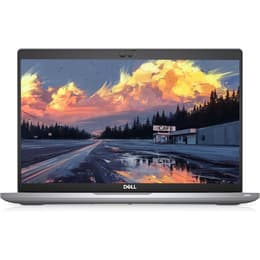
Dell Latitude 5300 13" vs Dell Latitude 5420 14"

Dell Latitude 5300 13"
Starting at

Refurbished price:A$480.00

Versus A$750.00 new

See options
Dell Latitude 5420 14"
Starting at

Refurbished price:A$426.00

Versus A$1,199.00 new

See options

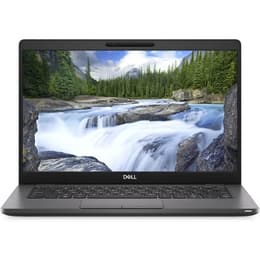
Dell's Latitude series offers business-oriented laptops designed for productivity and reliability. This comparison examines two models from the series: the Dell Latitude 5300 13, released in 2019, and the Dell Latitude 5420 14, launched in early 2021. While both are built for professional use, the 5420 introduces more recent internal components and enhanced connectivity options, distinguishing it from its predecessor. Both devices run on the Windows operating system, ensuring a familiar software experience for most users.

Scores

Durability

The longevity of a laptop is influenced by its build, software support, and ease of maintenance. These two Latitude models offer solid foundations for extended use, though their release timelines create some differences in expected support.

  • Release Timeline: The Latitude 5300 13, released in 2019, is an older model compared to the Latitude 5420 14, which launched in early 2021. This difference in age means the 5420 will likely receive software updates and security patches for a longer period, extending its functional lifespan.
  • Software Support: Both laptops are designed to run Windows, with the 5420 being more current and thus having a longer projected official support window for the latest Windows versions. The 5300, while still capable, will eventually reach its end-of-life for major OS updates sooner.
  • Repairability and Build: Both models feature robust construction suitable for business environments. The Latitude 5300 utilizes a sturdy plastic case reinforced with carbon fiber. The Latitude 5420 also incorporates carbon fiber and magnesium for durability. Both are generally considered maintainable, with accessible internal components for upgrades like RAM and storage.

Release year

2019

2020

Last Os Compatibility

Yes

Yes

Operating system

Windows 11

Windows 11

Performance

Performance in a business laptop translates to how smoothly it handles daily tasks, multitasking, and demanding applications. The generational gap between these two models is a key factor in their processing capabilities.

  • Processing Power: The Latitude 5300 13 is equipped with 8th Generation Intel Core processors. This provides reliable performance for common office applications, web browsing, and moderate multitasking. The Latitude 5420 14, featuring 11th Generation Intel Core processors, offers a noticeable uplift in processing efficiency and speed. This translates to faster application loading, smoother transitions between tasks, and better handling of more intensive software.
  • Memory and Storage: Both laptops support DDR4 RAM, with the Latitude 5420 typically offering faster 3200MHz memory compared to the 5300's 2666MHz. Both also utilize fast M.2 PCIe NVMe SSDs for quick boot times and data access, with various storage capacities available. The 5420 can be configured with up to 64GB of RAM, double the 5300's typical maximum of 32GB, which benefits users with extensive multitasking needs.
  • Real-world Responsiveness: Users of the Latitude 5300 generally report smooth operation for everyday office tasks. The Latitude 5420, with its newer processor generation and faster memory, provides a more responsive experience, particularly when running multiple applications simultaneously or handling data-intensive workloads.

Memory (GB)

8 GB

16 GB

Processor

Core i5 - Gen 8 (U)

Core i5-1135G7

Graphic card

Integrated Graphics

Intel Iris Xe Graphics

Screen quality

The display is a primary interface for any laptop, and differences in screen technology and specifications can significantly impact the user experience, especially for those who spend long hours in front of their device.

  • Display Size and Technology: The Latitude 5300 13 features a 13.3-inch display, while the Latitude 5420 14 offers a slightly larger 14-inch screen. Both commonly come with Full HD (1920x1080) IPS panels, providing good viewing angles and clarity. Some configurations of both models may also include lower-resolution HD (1366x768) options.
  • Brightness and Color Reproduction: The Latitude 5300's IPS panels typically offer around 300 nits of brightness, with some configurations having 220 nits. Certain 5300 IPS panels can cover up to 95% of the sRGB color gamut, providing vibrant images. The Latitude 5420 offers a wider range of brightness options, from 220 nits on base models to 300-400 nits on higher-end FHD panels. While some 5420 panels may only cover around 53% sRGB, others reach 100% sRGB for more accurate color representation. Both generally feature anti-glare coatings, which are beneficial for reducing reflections in various lighting conditions.
  • Refresh Rate: Both models typically feature a standard 60 Hz refresh rate, suitable for general productivity tasks. Neither display uses Pulse Width Modulation (PWM) for brightness adjustment, which can contribute to more comfortable viewing during prolonged use.

Resolution

1920 x 1080

1920 x 1080

Screen type

LED

LCD

Audiovisual

For business laptops, camera and audio quality are important for virtual meetings and communication. Both Latitude models provide essential features for these tasks, with some distinctions in their capabilities.

  • Webcam Performance: The Latitude 5300 13 typically includes a 0.9 MP webcam, offering 1280x720 resolution for video calls. The Latitude 5420 14 also features an integrated webcam, though some user feedback suggests its image quality can be "washed out" with noticeable artifacts. Both are generally sufficient for standard video conferencing.
  • Microphone and Speakers: Both laptops are equipped with integrated microphones for voice input during calls. The Latitude 5420's speakers have been noted for clear, crisp quality with some bass, comparable to a quality external Bluetooth speaker, making them suitable for media consumption and conference calls. While specific details on the 5300's speaker quality are less prominent, reviews suggest its audio output is "so-so".
  • Additional Features: The Latitude 5420 may include a webcam shutter for enhanced privacy, a feature not consistently highlighted for the 5300.

Miscellaneous

Beyond core performance and display, practical elements like connectivity, physical design, and security features contribute to the overall user experience and suitability for different work environments.

  • Connectivity Options: The Latitude 5300 13 offers a range of ports including USB 3.1 Gen 1 Type-A, an optional USB-C 3.1 Gen 2 with Thunderbolt 3, HDMI 1.4b, and Gigabit Ethernet. The Latitude 5420 14 provides more modern connectivity, featuring two USB-C Thunderbolt 4 ports with Power Delivery and DisplayPort Alt Mode, two USB-A 3.2 Gen 1 ports, HDMI 2.0, and Gigabit Ethernet. The inclusion of Thunderbolt 4 on the 5420 offers greater bandwidth and versatility for connecting external displays and high-speed peripherals. Both support Wi-Fi and Bluetooth, with the 5420 often featuring newer Wi-Fi 6 or 6E standards for improved wireless performance.
  • Physical Design and Portability: The Latitude 5300 is a compact 13.3-inch laptop, starting at approximately 1.24 kg (2.73 lbs). The Latitude 5420 is a 14-inch model, starting at around 1.37 kg (3.03 lbs). Both are designed for portability, though the 5420's chassis has been described by some as feeling "old-school" or "thick" compared to more modern, sleeker designs.
  • Security Features: Both Latitude models emphasize security, a hallmark of Dell's business line. They often include features like fingerprint readers integrated into the power button and optional Smart Card readers. The 5420 also supports Windows Hello for seamless authentication.

Weight

1240 oz

1370 oz

Screen size

13

14

User feedback for the Dell Latitude 5300 13 often highlights its compact size, sturdy build, and comprehensive business features as strong points, making it a reliable choice for everyday office tasks and portability. Some users have noted that its battery life, while generally good, might not always meet expectations given its capacity, and some display configurations could be brighter.

The Dell Latitude 5420 14 is frequently praised for its robust performance, excellent and modern connectivity options including Thunderbolt 4, and good upgradability. Its battery life is often cited as a significant advantage, with many users experiencing all-day usage. However, some criticisms point to its chassis design feeling less contemporary, and the quality of its clickpad and webcam in certain configurations.

Users prioritizing a highly portable and established business laptop for general productivity, where the latest processing power isn't the absolute top concern, may find the Latitude 5300 13 well-suited to their needs. Conversely, those who require more modern processing capabilities, advanced connectivity for peripherals, and potentially longer battery life for demanding work on the go, will likely lean towards the Latitude 5420 14. Both models offer a dependable foundation for professional use, and considering a quality-assured refurbished option for either can be an eco-friendly alternative to purchasing new.

See all articles

Our recent comparisons