
Google Pixel 8 Pro vs Nokia X30

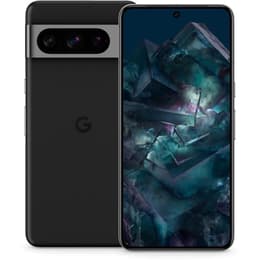
Google Pixel 8 Pro
Google Pixel 8 Pro
Starting at

Refurbished price:A$565.00

Versus A$1,859.00 new

See options
Nokia X30
Nokia X30
Starting at

Refurbished price:A$299.00

Versus A$965.00 new

See options

The Google Pixel 8 Pro (2023) and the Nokia X30 (2022) are Android smartphones offering distinct experiences for users. While the Pixel 8 Pro focuses on advanced computational photography and extended software support, the Nokia X30 emphasizes a balanced feature set with a focus on sustainable materials. Both devices run on the Android operating system, providing access to a wide ecosystem of applications and services.

Scores

Durability

The practical lifespan of a smartphone is influenced by its release date, software support, and physical resilience.

  • Release Timeline and Software Support: The Google Pixel 8 Pro, released in October 2023, benefits from Google's commitment to seven years of operating system and security updates, extending its software longevity significantly. The Nokia X30, launched in September 2022, is promised three years of OS upgrades and three years of monthly security updates, which means it will receive updates up to Android 15.
  • Durability Features: Both devices offer protection against environmental elements. The Pixel 8 Pro features an IP68 rating for dust and water resistance and is protected by Corning Gorilla Glass Victus 2. The Nokia X30 has an IP67 rating, making it dust and water resistant, and uses Corning Gorilla Glass Victus for screen protection.
  • Expected Practical Lifespan: Users can expect the Pixel 8 Pro to remain current with software features and security patches for a longer period due to its extended update policy. The Nokia X30 offers a solid three-year lifespan with guaranteed updates, aligning with typical upgrade cycles for many users.

Performance

Performance in smartphones is determined by the internal processing components, affecting how smoothly applications run and how efficiently the device handles daily tasks.

  • Processing Capabilities: The Google Pixel 8 Pro handles demanding applications and multitasking smoothly, providing a responsive experience for gaming, video editing, and complex AI-driven features. The Nokia X30 offers sustainable and dependable performance for everyday tasks, including browsing, social media, and moderate gaming, though it may show slight lags during the most demanding operations.
  • Memory and Storage: The Pixel 8 Pro is available with 12GB of RAM and storage options up to 1TB, providing ample space and efficient multitasking for power users. The Nokia X30 comes with 6GB or 8GB of RAM and up to 256GB of internal storage, which is sufficient for most users but lacks an expandable storage option.
  • Battery Behavior: The Pixel 8 Pro is equipped with a 5050 mAh battery, designed to provide all-day power for typical usage, with users reporting it lasting from morning to late evening with moderate to heavy use. The Nokia X30 features a 4200 mAh battery, which generally lasts a full day of average use, though heavy users might find themselves needing to charge more frequently. Both support fast wired charging, with the Pixel 8 Pro also offering wireless charging.

Memory (GB)

12 GB

8 GB

Screen quality

The display is a primary interface for smartphone interaction, and its quality significantly impacts the user experience.

  • Display Technology and Resolution: The Google Pixel 8 Pro features a 6.7-inch LTPO OLED display with a QHD+ resolution (2992 x 1344 pixels), offering sharp details and vibrant colors. The Nokia X30 has a 6.43-inch AMOLED display with an FHD+ resolution (2400 x 1080 pixels), providing clear visuals for daily consumption.
  • Brightness and Refresh Rate: The Pixel 8 Pro's display can reach a peak brightness of 2400 nits, ensuring excellent visibility even in direct sunlight, and features an adaptive refresh rate ranging from 1Hz to 120Hz for smooth scrolling and power efficiency. The Nokia X30 offers a typical brightness of 450 nits and a peak of 700 nits, with a 90Hz refresh rate that adapts between 60Hz and 90Hz for a fluid viewing experience.
  • Viewing Experience: The larger, higher-resolution, and brighter screen of the Pixel 8 Pro provides a more immersive and detailed viewing experience, particularly for media consumption and detailed work. The Nokia X30's display offers good color reproduction and smoothness for general use, making it suitable for browsing and casual media viewing.

Audiovisual

Camera capabilities are a key differentiator for modern smartphones, influencing how users capture and share their experiences.

  • Rear Camera System: The Google Pixel 8 Pro boasts a versatile triple-camera system, including a 50MP main sensor, a 48MP ultrawide lens with autofocus, and a 48MP telephoto lens with 5x optical zoom. This setup excels in various lighting conditions, offering enhanced low-light performance and detailed zoom capabilities. The Nokia X30 features a dual-camera setup with a 50MP main sensor with optical image stabilization (OIS) and a 13MP ultrawide lens.
  • Photography Features and Performance: The Pixel 8 Pro leverages advanced computational photography for features like improved Night Sight, Magic Editor, and Best Take, enhancing image quality and offering extensive post-capture editing options. The Nokia X30 includes features like Night Mode 2.0, Dark Vision, and AI Portrait, providing satisfactory results for everyday photography, particularly in good lighting.
  • Video Recording and Audio: The Pixel 8 Pro supports 4K video recording at 24, 30, or 60 frames per second on both front and rear cameras, with advanced video stabilization and audio features. The Nokia X30 records video at up to 1080p at 30 or 60 frames per second, and includes OZO Spatial Audio capture with wind noise reduction for improved audio quality in recordings.

Miscellaneous

Beyond core features, several practical elements contribute to the overall usability and experience of a smartphone.

  • Connectivity and Ports: The Google Pixel 8 Pro supports Wi-Fi 7 and Bluetooth 5.3, offering advanced wireless connectivity. It features a USB-C port for charging and data transfer, but lacks a 3.5mm headphone jack. The Nokia X30 supports Wi-Fi 6 and Bluetooth 5.1, and also uses a USB-C 2.0 port with OTG functionality, without a headphone jack.
  • Biometric Security and Sensors: Both devices incorporate an under-display optical fingerprint sensor for secure unlocking. The Pixel 8 Pro also offers secure face recognition. Both phones include standard sensors like accelerometers, gyroscopes, and compasses.
  • Design and Build Materials: The Pixel 8 Pro has an aluminum frame and a glass back, weighing approximately 213 grams. The Nokia X30 distinguishes itself with an emphasis on sustainability, featuring a frame made from 100% recycled aluminum and a back cover made from 65% recycled plastic, weighing around 185 grams.

Screen size (in)

6.7

6.43

Network

5G

5G

SIM card

Physical SIM + eSIM

Dual Physical SIM

Carrier compatibility

Unlocked

Unlocked

The Google Pixel 8 Pro and the Nokia X30 cater to different user priorities, each offering a compelling set of features within the Android ecosystem.

Users frequently praise the Pixel 8 Pro for its exceptional camera capabilities, particularly its advanced computational photography and long-term software support, which ensures the device remains updated for many years. Some common criticisms, though not widespread, sometimes relate to its size and weight for those preferring a more compact device. The Nokia X30 is often commended for its robust build quality, its commitment to using recycled materials, and its clean Android experience. User feedback sometimes points to its performance being suitable for everyday use rather than intensive tasks, and its video recording capabilities being limited to 1080p.

Users prioritizing a cutting-edge camera system, a vibrant and bright display, and the longest possible software support will find the Google Pixel 8 Pro well-suited to their needs. Its powerful processing is ideal for demanding applications and advanced AI features. Conversely, users who value a durable device with a strong emphasis on sustainable manufacturing, a clean Android experience, and reliable performance for daily tasks may lean toward the Nokia X30. Both devices are available as quality-assured refurbished options, providing an eco-friendly alternative for consumers looking to make informed and sustainable choices.

See all articles

Our recent comparisons