

Google Pixel 8 Pro vs Motorola Razr 40

Google Pixel 8 Pro
Google Pixel 8 Pro
Starting at

Refurbished price:A$565.00

Versus A$1,859.00 new

See options
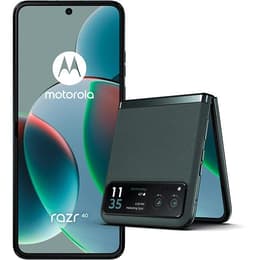
Motorola Razr 40
Motorola Razr 40
See options

Ratings

The Google Pixel 8 Pro, released in October 2023, and the Motorola Razr 40, launched in June 2023, represent distinct approaches to modern smartphone design. While the Pixel 8 Pro offers a traditional, high-performance slab experience, the Razr 40 provides a unique foldable clamshell form factor. These differences extend to their core capabilities, with the Pixel 8 Pro focusing on advanced computational features and extended software support, and the Razr 40 prioritizing a compact, stylish design with a secondary external display.

Scores

Durability

The expected lifespan of a smartphone is influenced by its physical resilience and the duration of software support it receives.

  • Release Timeline and Software Support: The Google Pixel 8 Pro, released in October 2023, is notable for its commitment to seven years of software updates, including Android OS upgrades, security updates, and regular Feature Drops. This extended support aims to keep the device current and secure for a longer period. The Motorola Razr 40, released in June 2023, typically receives a shorter duration of major OS updates, though it still benefits from security patches.
  • Physical Durability: The Pixel 8 Pro features Gorilla Glass Victus 2 for screen protection and an IP68 rating for dust and water resistance, indicating a high level of protection against environmental elements. The Razr 40, as a foldable device, incorporates a flexible main display and has a water-repellent coating with an IP52 rating, offering splash resistance but less comprehensive protection against dust and water immersion compared to the Pixel 8 Pro.
  • Practical Lifespan: Users prioritizing long-term software relevance and robust environmental protection may find the Pixel 8 Pro more aligned with their needs. The Razr 40's foldable design, while offering unique portability, introduces different considerations regarding screen care and overall structural integrity over time.

Release year

2023

2023

Compatible with latest Update

Yes

Yes

Foldable

No

Yes

Performance

Performance in daily use is a key differentiator, impacting how smoothly applications run and how efficiently the device manages tasks.

  • Processor Capabilities: The Google Pixel 8 Pro is equipped with a current-generation processor designed for demanding applications, advanced AI features, and efficient multitasking. This allows for smooth navigation, rapid app loading, and capable handling of graphically intensive games and complex computational tasks. The Motorola Razr 40 features a processor that provides reliable performance for everyday tasks, social media, and moderate gaming, ensuring a responsive user experience for general use.
  • Battery Behavior: The Pixel 8 Pro typically offers all-day battery life for many users, with some reporting 5-7 hours of screen-on time under varied usage conditions. It supports faster wired and wireless charging speeds. The Razr 40, with its battery capacity, generally provides sufficient power for a full day of typical use, and also supports wired and wireless charging, though at different speeds.
  • Storage and Multitasking: Both devices offer various internal storage options, with the Pixel 8 Pro providing up to 1 TB in some configurations and 12 GB of RAM, while the Razr 40 offers up to 256 GB of storage and 8 GB or 12 GB of RAM. The Pixel 8 Pro's higher RAM capacity contributes to smoother transitions between numerous open applications and more intensive background processes.

Memory (GB)

12 GB

8 GB

Screen quality

The display is a primary interface, and both devices offer distinct visual experiences tailored to their form factors.

  • Display Technology and Resolution: The Google Pixel 8 Pro features a 6.7-inch LTPO OLED display with a high resolution of 1344 x 2992 pixels, providing sharp images and vibrant colors. The Motorola Razr 40 has a 6.9-inch foldable LTPO AMOLED main display with a resolution of 1080 x 2640 pixels, offering a large viewing area when unfolded. The Razr 40 also includes a smaller 1.5-inch OLED external display for quick information and notifications.
  • Brightness and Refresh Rate: The Pixel 8 Pro's display can reach a peak brightness of 2400 nits, ensuring excellent visibility even in bright outdoor conditions, and features an adaptive refresh rate from 1Hz to 120Hz for smooth scrolling and power efficiency. The Razr 40's main display offers a 144Hz refresh rate and a peak brightness of 1400 nits, providing a fluid visual experience.
  • Viewing Experience: The Pixel 8 Pro's flat display offers a consistent viewing surface, ideal for media consumption and productivity. The Razr 40's foldable screen, while presenting a crease that is less noticeable during use, provides the unique benefit of a compact form factor when closed, making it highly portable.

Resolution

1344 x 2992

1080 x 2640

Screen type

LTPO OLED

Foldable LTPO AMOLED

Audiovisual

Camera capabilities are a significant factor for many users, and these devices offer different strengths in photography and videography.

  • Camera System Configuration: The Google Pixel 8 Pro features a versatile triple-camera system, including a 50 MP main sensor, a 48 MP ultrawide lens, and a 48 MP telephoto lens with 5x optical zoom. The Motorola Razr 40 has a dual-camera setup with a 64 MP main sensor and a 13 MP ultrawide lens. Both devices include a front-facing camera for selfies and video calls.
  • Photography Performance: The Pixel 8 Pro is renowned for its advanced computational photography, delivering consistently high-quality images with excellent detail, dynamic range, and natural color reproduction across various lighting conditions, including strong low-light performance. Its Pro Controls offer greater creative flexibility. The Razr 40's camera system performs well in good lighting, capturing detailed and vibrant photos, though its low-light performance and overall versatility may not match the Pixel 8 Pro's advanced capabilities.
  • Video Recording and Audio: Both phones support 4K video recording. The Pixel 8 Pro offers enhanced video stabilization and features like Audio Magic Eraser, contributing to high-quality video and clear audio capture. The Razr 40 also provides good video quality and features electronic stabilization, with users reporting clear audio from its stereo speakers.

Main camera

50 megapixels

64 megapixels

Front camera

10.5 megapixels

32 megapixels

Miscellaneous

Beyond core features, several practical elements contribute to the overall user experience and daily convenience.

  • Connectivity and Ports: Both devices support 5G connectivity, ensuring fast mobile data speeds. The Pixel 8 Pro supports Wi-Fi 7, while the Razr 40 supports Wi-Fi 6E, offering robust wireless internet connections. Both utilize USB-C for charging and data transfer, but neither includes a traditional headphone jack.
  • Biometric Security: The Pixel 8 Pro offers secure face unlock and an under-display fingerprint sensor for convenient and secure access. The Razr 40 features a side-mounted fingerprint sensor for biometric authentication.
  • Design and Handling: The Pixel 8 Pro has a polished aluminum frame and a matte glass back, weighing 213 grams. Its dimensions are 162.6 x 76.5 x 8.8 mm. The Razr 40, with its foldable design, is more compact when closed (88.2 x 74 x 15.8 mm) and weighs 188.6 grams, making it highly portable. When unfolded, it measures 170.8 x 74 x 7.4 mm. The Razr 40's build includes a plastic front and back with an aluminum frame and stainless steel hinge.

Weight

213 oz

189 oz

Screen size (in)

6.7

6,9

Network

5G

5G

SIM card

Physical SIM + eSIM

Dual Physical SIM + eSIM

Carrier compatibility

Unlocked

Unlocked

User sentiment for the Google Pixel 8 Pro frequently highlights its exceptional camera performance, particularly its computational photography capabilities and AI-driven features, as a major strength. Users also praise its clean Android experience and the promise of long-term software support. Some common concerns include battery life, which, while improved, may still require careful management for heavy users, and thermal performance under sustained heavy loads.

The Motorola Razr 40 is often lauded for its distinctive foldable design, offering a compact and stylish form factor that appeals to those seeking a unique smartphone experience. Its external display is appreciated for quick access to notifications and controls. Criticisms sometimes point to its camera performance in challenging conditions compared to flagship devices, and the inherent durability considerations of a foldable screen.

Users prioritizing a top-tier camera system, extensive software longevity, and a powerful, AI-enhanced computing experience will find the Google Pixel 8 Pro well-suited to their needs. Conversely, users who value a highly portable, compact, and stylish device with a unique foldable design for everyday tasks and moderate usage may lean toward the Motorola Razr 40. Both devices offer a quality-assured refurbished option, providing an eco-friendly alternative for consumers looking to make informed and sustainable choices.


See all articles

Our recent comparisons