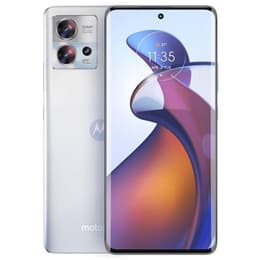

Google Pixel 6a vs Motorola Edge 30 Fusion

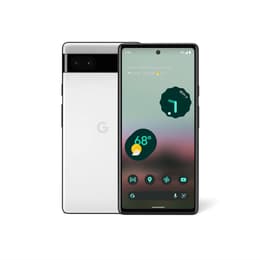
Google Pixel 6a
Google Pixel 6a
Starting at

Refurbished price:A$236.00

Versus A$569.00 new

See options
Motorola Edge 30 Fusion
Starting at

Refurbished price:A$257.46

Versus A$1,352.00 new

See options

The Google Pixel 6A (2022) and the Motorola Edge 30 Fusion (2022) are both Android smartphones released in the same year, offering distinct approaches to the mobile experience. While the Pixel 6A emphasizes a streamlined software experience and advanced computational photography, the Edge 30 Fusion focuses on a high-refresh-rate display and robust performance. Both devices operate on the Android platform, providing users with a familiar and customizable interface.

Scores

Durability

The longevity of a smartphone is influenced by its software support, physical resilience, and ease of repair. These two devices present different profiles in these areas.

  • Software Support: The Google Pixel 6A is expected to receive OS updates until at least July 2025 and security updates until at least July 2027, offering a longer period of guaranteed software support. The Motorola Edge 30 Fusion typically receives 2-3 years of major OS updates and 3 years of security updates from its release in September 2022.
  • Physical Durability: The Pixel 6A features Corning Gorilla Glass 3 on its display and boasts an IP67 rating for dust and water resistance, meaning it can withstand immersion in up to 1 meter of water for 30 minutes. The Motorola Edge 30 Fusion comes with Gorilla Glass 5 for its display and has an IP52 rating, indicating splash and dust resistance.
  • Repairability: The Pixel 6A has received a good repairability score of 7 out of 10, with components like the battery being relatively easy to access and replace. Information regarding the specific repairability score for the Motorola Edge 30 Fusion is less readily available, though its construction with an aluminum frame and glass back suggests a standard level of repair complexity.

Release year

2022

2022

Compatible with latest Update

Yes

Yes

Foldable

No

No

Performance

Evaluating the performance of these smartphones involves looking at how smoothly they handle daily tasks, demanding applications, and multitasking scenarios.

  • Processing Power: The Google Pixel 6A is equipped with a processor designed by Google, which provides a responsive and efficient experience for everyday use, including app navigation and general tasks. The Motorola Edge 30 Fusion utilizes a high-end processor from the previous year, enabling it to handle graphically intensive games and multiple applications simultaneously with considerable fluidity.
  • Memory and Storage: The Pixel 6A typically comes with 6GB of RAM and 128GB of internal storage, which is suitable for most users and their application needs. The Edge 30 Fusion offers more versatile configurations, including options for 8GB or 12GB of RAM and storage capacities ranging from 128GB to 512GB, providing more headroom for heavy multitasking and extensive media storage.
  • Battery Behavior: Both devices feature similar battery capacities, with the Pixel 6A housing a 4410 mAh battery and the Edge 30 Fusion a 4400 mAh battery. User experiences suggest that both can generally last through a full day of moderate use, though intensive tasks will naturally require more frequent charging. The Edge 30 Fusion supports faster charging speeds.

Memory (GB)

6 GB

8 GB

Screen quality

The display is a primary interface for smartphone interaction, and both devices offer vibrant viewing experiences with distinct characteristics.

  • Display Technology and Size: The Google Pixel 6A features a 6.1-inch OLED display, known for its deep blacks and excellent contrast. The Motorola Edge 30 Fusion sports a slightly larger 6.55-inch P-OLED display, which also delivers rich colors and strong contrast.
  • Resolution and Clarity: Both smartphones offer a Full HD+ resolution (1080 x 2400 pixels), resulting in sharp and clear visuals for everyday content consumption. The pixel density is high enough on both to ensure individual pixels are not discernible during typical use.
  • Refresh Rate and Brightness: A key difference lies in the refresh rate; the Pixel 6A has a standard 60Hz refresh rate, providing a smooth but conventional scrolling experience. The Edge 30 Fusion, however, boasts a 144Hz refresh rate, offering noticeably smoother animations and a more fluid feel when navigating the interface or playing compatible games. The Edge 30 Fusion also offers higher peak brightness for better outdoor visibility.

Resolution

1080 x 2400

1080 x 2400

Screen type

OLED

P-OLED

Audiovisual

Camera capabilities are a significant factor for many users, and these devices approach photography with different strengths.

  • Rear Camera System: The Google Pixel 6A features a dual-camera setup with a 12.2 MP main sensor and a 12 MP ultrawide sensor. It is highly regarded for its computational photography, producing consistently good images with accurate colors and dynamic range, especially in various lighting conditions. The Motorola Edge 30 Fusion includes a triple-camera system, typically with a 50 MP main sensor, a 13 MP ultrawide sensor (often with macro capabilities), and a 2 MP depth sensor. Its main camera performs well in good lighting, capturing detailed images.
  • Low-Light and Video Performance: The Pixel 6A excels in low-light photography thanks to its advanced software processing, including features like Night Sight. It can record video at 4K resolution at 30 or 60 frames per second. The Edge 30 Fusion also offers good low-light performance with its Night Vision mode. It supports video recording up to 8K at 30 frames per second, or 4K at 30 frames per second with HDR10.
  • Front Camera and Audio: The Pixel 6A has an 8 MP front camera, suitable for video calls and selfies. The Edge 30 Fusion features a higher-resolution 32 MP front camera, which captures detailed selfies. For audio, both devices offer stereo loudspeakers, and the Edge 30 Fusion is noted for clear call quality with effective noise filtering.

Main camera

12.2 megapixels

50 megapixels

Front camera

8 megapixels

32 megapixels

Miscellaneous

Beyond core features, several practical elements contribute to the overall user experience and daily convenience.

  • Connectivity and Ports: Both the Google Pixel 6A and the Motorola Edge 30 Fusion support 5G connectivity, ensuring access to faster mobile networks where available. They also include modern Wi-Fi standards (Wi-Fi 6E for Pixel 6A, Wi-Fi 6 for Edge 30 Fusion) and Bluetooth 5.2 for wireless accessories. Both devices utilize a USB-C port for charging and data transfer, but neither includes a traditional 3.5mm headphone jack.
  • Biometric Security and Sensors: Both smartphones feature an under-display optical fingerprint sensor for secure unlocking. The Edge 30 Fusion also supports face unlock. Standard sensors like accelerometers, gyroscopes, and compasses are present in both devices.
  • Physical Design and Materials: The Pixel 6A has dimensions of 152.2 x 71.8 x 8.9 mm and weighs 178 grams, featuring a glass front (Gorilla Glass 3), an aluminum frame, and a plastic back. The Motorola Edge 30 Fusion is slightly larger and thinner at 158.5 x 71.2 x 7.5 mm and weighs 168-175 grams, with a glass front and back (Gorilla Glass 5) and an aluminum frame, giving it a premium feel.

Weight

250 oz

168 oz

Screen size (in)

6.1

6,55

SIM card

Physical SIM + eSIM

Dual Physical SIM

Carrier compatibility

Unlocked

Unlocked

The Google Pixel 6A and Motorola Edge 30 Fusion each offer compelling features, catering to different user priorities. User feedback for the Pixel 6A often praises its exceptional camera performance, driven by Google's computational photography, and its consistent software experience with extended update support. Some common criticisms include its standard 60Hz display and the absence of faster charging. The Motorola Edge 30 Fusion is frequently lauded for its fluid 144Hz display, powerful performance for its class, and premium design. However, its camera performance, while capable, may not consistently match the Pixel's computational strengths, and its software update policy is shorter.

Users prioritizing a long-lasting software experience, a highly reliable camera for diverse conditions, and a compact form factor may find the Google Pixel 6A well-suited to their needs. Its strengths lie in delivering a consistent and intelligent smartphone experience. Conversely, individuals who value a very smooth display, robust performance for gaming and demanding applications, and a sleek design might lean towards the Motorola Edge 30 Fusion. This device offers a more immersive visual experience and powerful hardware for intensive use. Both devices represent solid choices in their category, and considering refurbished options for either model can provide an eco-friendly alternative for making an informed and sustainable choice.


See all articles

Our recent comparisons