Google Pixel 6a vs iPhone 14 Plus

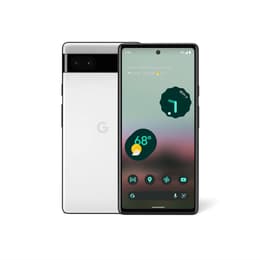
Google Pixel 6a
Google Pixel 6a
Starting at

Refurbished price:A$236.00

Versus A$569.00 new

See options
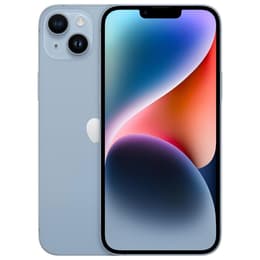
iPhone 14 Plus
iPhone 14 Plus
Starting at

Refurbished price:A$480.00

Versus A$1,249.00 new

See options

Ratings

The Google Pixel 6A, released in July 2022, and the iPhone 14 Plus, launched in October 2022, represent distinct approaches to smartphone design and user experience. While both devices offer capable performance for daily use, they differ significantly in their operating systems, physical dimensions, and core feature sets. The Pixel 6A operates on the Android platform, emphasizing Google's software integration and a more compact form factor, whereas the iPhone 14 Plus runs on iOS, providing a larger display and a focus on the Apple ecosystem.

Scores

Durability

Evaluating the long-term usability of a smartphone involves considering its software support, physical durability, and ease of repair.

  • Software Longevity: The Google Pixel 6A is expected to receive operating system updates until at least July 2025 and security updates until at least July 2027, providing a solid period of software support. The iPhone 14 Plus, running on iOS, typically benefits from a longer duration of software updates from Apple, often extending beyond that of many Android devices.
  • Physical Resilience: The Pixel 6A features Corning Gorilla Glass 3 on its front display and an IP67 rating for dust and water resistance, indicating protection against immersion in up to 1 meter of water for 30 minutes. The iPhone 14 Plus incorporates Apple's Ceramic Shield front cover, designed for enhanced drop performance, and boasts an IP68 rating, allowing for submersion in up to 6 meters of water for 30 minutes.
  • Practical Lifespan: Both devices are built to withstand typical daily use, with their respective durability features contributing to their overall longevity. The availability of quality-assured refurbished options for both models further extends their practical lifespan, offering a sustainable choice for consumers.

Release year

2022

2022

Compatible with latest Update

Yes

Yes

Foldable

No

No

Performance

The performance of these devices is influenced by their internal components, affecting how smoothly applications run and how efficiently tasks are handled.

  • Processing Capabilities: The Google Pixel 6A is equipped with a processor designed by Google, which enables smooth navigation and efficient handling of everyday applications. The iPhone 14 Plus utilizes a powerful processor that delivers responsive performance for demanding applications, multitasking, and graphically intensive games.
  • System Responsiveness: Users of the Pixel 6A generally report a fluid experience for daily tasks, with applications loading quickly and the system maintaining responsiveness. The iPhone 14 Plus is noted for its consistent speed and efficiency, ensuring that app switching and background processes operate without noticeable delays.
  • Memory and Storage: Both devices come with 6GB of RAM, which supports effective multitasking. The Pixel 6A offers a single storage configuration of 128GB. The iPhone 14 Plus provides more storage flexibility with options for 128GB, 256GB, and 512GB.

Memory (GB)

6 GB

6 GB

Screen quality

The visual experience on a smartphone is largely defined by its display technology, size, and clarity.

  • Display Technology and Size: The Google Pixel 6A features a 6.1-inch OLED display, offering vibrant colors and deep blacks in a more compact form factor. The iPhone 14 Plus boasts a larger 6.7-inch Super Retina XDR OLED display, providing an expansive viewing area for media consumption and productivity.
  • Resolution and Clarity: The Pixel 6A's display has a resolution of 1080 x 2400 pixels, delivering clear and sharp visuals for its size. The iPhone 14 Plus offers a higher resolution of 1284 x 2778 pixels, contributing to a very sharp and detailed image on its larger screen.
  • Brightness and Refresh Rate: The Pixel 6A can reach a peak brightness of up to 778 nits with adaptive brightness enabled, ensuring good visibility in various lighting conditions. The iPhone 14 Plus achieves a typical brightness of 800 nits and can peak at 1200 nits for HDR content, offering strong outdoor visibility. Both devices feature a standard 60Hz refresh rate, which provides a smooth experience for general use.

Resolution

1080 x 2400

1284 x 2778

Screen type

OLED

Super Retina XDR OLED

Audiovisual

Both smartphones offer capable camera systems, though their strengths and processing approaches differ.

  • Rear Camera System: The Google Pixel 6A includes a dual-camera setup on the rear, consisting of a 12.2-megapixel wide lens and a 12-megapixel ultrawide lens. It is recognized for its computational photography, which enhances image quality, particularly in challenging lighting. The iPhone 14 Plus also features a dual 12-megapixel rear camera system, with a wide and an ultrawide lens, designed to capture detailed photos and videos with improved low-light performance compared to earlier models.
  • Photography Performance: The Pixel 6A delivers consistent colors and good dynamic range, with its Night Sight mode effectively brightening low-light scenes. The iPhone 14 Plus provides reliable image capture across various conditions, with a focus on natural color reproduction and strong video recording capabilities. Neither device includes a dedicated telephoto lens.
  • Front Camera and Audio: The Pixel 6A has an 8-megapixel front camera. The iPhone 14 Plus features a 12-megapixel front camera with autofocus, which contributes to sharper selfies. Both phones offer stereo speakers, providing a good audio experience for media consumption.

Main camera

12.2 megapixels

12 megapixels

Front camera

8 megapixels

12 megapixels

Miscellaneous

Beyond core performance, several practical features contribute to the overall user experience of these devices.

  • Connectivity and Ports: Both the Pixel 6A and iPhone 14 Plus support 5G cellular networks and Wi-Fi 6 for fast wireless connectivity. The Pixel 6A uses a USB-C port for charging and data transfer. The iPhone 14 Plus retains the Lightning port. For wireless accessories, the Pixel 6A supports Bluetooth 5.2, while the iPhone 14 Plus features the slightly newer Bluetooth 5.3.
  • Biometrics and Sensors: The Pixel 6A incorporates an in-display fingerprint sensor for secure unlocking and authentication. The iPhone 14 Plus relies on Face ID, Apple's facial recognition system.
  • Design and Handling: The Pixel 6A has a plastic back and an aluminum frame, weighing approximately 178 grams, offering a comfortable and relatively compact feel. The iPhone 14 Plus features an aluminum frame with a glass back and weighs around 203 grams, providing a larger screen experience.

Weight

250 oz

203 oz

Screen size (in)

6.1

6,7

SIM card

Physical SIM + eSIM

Physical SIM + eSIM

Carrier compatibility

Unlocked

Unlocked

When choosing between the Google Pixel 6A and the iPhone 14 Plus, user priorities regarding operating system, device size, and specific features are key considerations. The Pixel 6A is often praised for its strong camera performance, particularly its computational photography capabilities, and its more compact design, making it suitable for users who prefer a smaller device that is easy to handle with one hand. Some users have noted that the Pixel 6A's 60Hz display and Gorilla Glass 3, while functional, are areas where it differs from more premium offerings.

The iPhone 14 Plus is frequently highlighted for its expansive display, robust battery life, and the consistent performance of the iOS ecosystem. Users appreciate the larger screen for media consumption and the overall smoothness of the Apple experience. Criticisms sometimes point to the 60Hz refresh rate, which is standard but not as fluid as higher refresh rate displays found on some other devices.

Users prioritizing a compact Android experience with excellent photography and Google's software integration may find the Pixel 6A well-suited to their needs. Conversely, those who value a larger display, the iOS ecosystem, and extended battery life will likely lean towards the iPhone 14 Plus. Both devices offer reliable performance for everyday tasks. For those seeking a more environmentally conscious choice, considering a refurbished version of either model provides a quality-assured alternative.

See all articles

Our recent comparisons