
Galaxy S25+ vs Google Pixel 9

Galaxy S25+
Galaxy S25+
Starting at

Refurbished price:A$919.00

Versus A$1,699.00 new

See options
Google Pixel 9
Google Pixel 9
Starting at

Refurbished price:A$717.00

Versus A$1,349.00 new

See options

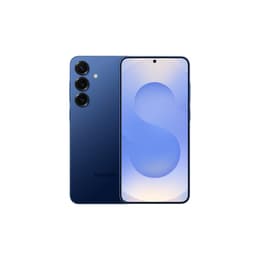
The Samsung Galaxy S25 Plus (2025) and the Google Pixel 9 (2024) are prominent Android smartphones, each offering a distinct approach to mobile technology. While both devices run on the Android operating system and aim to deliver a premium user experience, they differ in display resolution, camera capabilities, and overall design philosophy. The Galaxy S25 Plus emphasizes a larger, higher-resolution screen and a versatile camera system, whereas the Pixel 9 focuses on a compact form factor and advanced computational photography.

Scores

Durability

When considering the long-term usability of a smartphone, factors like release timeline, software support, and physical durability play a significant role. Both the Galaxy S25 Plus and the Pixel 9 are designed for extended practical lifespans, though they were released at different times.

  • Release Timeline: The Google Pixel 9 was released in August 2024, making it several months older than the Samsung Galaxy S25 Plus, which launched in February 2025. This difference in release date means the Galaxy S25 Plus benefits from a slightly newer hardware generation.
  • Software Longevity: Both manufacturers have committed to providing extensive software support. The Galaxy S25 Plus is expected to receive seven years of Android updates, ensuring it stays current with the latest features and security patches for an extended period. Similarly, the Google Pixel 9 also comes with a commitment of seven years of OS and security updates, positioning both devices as excellent long-term investments in terms of software.
  • Physical Durability: Both devices incorporate Corning Gorilla Glass Victus 2 for screen protection, offering a good level of resistance against drops and scratches. The Galaxy S25 Plus features an aluminum frame, while the Pixel 9 utilizes a frame made from 100% recycled aluminum, contributing to its sustainability profile. Both phones also carry an IP68 rating for dust and water resistance, indicating robust protection against environmental elements.

Release year

2025

2024

Operating system

Android

Android

Foldable

No

No

Performance

The performance of a smartphone is crucial for daily tasks, from navigating apps to demanding multimedia use. Both the Galaxy S25 Plus and the Pixel 9 are equipped with powerful internal components designed to deliver a smooth and responsive experience.

  • Processing Power: The Samsung Galaxy S25 Plus is powered by a current-generation processor, enabling it to handle demanding applications and multitasking with efficiency. Users report a very smooth experience when switching between apps and navigating the interface. The Google Pixel 9 features its own custom-designed processor, optimized for integrating artificial intelligence features and ensuring a fluid user experience for everyday tasks and general usage.
  • Multitasking and Responsiveness: Both devices come with 12GB of RAM, which is ample for running multiple applications simultaneously without significant slowdowns. This allows for seamless transitions between tasks and keeps frequently used apps ready in the background. User feedback for both phones highlights their overall system responsiveness, with animations and interactions feeling quick and fluid.
  • Battery Behavior: The Galaxy S25 Plus houses a 4900 mAh battery, which, combined with its efficient processor, generally provides strong battery life, often lasting through a full day of heavy use. It also supports faster wired charging at 45W. The Pixel 9, with its 4700 mAh battery, is also noted for its good battery life, with many users reporting it comfortably lasts a full day. It supports 27W wired charging.

Memory (GB)

12 GB

12 GB

Screen quality

The display is a primary interface for smartphone interaction, and both the Galaxy S25 Plus and the Pixel 9 offer high-quality viewing experiences, though with some key distinctions in their specifications.

  • Display Technology and Resolution: The Samsung Galaxy S25 Plus features a 6.7-inch Dynamic LTPO AMOLED 2X display with a QHD+ resolution of 3120 x 1440 pixels, resulting in a high pixel density for sharp and detailed visuals. The Google Pixel 9 comes with a 6.3-inch OLED panel, offering a Full HD+ resolution of 1080x2424 pixels. While both provide vibrant colors and deep blacks characteristic of OLED technology, the Galaxy S25 Plus offers a noticeably sharper image due to its higher resolution and pixel density.
  • Brightness and Refresh Rate: Both phones support a 120Hz adaptive refresh rate, ensuring smooth scrolling and fluid animations. The Galaxy S25 Plus can reach a peak brightness of up to 2600 nits, making it highly visible even in bright outdoor conditions. The Pixel 9 also offers impressive brightness, with HDR content reaching up to 1800 nits and a peak brightness of up to 2700 nits, providing excellent visibility and vibrant HDR playback.
  • Viewing Experience: The larger screen of the Galaxy S25 Plus provides a more expansive canvas for media consumption and multitasking. The Pixel 9, with its slightly smaller display, offers a more compact and potentially easier-to-handle form factor for users who prefer a smaller device. Both displays are praised for their color accuracy and overall visual quality.

Resolution

1440x3120

1080 x 2424

Audiovisual

Camera performance is a significant consideration for many smartphone users, and both the Galaxy S25 Plus and the Pixel 9 offer capable camera systems, each with its own strengths in image processing and hardware.

  • Rear Camera Systems: The Samsung Galaxy S25 Plus features a versatile triple-camera setup on the rear, consisting of a 50MP main sensor, a 12MP ultra-wide lens, and a 10MP telephoto lens capable of 3x optical zoom. This provides flexibility for various shooting scenarios, including zoomed-in shots. The Google Pixel 9 comes with a dual-camera system, including a 50MP main camera and a 48MP ultra-wide camera. It relies on digital zoom for distant subjects, as it lacks a dedicated telephoto lens.
  • Photography Performance: The Galaxy S25 Plus is known for producing sharp and vibrant photos, with Samsung's characteristic punchy colors. Its telephoto lens offers a distinct advantage for capturing subjects at a distance without significant loss of detail. The Pixel 9 is highly regarded for its computational photography, consistently delivering excellent images with natural colors and strong detail, particularly in everyday and low-light conditions. Its ultra-wide camera is also noted for its quality.
  • Video Recording and Front Camera: Both devices are capable of high-quality video recording. The Galaxy S25 Plus supports 8K video recording at 30fps. The Pixel 9 also offers strong video capabilities, though some advanced video features like Video Boost are exclusive to its Pro models. For selfies, the Galaxy S25 Plus has a 12MP front camera, while the Pixel 9 features a 10.5MP front camera, both capable of capturing clear self-portraits.

Miscellaneous

Beyond core performance and display, several practical elements contribute to the overall user experience of a smartphone. The Galaxy S25 Plus and Pixel 9 offer a range of features that cater to modern connectivity and convenience.

  • Connectivity and Ports: Both smartphones support 5G connectivity, ensuring access to the latest mobile network speeds. They also feature modern Wi-Fi standards and Bluetooth for wireless connections. The Galaxy S25 Plus uses a USB-C port for charging and data transfer, while the Pixel 9 also utilizes a USB-C 3.2 port. Both devices support dual SIM functionality, typically through a physical SIM and an eSIM.
  • Biometrics and Handling: The Galaxy S25 Plus includes an ultrasonic in-screen fingerprint sensor for secure and convenient unlocking. The Pixel 9 also features an in-display fingerprint reader, though some users have noted occasional inconsistencies. In terms of physical design, the Galaxy S25 Plus measures 158.4 x 75.8 x 7.3 mm and weighs 190g, offering a relatively slim and light profile for its screen size. The Pixel 9 is more compact at 152.8 x 72.0 x 8.5mm but is slightly heavier at 198g, which some users have found noticeable.
  • Additional Features: The Galaxy S25 Plus integrates Samsung's AI features, which enhance various aspects of the user experience, from photo editing to system optimization. The Pixel 9 also heavily leverages Google's AI capabilities, particularly in its camera and software features, such as Magic Editor. The Pixel 9 also includes MagSafe for wireless charging, a convenient addition for accessory compatibility.

Weight

190 oz

198 oz

Screen size (in)

6.7

6.3

Network

5G

5G

SIM card

Physical SIM + eSIM

Physical SIM + eSIM

Carrier compatibility

Unlocked

Unlocked

The Samsung Galaxy S25 Plus and the Google Pixel 9 both stand as strong contenders in the Android smartphone market, each appealing to different user priorities. The Galaxy S25 Plus is frequently praised for its exceptionally smooth performance, vibrant and high-resolution display, and robust battery life. Users appreciate its extensive customization options and the long-term software support provided by Samsung. Some criticisms occasionally point to its camera performance in specific low-light or indoor scenarios, and some find the integration of AI features to be somewhat prominent.

The Google Pixel 9 garners significant acclaim for its outstanding camera capabilities, delivering consistent and high-quality photos with natural processing. Its long-lasting battery and the seamless, intuitive software experience are also frequently highlighted by users. The deep integration of Google's AI features is a strong point, though some users have reported that certain AI functions do not always work as smoothly as expected, and the fingerprint reader can be inconsistent. The absence of a dedicated telephoto lens on the base Pixel 9 model is also a point of consideration for those who frequently use zoom.

Users prioritizing a larger, sharper display and a versatile camera system with optical zoom may find the Samsung Galaxy S25 Plus better suited to their needs. Its slightly newer release and faster wired charging could also be deciding factors. Conversely, users who value a more compact device, exceptional computational photography, and a pure Android experience with prompt updates might lean towards the Google Pixel 9. Both devices offer an impressive seven years of software support, making them excellent choices for those seeking a device with a long lifespan. For consumers looking for an eco-friendly alternative, both models are available as quality-assured refurbished options, providing a sustainable choice without compromising on performance or features.

See all articles

Our recent comparisons