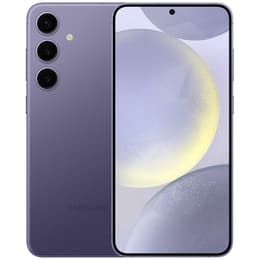


Galaxy S24+ vs Motorola Edge 30 Neo

Galaxy S24+
Galaxy S24+
Starting at

Refurbished price:A$639.00

Versus A$873.00 new

See options
Motorola Edge 30 Neo
Starting at

Refurbished price:A$307.00

Versus A$414.00 new

See options

Ratings

The Samsung Galaxy S24 Plus, released in January 2024, and the Motorola Edge 30 Neo, launched in September 2022, are both smartphones designed for different user priorities. While the Galaxy S24 Plus offers a premium experience with advanced features and extended software support, the Edge 30 Neo focuses on a compact design and efficient everyday performance. Both devices run on the Android operating system, though they differ in their software update policies and overall user interface approaches.

Scores

Durability

The practical lifespan and ongoing usability of a smartphone are significantly influenced by its release timeline and software support.

  • Release Timeline: The Samsung Galaxy S24 Plus was released in January 2024, making it a more recent device compared to the Motorola Edge 30 Neo, which launched in September 2022. This difference in release dates inherently means the Galaxy S24 Plus benefits from newer hardware and a longer period before its technology becomes outdated.
  • Software Longevity: Samsung offers an extensive seven years of software updates for the Galaxy S24 Plus, ensuring it receives major Android upgrades and security patches for a prolonged period. In contrast, the Motorola Edge 30 Neo was promised two OS updates, which would bring it up to Android 14, a shorter support window compared to its counterpart. This difference means the Galaxy S24 Plus will maintain compatibility with newer applications and security standards for a considerably longer time.
  • Repairability and Durability: The Galaxy S24 Plus features an aluminum frame and glass front/back, with an Enhanced Armor Aluminum frame contributing to its durability. The Edge 30 Neo, while compact and light at 155 grams, often features a plastic back and an IP52 water resistance rating, offering basic protection against dust and splashes. Users prioritizing long-term software support and robust build quality may find the Galaxy S24 Plus more aligned with their needs.

Release year

2024

2022

Operating system

Android

Android

Foldable

No

No

Performance

Performance in daily use, from app handling to gaming, is a key differentiator between these two devices, largely driven by their internal components and optimization.

  • Processor Capabilities: The Samsung Galaxy S24 Plus is equipped with a high-end processor (either Snapdragon 8 Gen 3 or Exynos 2400, depending on the region), which provides very fast and smooth performance for demanding applications, intensive multitasking, and graphic-heavy gaming. The Motorola Edge 30 Neo utilizes a mid-range processor, which handles everyday tasks and web browsing smoothly but may require lower graphics settings for more demanding games.
  • System Responsiveness and Multitasking: With 12GB of RAM, the Galaxy S24 Plus offers substantial headroom for seamless multitasking, allowing users to switch between numerous applications without experiencing slowdowns. The Edge 30 Neo typically comes with 8GB of RAM, which is sufficient for general use and moderate multitasking, though it might show slight stutters when the CPU is heavily loaded, such as during background app installations.
  • Storage Options: The Galaxy S24 Plus is available with 256GB or 512GB of internal storage, providing ample space for apps, media, and files. The Motorola Edge 30 Neo is commonly found with 128GB of storage, with some international markets offering a 256GB variant, but it does not support external microSD cards for expansion.

Memory (GB)

12 GB

8 GB

Screen quality

The visual experience on a smartphone is heavily influenced by its display technology, resolution, and brightness capabilities.

  • Display Technology and Resolution: The Samsung Galaxy S24 Plus features a 6.7-inch QHD+ Dynamic AMOLED 2X display, offering a high resolution of 3120x1440 pixels for exceptional clarity and detail. The Motorola Edge 30 Neo has a 6.28-inch pOLED display with a 1080x2400 pixel (FHD+) resolution, which provides clear visuals for general content consumption.
  • Brightness and Outdoor Visibility: The Galaxy S24 Plus boasts a peak brightness of 2600 nits, ensuring excellent visibility even under direct sunlight. The Edge 30 Neo also offers good outdoor visibility, reaching up to 923 nits in sunny conditions, which is notable for its category.
  • Refresh Rate and Smoothness: Both devices feature a 120Hz refresh rate for smooth scrolling and fluid animations. The Galaxy S24 Plus offers a more dynamic adaptive refresh rate, scaling from 1Hz to 120Hz depending on the content, which helps optimize battery consumption. The Edge 30 Neo's 120Hz panel can also adapt, but typically operates at fixed levels or between 48Hz and 120Hz.

Resolution

1440x3120

1080 x 2400

Audiovisual

The camera systems on both smartphones cater to different photographic needs, with varying capabilities in different lighting conditions and video recording.

  • Rear Camera System: The Samsung Galaxy S24 Plus features a versatile triple-camera setup, including a 50MP main sensor with optical image stabilization (OIS), a 12MP ultrawide lens, and a 10MP telephoto lens with 3x optical zoom and OIS. This configuration allows for detailed photos across various focal lengths. The Motorola Edge 30 Neo has a dual-camera system, comprising a 64MP main sensor with OIS and a 13MP ultrawide lens that also handles macro shots.
  • Photography Performance: The Galaxy S24 Plus delivers excellent photo quality in good lighting conditions, with improved image processing that results in more natural-looking images. Its low-light performance is also generally good, though some users note that images can appear soft in challenging conditions. The Edge 30 Neo takes good photos in well-lit environments, with natural colors, but its low-light performance is less impressive, often lacking detail.
  • Video Recording and Audio: The Galaxy S24 Plus supports video recording up to 8K at 30fps and 4K at 60fps, offering high-resolution video capabilities. The Edge 30 Neo is limited to 1080p video recording at 30fps or 60fps for the main camera, and 30fps for the ultrawide, which is a more modest offering. Both phones include stereo speakers, with the Edge 30 Neo featuring Dolby Atmos certification, though some users report its loudspeakers are not particularly impressive despite getting loud.

Miscellaneous

Beyond core performance and display, several practical features contribute to the overall user experience and daily convenience of these smartphones.

  • Connectivity and Ports: The Samsung Galaxy S24 Plus supports modern connectivity standards including Wi-Fi 6E/6 and Bluetooth 5.3, along with 5G capabilities. It features a USB-C port for charging and data transfer. The Motorola Edge 30 Neo supports Wi-Fi 5 and Bluetooth v5, also offering 5G connectivity. It includes a USB-C port and notably supports 5W wireless charging, a feature not always present in its segment.
  • Biometric Security: Both devices incorporate fingerprint sensors for secure unlocking. The Galaxy S24 Plus features an in-display fingerprint sensor that is noted for its speed. The Edge 30 Neo also has an in-display fingerprint sensor, which is generally fast and accurate, though some users occasionally report needing to press longer for recognition.
  • Design and Handling: The Galaxy S24 Plus has dimensions of 158.5 x 75.9 x 7.6mm and weighs 197 grams, offering a substantial feel. The Edge 30 Neo is a more compact and lighter device, measuring 152.9 x 71.2 x 7.75mm and weighing 155 grams, making it easier for one-handed use. Its thin and light design is a key characteristic, often highlighted by users who prefer smaller phones.

Weight

200 oz

155 oz

Screen size (in)

6.7

6.28

Network

5G

5G

SIM card

Physical SIM + eSIM

Dual Physical SIM

Carrier compatibility

Unlocked

Unlocked

User feedback for the Samsung Galaxy S24 Plus frequently praises its exceptional battery life, with many users reporting it comfortably lasts through a full day, and often two days for moderate use. The device is also lauded for its bright, high-resolution display and powerful performance, making it suitable for demanding tasks and gaming. Some common criticisms include the camera performance, which, while capable, may not always meet the high expectations set by its premium positioning, particularly in challenging lighting conditions or compared to the Ultra model.

For the Motorola Edge 30 Neo, users often highlight its compact size and lightweight design as significant advantages, making it comfortable to handle. The fast charging capability and the vibrant pOLED display are also frequently mentioned positive aspects. Criticisms often revolve around its camera performance, especially in low light, and the limited software update policy compared to some competitors. Some users also note that while adequate for daily tasks, its performance might not satisfy those who engage in intensive mobile gaming.

Users prioritizing a long-lasting device with extensive software support, top-tier performance for all applications, and a high-resolution, bright display will find the Samsung Galaxy S24 Plus well-suited to their needs. Its robust battery life and advanced camera system make it a strong choice for those who rely heavily on their smartphone throughout the day for various tasks, including photography and video. Conversely, individuals who value a compact, lightweight design, efficient everyday performance, and fast charging in a more manageable form factor may prefer the Motorola Edge 30 Neo. It serves well for general communication, media consumption, and casual photography, especially for those who appreciate a smaller device. Both devices, whether new or as quality-assured refurbished options, offer distinct advantages depending on individual user preferences and usage patterns.


See all articles

Our recent comparisons