Galaxy S24 vs Nokia X30

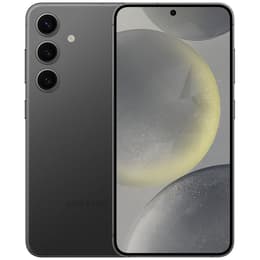
Galaxy S24
Galaxy S24
Starting at

Refurbished price:A$699.00

Versus A$1,399.00 new

See options
Nokia X30
Nokia X30
Starting at

Refurbished price:A$299.00

Versus A$965.00 new

See options

The Samsung Galaxy S24, released in January 2024, and the Nokia X30, launched in September 2022, represent distinct offerings in the smartphone market. While both devices operate on the Android platform, they cater to different user expectations through their hardware capabilities and software support commitments. The Galaxy S24 focuses on delivering a premium experience with advanced processing power and extended software longevity, whereas the Nokia X30 emphasizes a balanced mid-range performance with a focus on sustainable design.

Scores

Durability

The longevity of a smartphone is influenced by its release timeline, software support, and physical durability.

  • Release Timeline: The Galaxy S24, being a more recent device from early 2024, benefits from a newer hardware foundation compared to the Nokia X30, which was released in late 2022. This difference in launch dates inherently provides the S24 with a longer potential lifespan before its hardware becomes outdated.
  • OS Support: Samsung has committed to an extensive seven years of major Android operating system upgrades and security updates for the Galaxy S24, ensuring it remains current and secure well into the future. In contrast, the Nokia X30 was initially promised three years of OS updates and security patches. While it has received updates up to Android 14, there have been reports indicating that Android 15 may not be released for the device, potentially limiting its software longevity to fewer than the initially promised three major OS upgrades.
  • Durability Features: The Galaxy S24 features an Armor Aluminum frame and Gorilla Glass Victus 2 on both the front and back, along with an IP68 rating for dust and water resistance. The Nokia X30 incorporates an aluminum frame and Gorilla Glass Victus on the front, with an IP67 rating for dust and water resistance, and is noted for its use of recycled materials in its construction.

Performance

Performance is a key differentiator, impacting how smoothly applications run and how efficiently the device handles demanding tasks.

  • Processing Power: The Galaxy S24 is equipped with a current-generation processor, enabling it to handle demanding applications, complex multitasking, and graphics-intensive games with high responsiveness. Users can expect a consistently fluid experience even with heavy usage. The Nokia X30 features a mid-range processor, which capably manages everyday tasks, web browsing, and most common applications. However, it may exhibit limitations when running very demanding games or numerous applications simultaneously.
  • Storage and RAM: Both devices offer various storage configurations, typically starting from 128GB, with options for higher capacities. The Galaxy S24 generally comes with 8GB of RAM, providing ample memory for efficient multitasking. The Nokia X30 is available with 6GB or 8GB of RAM, which is sufficient for typical smartphone usage.
  • Battery Behavior: The Galaxy S24 houses a 4000 mAh battery, which, combined with its efficient processor and display, allows for reliable all-day use for many users. The Nokia X30 features a slightly larger 4200 mAh battery, and users often report good all-day battery life, particularly with moderate usage.

Memory (GB)

12 GB

8 GB

Screen quality

The display quality significantly influences the visual experience, from everyday browsing to multimedia consumption.

  • Display Technology and Brightness: The Galaxy S24 features a 6.2-inch Dynamic AMOLED 2X display, known for its vibrant colors, deep blacks, and high contrast. It boasts a peak brightness of up to 2600 nits, ensuring excellent visibility even in bright outdoor conditions. The Nokia X30 comes with a 6.43-inch AMOLED display, offering good color reproduction and contrast. Its peak brightness is rated at 700 nits, which is suitable for most indoor and outdoor environments but may be less visible under direct sunlight compared to the S24.
  • Resolution and Clarity: Both devices offer a Full HD+ resolution (1080 x 2340 pixels for S24, 1080 x 2400 pixels for X30), providing sharp and clear visuals for text and images. The pixel density on both phones ensures that individual pixels are not discernible during typical viewing.
  • Refresh Rate: The Galaxy S24 features an adaptive 120Hz refresh rate, which contributes to smoother scrolling, more fluid animations, and a more responsive feel during gaming. The Nokia X30 has a 90Hz refresh rate, offering a smoother experience than standard 60Hz displays, which enhances general navigation and some content viewing.

Audiovisual

Camera capabilities are a primary consideration for many users, impacting the quality of photos and videos captured.

  • Rear Camera System: The Galaxy S24 features a versatile triple-camera setup, including a 50 MP main sensor with optical image stabilization (OIS), a 12 MP ultrawide lens, and a 10 MP telephoto lens with 3x optical zoom and OIS. This configuration allows for a wide range of photographic scenarios, from expansive landscapes to detailed zoomed-in shots. The Nokia X30 is equipped with a dual-camera system, comprising a 50 MP main sensor with OIS and a 13 MP ultrawide lens.
  • Photography Performance: The Galaxy S24 delivers detailed and color-accurate photos in various lighting conditions, with strong low-light performance and consistent results across its multiple lenses. The telephoto lens provides clear zoomed images. The Nokia X30's main camera performs well in good lighting, producing natural colors and decent detail. Its low-light performance is also noted to be capable for a mid-range device, particularly with its Night mode features.
  • Video Recording: The Galaxy S24 offers advanced video recording capabilities, including up to 8K resolution at 24/30fps and 4K at 30/60fps, along with enhanced stabilization. The Nokia X30 supports video recording up to 1080p, which is suitable for casual video capture.

Miscellaneous

Beyond core specifications, several practical elements contribute to the overall user experience and device utility.

  • Connectivity and Ports: Both the Galaxy S24 and Nokia X30 support 5G connectivity, ensuring access to faster mobile network speeds. The Galaxy S24 features Wi-Fi 6E and Bluetooth 5.3, while the Nokia X30 supports Wi-Fi 6 and Bluetooth 5.1. The Galaxy S24 uses a USB-C 3.2 port, offering faster data transfer speeds, whereas the Nokia X30 uses a USB-C 2.0 port. Neither device includes a traditional 3.5mm headphone jack.
  • Biometrics and Sensors: Both smartphones incorporate in-display fingerprint sensors for secure unlocking. The Galaxy S24 uses an ultrasonic sensor, known for its speed and reliability, while the Nokia X30 uses an optical sensor. Both also offer face recognition capabilities.
  • Design and Handling: The Galaxy S24 is a more compact device, weighing 167g and featuring a refined design with slim bezels. The Nokia X30 is slightly larger and heavier at 185g, and its design emphasizes the use of recycled materials, aligning with sustainability efforts.

Screen size (in)

6.2

6.43

Network

5G

5G

SIM card

Physical SIM + eSIM

Dual Physical SIM

Carrier compatibility

Unlocked

Unlocked

Choosing between the Samsung Galaxy S24 and the Nokia X30 involves weighing priorities related to performance, longevity, and specific features. The Galaxy S24 is frequently praised for its powerful performance, bright and fluid display, and Samsung's commitment to seven years of software updates, which is a significant advantage for users seeking long-term device support. Some users note its compact size as a positive, while others might find the battery life, though improved, not as exceptional as larger flagship models.

The Nokia X30 receives commendation for its robust build quality, use of recycled materials, and a clean Android experience. Users appreciate its reliable battery life for moderate use and its capable main camera in good lighting conditions. However, its mid-range processor and more limited software update policy compared to the S24 are common points of consideration.

Users prioritizing cutting-edge performance, a superior display, advanced camera features, and the longest possible software support will find the Samsung Galaxy S24 well-suited to their needs. It is ideal for those who engage in demanding tasks, mobile gaming, and extensive multimedia creation. Conversely, users who value a balanced mid-range experience, good battery life, a focus on sustainable design, and a clean Android interface may lean towards the Nokia X30. Both devices are available as quality-assured refurbished options, providing an eco-friendly alternative for consumers.

See all articles

Our recent comparisons