
Galaxy S24 vs Google Pixel 6a

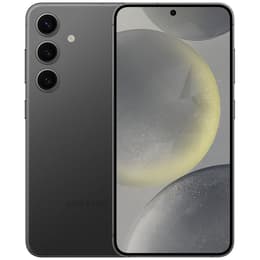
Galaxy S24
Galaxy S24
Starting at

Refurbished price:A$622.00

Versus A$1,841.10 new

See options
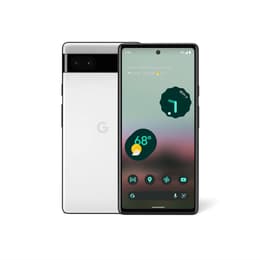
Google Pixel 6a
Google Pixel 6a
Starting at

Refurbished price:A$236.00

Versus A$569.00 new

See options

Ratings

The Samsung Galaxy S24, released in January 2024, and the Google Pixel 6A, launched in July 2022, represent different segments within the Android smartphone market. While both offer a streamlined Android experience, the Galaxy S24 is positioned as a more recent flagship device, featuring advanced hardware and extended software support, whereas the Pixel 6A was introduced as a mid-range option known for its strong camera performance and Google's software optimizations. This comparison will highlight their core differences to help users determine which device aligns best with their needs.

Scores

Durability

When considering the long-term usability of a smartphone, factors like release date, software support, and physical resilience are key.

  • Release Timeline and Software Support: The Galaxy S24, being a newer device from early 2024, benefits from Samsung's commitment to providing seven years of operating system and security updates, extending its software longevity significantly, potentially through Android 21. In contrast, the Google Pixel 6A, released in mid-2022, was initially promised three years of OS updates and five years of security updates. Its OS update window has been extended, with updates expected until at least July 2025 for the operating system and July 2027 for security patches. This means the Galaxy S24 offers a considerably longer period of guaranteed software support.
  • Physical Durability: The Galaxy S24 features Corning Gorilla Glass Victus 2 on both its front and back, paired with an aluminum frame, and boasts an IP68 rating for dust and water resistance. The Pixel 6A utilizes Corning Gorilla Glass 3 for its display and has an IP67 rating for dust and water resistance. The S24's newer glass technology generally offers enhanced scratch and drop protection.
  • Expected Practical Lifespan: Given its more recent release and extended software support, the Galaxy S24 is designed for a longer practical lifespan in terms of receiving the latest features and security. The Pixel 6A, while still a capable device, will reach its end-of-life for major OS updates sooner.

Release year

2024

2022

Compatible with latest Update

Yes

Yes

Foldable

No

No

Performance

The performance of a smartphone is largely dictated by its internal components, influencing how smoothly applications run and how efficiently it handles demanding tasks.

  • Processing Power: The Galaxy S24 is equipped with a current-generation octa-core processor, which provides robust performance for demanding applications, intensive gaming, and seamless multitasking. The Pixel 6A features Google's first-generation Tensor processor, which delivered strong performance for its time, particularly in AI-driven tasks and everyday usage. However, the S24's newer processor offers a noticeable advantage in raw speed and efficiency.
  • Memory and Storage: The Galaxy S24 comes with 8GB of RAM and offers storage options of 128GB, 256GB, or 512GB, utilizing faster UFS 4.0 storage for higher capacities. The Pixel 6A includes 6GB of RAM and 128GB of internal storage, which is not expandable. The S24's greater RAM and faster storage contribute to more fluid app switching and quicker data access.
  • Battery Performance: The Galaxy S24 houses a 4000 mAh battery, supporting 25W wired fast charging and 15W wireless charging. The Pixel 6A has a slightly larger 4410 mAh battery with 18W wired charging, but it lacks wireless charging capabilities. While the Pixel 6A's battery capacity is larger, real-world battery life can vary, with some users reporting it lasts a full day with typical use, while others found it less consistent in tests.

Memory (GB)

12 GB

6 GB

Screen quality

The display is a primary interface for smartphone interaction, and its quality significantly impacts the user experience.

  • Display Technology and Clarity: Both devices feature OLED displays, known for deep blacks and vibrant colors. The Galaxy S24 has a 6.2-inch Dynamic AMOLED 2X display with a resolution of 2340x1080 pixels. The Pixel 6A offers a 6.1-inch OLED display with a resolution of 2400x1080 pixels. Both provide clear and sharp visuals for everyday viewing.
  • Brightness and Refresh Rate: The Galaxy S24's display can reach a peak brightness of 2600 nits, making it highly visible even in bright outdoor conditions, and features an adaptive refresh rate that ranges from 1Hz to 120Hz for smooth scrolling and power efficiency. The Pixel 6A has a standard 60Hz refresh rate, which provides a consistent viewing experience but lacks the fluidity of higher refresh rate displays. Its peak brightness is also lower than the S24.
  • Eye Comfort: The Galaxy S24 series has an improved Pulse Width Modulation (PWM) refresh rate of 492Hz, which can contribute to reduced eye strain for some users, especially at lower brightness settings. The Pixel 6A's PWM rate is lower, which might be a consideration for users sensitive to screen flickering.

Resolution

1080x2340

1080 x 2400

Screen type

Dynamic LTPO AMOLED 2X

OLED

Audiovisual

Camera capabilities are a significant consideration for many smartphone users, encompassing both hardware and software processing.

  • Rear Camera Systems: The Galaxy S24 features a versatile triple-camera setup on the rear, including a 50MP wide-angle main sensor with optical image stabilization (OIS), a 12MP ultrawide lens, and a 10MP telephoto lens with 3x optical zoom and OIS. This configuration allows for a wide range of photographic scenarios, from expansive landscapes to detailed zoomed-in shots. The Pixel 6A comes with a dual-camera system, comprising a 12.2MP wide-angle main sensor with OIS and a 12MP ultrawide lens. While it lacks a dedicated telephoto lens, Google's computational photography excels at producing high-quality images.
  • Photography Performance: The Galaxy S24 offers strong performance across various lighting conditions, with its larger main sensor and telephoto lens providing flexibility. It supports 8K video recording. The Pixel 6A is highly regarded for its consistent image quality, particularly in everyday and low-light situations, leveraging its advanced software processing for sharp and well-exposed photos. It records 4K video at up to 60 frames per second.
  • Front Camera and Audio: Both devices feature capable front-facing cameras for selfies and video calls; the S24 has a 12MP sensor, while the Pixel 6A has an 8MP sensor. For audio, the Galaxy S24 includes stereo speakers for a more immersive media consumption experience. The Pixel 6A also offers stereo speakers.

Main camera

50 megapixels

12.2 megapixels

Front camera

12 megapixels

8 megapixels

Miscellaneous

Beyond the core specifications, several practical features and design elements contribute to the overall user experience.

  • Connectivity and Ports: Both smartphones support 5G connectivity, Wi-Fi 6E, and Bluetooth. The Galaxy S24 uses Bluetooth 5.3, while the Pixel 6A uses Bluetooth 5.2. Both devices feature a USB-C port for charging and data transfer. Neither phone includes a 3.5mm headphone jack.
  • Biometric Security: Both the Galaxy S24 and Pixel 6A incorporate in-display fingerprint sensors for secure unlocking.
  • Physical Design and Handling: The Galaxy S24 measures 147 x 70.6 x 7.6 mm and weighs 168 grams, offering a compact and relatively light form factor. The Pixel 6A is slightly larger and heavier at 152.2 x 71.8 x 8.7 mm and 178 grams. The S24's design includes a more robust aluminum frame and newer Gorilla Glass for enhanced durability.
  • Additional Features: The Galaxy S24 supports reverse wireless charging, allowing it to charge other compatible devices. The Pixel 6A does not offer this feature.

Weight

167 oz

250 oz

Screen size (in)

6.2

6.1

SIM card

Physical SIM + eSIM

Physical SIM + eSIM

Carrier compatibility

Unlocked

Unlocked

User feedback for the Google Pixel 6A often highlights its exceptional camera performance for its category, with many praising its ability to capture detailed and vibrant photos through computational photography. Some users appreciate its compact size and the clean Android experience. Criticisms sometimes point to its 60Hz display, which some find less fluid compared to higher refresh rate screens, and mixed experiences with battery life, with some finding it sufficient for a day while others noted it could be better under heavy use.

For the Samsung Galaxy S24, common praise revolves around its bright and smooth adaptive display, powerful performance for all tasks, and the versatility of its camera system, especially the inclusion of a telephoto lens. Users also value Samsung's commitment to extended software updates. Potential concerns, though less frequent, might include the regional variations in its processor. Overall, the S24 is seen as a comprehensive flagship experience.

Users prioritizing a device with the longest possible software support, a highly fluid display, and a versatile camera system including optical zoom will find the Galaxy S24 well-suited to their needs. Its newer hardware also provides a performance advantage for demanding applications. Conversely, users who value a strong computational photography experience, a clean Android interface, and a more compact form factor, and who do not require the absolute latest in display technology or the longest software update window, may find the Google Pixel 6A to be a practical choice. Both devices offer a quality Android experience, and considering a quality-assured refurbished option for either model can be an eco-friendly alternative.

See all articles

Our recent comparisons