Galaxy S24 vs Galaxy Z Fold4

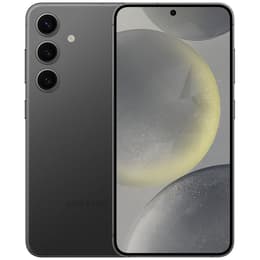
Galaxy S24
Galaxy S24
Starting at

Refurbished price:A$622.00

Versus A$1,841.10 new

See options
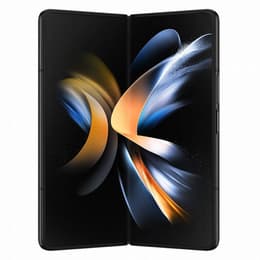
Galaxy Z Fold4
Galaxy Z Fold4
Starting at

Refurbished price:A$734.00

Versus A$3,628.00 new

See options

Ratings

The Samsung Galaxy S24, released in January 2024, is a traditional smartphone offering a compact design and advanced features. In contrast, the Samsung Galaxy Z Fold4, launched in August 2022, presents a unique foldable form factor that transforms from a standard smartphone into a tablet-like device. These two Android-based devices cater to different user preferences, primarily differing in their physical design, display versatility, and overall user experience.

Scores

Durability

When considering the longevity of these devices, several factors come into play, including their release timelines, software support, and physical resilience.

  • Release and Software Support: The Galaxy S24, being a newer device from January 2024, benefits from Samsung's commitment to providing seven years of operating system and security updates, extending its software support until approximately 2031. The Galaxy Z Fold4, released in August 2022, was promised four Android OS upgrades and five years of security updates, meaning its software support is expected to conclude around 2027. This difference provides the S24 with a significantly longer period of official software updates.
  • Physical Durability: The Galaxy S24 features Corning Gorilla Glass Victus 2 on both its front and back, coupled with an aluminum frame, and boasts an IP68 rating for dust and water resistance. The Galaxy Z Fold4 utilizes an Armor Aluminum frame and Gorilla Glass Victus+ on its cover screen, with an IPX8 rating for water resistance, but not dust. The foldable design of the Z Fold4 introduces a hinge mechanism, which is a point of mechanical complexity.
  • Repairability: The Galaxy S24 has received a high repairability score of 9/10 from some assessments, noting ease of battery replacement and access to many internal components, though screen replacement can be challenging. While specific repairability scores for the Z Fold4 are less commonly cited, foldable devices generally present more intricate repair processes due to their complex design.

Release year

2024

2022

Compatible with latest Update

Yes

Yes

Operating system

Android

Android

Foldable

No

Yes

Performance

The performance of both devices is robust, designed to handle demanding applications and multitasking, though they feature different generations of processing technology.

  • Processing Power: The Galaxy S24 is equipped with a newer generation processor, either the Snapdragon 8 Gen 3 or the Exynos 2400 depending on the region. This allows for smooth handling of demanding applications, efficient multitasking, and responsive gaming experiences. The Galaxy Z Fold4 is powered by the Snapdragon 8+ Gen 1 processor, which was a high-performing chip at its release, capable of managing complex tasks and offering a fluid user experience.
  • Memory and Storage: The Galaxy S24 typically comes with 8GB or 12GB of RAM and offers storage options of 128GB (UFS 3.1), 256GB, or 512GB (UFS 4.0). The Galaxy Z Fold4 generally includes 12GB of RAM as standard and offers 256GB, 512GB, or 1TB of UFS 3.1 storage, without expandable storage. The higher RAM in the Z Fold4 can be beneficial for extensive multitasking, especially with its large foldable screen.
  • Battery Performance: The Galaxy S24 houses a 4000 mAh battery, which for most users provides reliable all-day performance, often achieving 4-6 hours of screen-on time with moderate usage. The Galaxy Z Fold4 has a larger 4400 mAh battery. Despite the larger capacity, the Z Fold4 powers two displays, and its real-world battery life is generally considered sufficient for a full day, with improvements over its predecessor due to a more efficient processor.

Memory (GB)

12 GB

12 GB

Screen quality

The display experience is a primary differentiator between these two Samsung smartphones, offering distinct approaches to visual interaction.

  • Display Technology and Clarity: Both devices feature Dynamic AMOLED 2X displays, known for vibrant colors and deep blacks. The Galaxy S24 has a single 6.2-inch FHD+ (2340x1080) display with a pixel density of approximately 416 ppi. The Galaxy Z Fold4 offers a dual-screen setup: a 6.2-inch HD+ (2316x904) cover display and a large 7.6-inch QXGA+ (2176x1812) main foldable display, with the main screen having a pixel density of around 373 ppi. The S24 offers a slightly sharper image on its single screen due to higher pixel density.
  • Brightness and Refresh Rate: The Galaxy S24's display can reach a peak brightness of 2600 nits, offering excellent visibility in bright outdoor conditions. Its adaptive refresh rate ranges from 1Hz to 120Hz for smooth scrolling and power efficiency. The Galaxy Z Fold4's main display has a peak brightness of 1200 nits, and its cover display reaches 1000 nits, both supporting an adaptive refresh rate from 1Hz to 120Hz. The S24 provides a brighter viewing experience.
  • Viewing Experience: The Galaxy S24 provides a traditional, immersive smartphone display experience with minimal bezels. The Galaxy Z Fold4's main display offers a large, tablet-like canvas ideal for multitasking, media consumption, and productivity, though it features a visible crease where the screen folds. The cover screen provides a more conventional smartphone experience when folded.

Resolution

1080x2340

1812 x 2176

Screen type

Dynamic LTPO AMOLED 2X

Foldable Dynamic AMOLED 2X

Audiovisual

Both the Galaxy S24 and Galaxy Z Fold4 are equipped with capable camera systems designed to capture high-quality photos and videos, though with some differences in their capabilities and features.

  • Rear Camera Systems: The Galaxy S24 features a triple rear camera setup consisting of a 50 MP wide-angle lens with optical image stabilization (OIS), a 12 MP ultrawide lens, and a 10 MP telephoto lens with 3x optical zoom and OIS. The Galaxy Z Fold4 also has a triple rear camera system, including a 50 MP wide-angle lens with OIS, a 12 MP ultrawide lens, and a 10 MP telephoto lens with 3x optical zoom. The Z Fold4's camera system was a significant upgrade at its release, comparable to the Galaxy S22 series.
  • Front Cameras and Video: The Galaxy S24 has a 12 MP front camera. It supports video recording up to 8K at 24/30fps and 4K at 30/60fps. The Galaxy Z Fold4 features a 10 MP camera on its cover display and a 4 MP under-display camera on its main screen. It can record video up to 8K at 24fps and 4K at 30/60fps. The under-display camera on the Z Fold4 is less visible than previous iterations but offers lower resolution.
  • Photography Features: The Galaxy S24 benefits from newer software enhancements, including AI-powered features like ProVisual AI Engine and AI-based edit suggestions, along with improved Nightography for low-light conditions. The Galaxy Z Fold4 also offers enhanced low-light photography, OIS, and video digital image stabilization, with its camera system designed to leverage the larger screen for framing shots.

Main camera

50 megapixels

50 megapixels

Front camera

12 megapixels

4 megapixels

Miscellaneous

Beyond core performance and display, several practical elements contribute to the overall user experience of these devices.

  • Connectivity and Ports: Both smartphones support 5G connectivity, ensuring access to fast mobile networks. The Galaxy S24 supports Wi-Fi 6E/7 and Bluetooth 5.3, while the Galaxy Z Fold4 supports Wi-Fi 6E and Bluetooth 5.2. Both utilize a USB Type-C port for charging and data transfer and lack a traditional 3.5mm headphone jack.
  • Biometrics and Sensors: The Galaxy S24 features an ultrasonic in-screen fingerprint sensor for secure unlocking. The Galaxy Z Fold4 incorporates a side-mounted fingerprint scanner. Both devices include a range of sensors such as accelerometers, gyroscopes, and proximity sensors.
  • Dimensions and Handling: The Galaxy S24 is a compact device, measuring 147 x 70.6 x 7.6 mm and weighing 168 grams, making it comfortable for one-handed use. The Galaxy Z Fold4 is significantly larger and heavier, especially when folded (155.1 x 67.1 x 14.2-15.8 mm, 263 grams), and transforms into a wider, thinner device when unfolded (155.1 x 130.1 x 6.3 mm). The S24 offers a more traditional and pocketable form factor, while the Z Fold4 provides a larger screen experience at the expense of portability.

Weight

167 oz

263 oz

Screen size (in)

6.2

7.6

Network

5G

5G

SIM card

Physical SIM + eSIM

Physical SIM + eSIM

Carrier compatibility

Unlocked

Unlocked

The Samsung Galaxy S24 and Galaxy Z Fold4 offer distinct smartphone experiences, each with its own set of strengths tailored to different user needs. Users often praise the Galaxy S24 for its compact size, vibrant and bright display, and consistent all-day battery life. Its advanced camera system, bolstered by newer AI features, is also a frequent highlight, providing excellent photo and video capabilities. Some users, however, might find its design less innovative compared to foldable alternatives.

The Galaxy Z Fold4 is frequently lauded for its innovative foldable design, offering the versatility of a large tablet-like screen for productivity and media consumption, alongside a conventional smartphone experience when folded. Its robust build with an Armor Aluminum frame and capable camera system are also well-regarded. Criticisms sometimes point to its heavier and thicker profile when folded, and the visible crease on the main display.

Users prioritizing a traditional, pocket-friendly smartphone with a long software support window and a highly capable camera system will find the Galaxy S24 well-suited to their needs. Its bright display and efficient performance make it a reliable daily driver. Conversely, users who value a large, adaptable screen for multitasking, content creation, or immersive media viewing may lean toward the Galaxy Z Fold4. Its unique form factor offers a distinct advantage for those seeking a device that blurs the lines between a smartphone and a small tablet. Both models represent strong options within their respective categories, and considering a quality-assured refurbished option can be a sustainable choice for either device.

See all articles

Our recent comparisons