Galaxy S23 vs Motorola Edge 30 Fusion

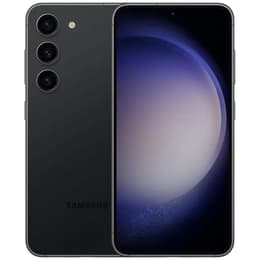
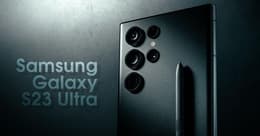
Galaxy S23
Galaxy S23
Starting at

Refurbished price:A$489.00

Versus A$1,349.00 new

See options
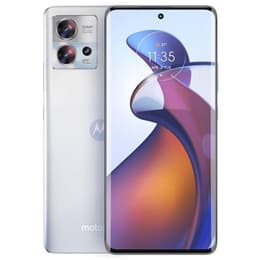
Motorola Edge 30 Fusion
Starting at

Refurbished price:A$257.46

Versus A$1,352.00 new

See options

The Samsung Galaxy S23 (released February 2023) and the Motorola Edge 30 Fusion (released September 2022) are both Android smartphones that offer distinct experiences for users. While the Galaxy S23 presents a more compact design with a focus on extended software support and advanced camera capabilities, the Edge 30 Fusion provides a larger display with a higher refresh rate and a robust battery, catering to different user preferences.

Scores

Durability

The practical lifespan of a smartphone is significantly influenced by its release timeline, software support, and physical durability. These two devices, while both offering solid construction, differ in their long-term software commitments and protective features.

  • Release Timeline and Software Support: The Galaxy S23, launched in February 2023, benefits from Samsung's commitment to four major Android operating system upgrades and five years of security updates, extending its support until at least 2028. It shipped with Android 13 and has since received updates to Android 16 and One UI 8. In contrast, the Motorola Edge 30 Fusion, released in September 2022 with Android 12, was promised two major OS upgrades and three years of security patches, having received Android 13 and Android 14. This means the Galaxy S23 offers a longer period of official software and security updates.
  • Physical Durability: The Galaxy S23 features Gorilla Glass Victus 2 on both its front and back, along with an Armor Aluminum frame, providing enhanced resistance against drops and scratches. It also boasts an IP68 rating for dust and water resistance, allowing submersion in water. The Motorola Edge 30 Fusion uses Gorilla Glass 5 for its front and back and an aluminum frame, offering good protection, but its IP52 rating indicates splash resistance rather than full water immersion.
  • Repairability: The Galaxy S23 series has shown improvements in repairability, with a French environmental legislation score of 8.2, and efforts made for easier battery replacement. While specific repairability scores for the Edge 30 Fusion are less commonly cited, Motorola generally aims for a reasonable level of repair-friendliness.

Release year

2023

2022

Compatible with latest Update

Yes

Yes

Operating system

Android

Android

Foldable

No

No

Performance

Both smartphones deliver capable performance for daily tasks, but they utilize different generations of internal components, leading to variations in handling demanding applications and multitasking.

  • Processing Power: The Galaxy S23 is equipped with a current-generation processor specifically optimized for its ecosystem, which translates to very responsive performance across various applications, smooth multitasking, and efficient handling of graphically intensive games. Users report no significant lags or overheating even during extended gaming sessions. The Motorola Edge 30 Fusion uses a previous-generation flagship processor, which still provides a fluid user experience for everyday use, app loading, and most gaming. It handles demanding tasks well, though some reviews note a gradual throttling of performance after prolonged heavy use to manage heat.
  • Storage and RAM: Both devices offer various storage options, including 128GB, 256GB, and 512GB. The Galaxy S23 utilizes faster UFS 4.0 storage for its 256GB and 512GB variants, which can contribute to quicker app loading and data transfer speeds compared to the UFS 3.1 found in the Edge 30 Fusion. Both typically come with 8GB of RAM, with the Edge 30 Fusion also offering a 12GB RAM option, which can provide a slight edge in keeping more applications open simultaneously without needing to reload.
  • Battery Behavior: The Motorola Edge 30 Fusion houses a larger 4400 mAh battery, and users generally report solid all-day battery life, even with heavy usage. The Galaxy S23 has a 3900 mAh battery, which, despite being smaller, is optimized for efficiency by its processor and software, allowing many users to achieve a full day of moderate use.

Memory (GB)

8 GB

8 GB

Screen quality

The visual experience on both devices is vibrant and clear, though they employ different display technologies and offer distinct characteristics in terms of size, refresh rate, and brightness.

  • Display Technology and Clarity: The Galaxy S23 features a 6.1-inch Dynamic AMOLED 2X display, known for its deep blacks, vibrant colors, and excellent contrast. Its resolution of 2340 x 1080 pixels results in a sharp image with a pixel density of 425 pixels per inch. The Motorola Edge 30 Fusion comes with a larger 6.55-inch pOLED display, also offering rich colors and good contrast, with a resolution of 2400 x 1080 pixels and a pixel density of 402 pixels per inch.
  • Brightness and Refresh Rate: The Galaxy S23 can reach a peak brightness of 1750 nits, making it highly visible even in bright outdoor conditions. It offers an adaptive refresh rate that ranges from 48Hz to 120Hz, providing smooth scrolling and animations while conserving battery life. The Edge 30 Fusion has a peak brightness of 1100 nits and features a higher fixed refresh rate of 144Hz, which can result in an even smoother visual experience, particularly noticeable during fast-paced content or gaming.
  • Screen Size and Design: The Galaxy S23 offers a more compact form factor with a flat display, which some users prefer for one-handed use and to avoid accidental touches. The Edge 30 Fusion's larger screen and curved edges provide a more expansive viewing area, which can enhance media consumption and overall immersion.

Resolution

1080 x 2340

1080 x 2400

Screen type

Dynamic AMOLED 2X

P-OLED

Audiovisual

Both smartphones are equipped with capable camera systems, but they differ in their lens configurations and overall photographic strengths, particularly in specialized shooting scenarios.

  • Rear Camera Systems: The Galaxy S23 features a versatile triple-camera setup, including a 50MP main sensor with optical image stabilization (OIS), a 10MP telephoto lens with 3x optical zoom and OIS, and a 12MP ultrawide lens. This configuration allows for detailed zoom shots and a wider range of photographic options. The Motorola Edge 30 Fusion has a dual-camera system on the rear, comprising a 50MP main sensor with OIS and a 13MP ultrawide lens that also functions for macro photography.
  • Photography Performance: The Galaxy S23 is praised for its consistent image quality, vibrant colors, and strong low-light performance, with users reporting sharp and detailed night photos. Its telephoto lens provides excellent zoom capabilities. The Edge 30 Fusion's main camera delivers good detail and natural colors in well-lit conditions, and its low-light performance is considered decent, especially with auto-enhancement. However, its ultrawide camera may show some noise and distortion towards the edges.
  • Video Recording and Front Camera: The Galaxy S23 can record video up to 8K resolution at 30 frames per second, offering sharp and stable footage. Its front-facing camera is 12MP. The Edge 30 Fusion also supports 4K video recording from its main and ultrawide cameras. It features a higher-resolution 32MP front camera with autofocus, capable of producing detailed selfies and 4K selfie videos.

Main camera

50 megapixels

50 megapixels

Front camera

12 megapixels

32 megapixels

Miscellaneous

Beyond core performance and display, several practical elements contribute to the overall user experience, including connectivity, physical design, and additional features.

  • Connectivity and Ports: Both devices support 5G connectivity and Wi-Fi 6E for fast wireless internet. The Galaxy S23 features Bluetooth 5.3 and a USB-C 3.2 port, offering faster data transfer speeds. The Motorola Edge 30 Fusion comes with Bluetooth 5.2 and a USB-C 2.0 port. Neither phone includes a traditional 3.5mm headphone jack.
  • Sensors and Security: Both smartphones incorporate in-display fingerprint sensors for secure unlocking. The Galaxy S23 also offers facial recognition, which users find to be effective. The Edge 30 Fusion includes NFC for mobile payments.
  • Weight and Dimensions: The Galaxy S23 is a more compact device, measuring 146.3 x 70.9 x 7.6 mm and weighing 168 grams, making it comfortable for one-handed use. The Motorola Edge 30 Fusion is slightly larger at 158.48 x 71.99 x 7.45 mm and weighs around 168g (vegan leather) or 175g (glass), offering a larger screen experience while maintaining a relatively slim profile.
  • Build Materials: The Galaxy S23 uses Gorilla Glass Victus 2 and an Armor Aluminum frame, contributing to its robust feel. The Edge 30 Fusion features Gorilla Glass 5 and an aluminum frame, providing a premium in-hand feel.

Weight

227 oz

168 oz

Screen size (in)

6.1

6,55

Network

5G

5G

SIM card

Physical SIM + eSIM

Dual Physical SIM

Carrier compatibility

Unlocked

Unlocked

The Samsung Galaxy S23 and Motorola Edge 30 Fusion each present a compelling package, with user feedback highlighting distinct strengths for different priorities. Users often praise the Galaxy S23 for its consistent camera performance, particularly its telephoto capabilities and strong low-light photography. Its compact size and extended software support are also frequently noted as significant advantages, contributing to a longer perceived lifespan and a more manageable form factor. Some users appreciate its vibrant display and overall smooth performance for daily tasks and gaming.

On the other hand, the Motorola Edge 30 Fusion receives commendation for its larger, high-refresh-rate display, which provides a very fluid visual experience. Its larger battery capacity is often cited as a positive, offering reliable all-day power. Users also value its near-stock Android experience and premium build quality. Criticisms for the Edge 30 Fusion sometimes point to its less extensive software update policy compared to some competitors and its camera system, while capable, not always matching the consistency of higher-end devices in challenging conditions.

Users prioritizing a compact device with a top-tier camera system, extended software longevity, and robust water and dust resistance may find the Samsung Galaxy S23 well-suited to their needs. Its performance and display quality are designed for a premium experience over a longer period. Conversely, users who value a larger, exceptionally smooth display, a bigger battery for extended use, and a clean Android interface might lean towards the Motorola Edge 30 Fusion. Both devices represent solid choices, and considering a quality-assured refurbished option for either model can be an eco-friendly alternative to purchasing new, allowing for informed and sustainable choices.

See all articles

Our recent comparisons