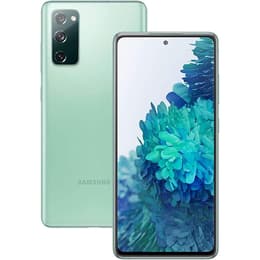


Galaxy S20 FE vs Google Pixel 8 Pro

Galaxy S20 FE
Galaxy S20 FE
Starting at

Refurbished price:A$268.29

Versus A$578.00 new

See options
Google Pixel 8 Pro
Google Pixel 8 Pro
Starting at

Refurbished price:A$565.00

Versus A$1,859.00 new

See options

Ratings

The Samsung Galaxy S20 FE (Fan Edition) and the Google Pixel 8 Pro are distinct smartphones from different generations, each offering a unique set of features and user experiences. The Galaxy S20 FE, released in October 2020, aimed to deliver a flagship-like experience with a focus on core features. The Google Pixel 8 Pro, launched in October 2023, represents a more recent advancement, emphasizing advanced computational photography and extended software support. Both devices operate on the Android platform, but they differ significantly in their hardware capabilities and long-term software commitments.

Scores

Durability

The practical lifespan of a smartphone is heavily influenced by its release date and the manufacturer's commitment to software updates and security patches.

  • Release Timeline: The Samsung Galaxy S20 FE was released in October 2020, making it a device from an earlier generation. The Google Pixel 8 Pro, launched in October 2023, benefits from a more recent introduction to the market.
  • Software Longevity: The Galaxy S20 FE launched with Android 10 and received major OS updates up to Android 13. Its software support, including security patches, concluded around October 2025, marking approximately five years of support. In contrast, the Pixel 8 Pro was released with Android 14 and comes with a commitment of seven years of OS upgrades, security updates, and feature drops. This extended support period means the Pixel 8 Pro is designed to remain current with software advancements for a significantly longer duration.
  • Physical Durability: Both devices offer IP68 water and dust resistance, providing protection against environmental elements. The Pixel 8 Pro features Corning Gorilla Glass Victus 2 on its front and back for enhanced scratch and drop resistance, while the Galaxy S20 FE uses Corning Gorilla Glass 3 for its display.

Release year

2020

2023

Compatible with latest Update

No

Yes

Foldable

No

No

Performance

Performance in smartphones is determined by the efficiency of their internal components, impacting everything from app responsiveness to multitasking capabilities and battery usage.

  • Processing Power: The Galaxy S20 FE is equipped with a processor that handles everyday tasks and moderate gaming smoothly. Users generally report a responsive experience for typical smartphone activities. The Pixel 8 Pro features a more advanced, current-generation processor designed for demanding applications, complex AI tasks, and efficient multitasking. This results in faster app loading, smoother transitions, and enhanced capabilities for intensive computational processes.
  • Multitasking and Storage: The Galaxy S20 FE typically comes with 6GB of RAM and 128GB of internal storage, with the option to expand storage using a microSD card. The Pixel 8 Pro offers 12GB of RAM and a range of storage options from 128GB up to 1TB, though it does not support expandable storage. The higher RAM in the Pixel 8 Pro allows for more applications to run simultaneously without performance degradation.
  • Battery Behavior: The Galaxy S20 FE has a 4,500 mAh battery, generally providing a full day of use for many users, though continuous high-refresh-rate usage can reduce this. It supports 25W wired charging (though often ships with a 15W charger) and 15W wireless charging. The Pixel 8 Pro features a larger 5,050 mAh battery and supports 30W fast charging, along with wireless and reverse wireless charging. Its adaptive refresh rate display also contributes to optimizing battery consumption.

Memory (GB)

6 GB

12 GB

Screen quality

The display is a primary interface for smartphone interaction, and differences in technology, resolution, and refresh rate significantly impact the visual experience.

  • Display Technology and Clarity: The Galaxy S20 FE features a 6.5-inch Super AMOLED display with a Full HD+ resolution (2400 x 1080 pixels), offering vibrant colors and deep blacks. The Pixel 8 Pro boasts a larger 6.7-inch LTPO OLED display with a Quad HD+ resolution (2992 x 1344 pixels), resulting in a sharper and more detailed image. The Pixel 8 Pro's higher pixel density (489 ppi vs 407 ppi) contributes to its superior clarity.
  • Brightness and Refresh Rate: Both devices offer a 120Hz refresh rate for smooth scrolling and fluid animations. However, the Pixel 8 Pro's LTPO technology allows for an adaptive refresh rate that can scale from 1Hz to 120Hz, optimizing power consumption. The Pixel 8 Pro also achieves significantly higher peak brightness levels, reaching up to 2400 nits, which enhances outdoor visibility and HDR content viewing. The Galaxy S20 FE's display is bright and colorful, but does not reach the same peak brightness levels.
  • Viewing Experience: The Galaxy S20 FE has a flat display, which some users prefer for avoiding accidental touches. The Pixel 8 Pro also features a flat display, moving away from the curved edges of some previous Pixel models, which can improve usability. Both displays support HDR10+ for an enhanced viewing experience with compatible content.

Resolution

1080 x 2400

1344 x 2992

Screen type

Super AMOLED

LTPO OLED

Audiovisual

Camera capabilities are a significant differentiator, with both devices offering versatile systems but with varying levels of computational enhancement and sensor technology.

  • Rear Camera Systems: The Galaxy S20 FE features a triple camera setup with a 12MP main sensor, a 12MP ultrawide sensor, and an 8MP telephoto lens offering 3x optical zoom. The Pixel 8 Pro also has a triple camera system, but with higher resolution sensors: a 50MP main sensor, a 48MP ultrawide sensor with autofocus, and a 48MP telephoto lens providing 5x optical zoom. The Pixel 8 Pro's larger sensors and wider apertures generally allow for better light gathering, particularly in challenging conditions.
  • Photography Performance: The Galaxy S20 FE delivers good image quality in well-lit conditions, with vibrant colors and effective optical image stabilization on its main lens. Its Night mode is functional across all three rear lenses. The Pixel 8 Pro excels in computational photography, producing images with excellent detail, natural colors, and strong dynamic range across various lighting scenarios. Its ultrawide camera is noted for being brighter and more detailed, especially in low light. The Pixel 8 Pro also introduces a Pro mode with manual controls and advanced AI-powered editing features like Best Take and Magic Editor.
  • Video Recording and Front Camera: Both devices are capable of recording video at up to 4K resolution at 60 frames per second. The Galaxy S20 FE has a 32MP front camera, but it lacks autofocus. The Pixel 8 Pro features a 10.5MP ultrawide front camera with autofocus, which can improve clarity for selfies and video calls.

Main camera

12 megapixels

50 megapixels

Front camera

32 megapixels

10.5 megapixels

Miscellaneous

Beyond core performance and display, several practical features contribute to the overall user experience and device utility.

  • Connectivity and Ports: Both smartphones support 5G connectivity, enabling faster mobile data speeds. The Galaxy S20 FE supports Wi-Fi 6 and Bluetooth 5.0. The Pixel 8 Pro features more advanced connectivity with Bluetooth 5.3 and is designed to support newer Wi-Fi standards. Both devices utilize a USB-C port for charging and data transfer and omit a 3.5mm headphone jack.
  • Biometric Security and Sensors: The Galaxy S20 FE includes an in-display optical fingerprint sensor. The Pixel 8 Pro offers both an in-display optical fingerprint sensor and secure face unlock capabilities. A unique addition to the Pixel 8 Pro is a temperature sensor, allowing users to scan objects for their surface temperature.
  • Design and Handling: The Galaxy S20 FE has dimensions of 159.8 x 74.5 x 8.4 mm and weighs 190g, featuring a plastic back and matte metal frame. The Pixel 8 Pro is slightly larger and heavier at 162.6 x 76.5 x 8.8 mm and 213g, with a glass front and back (Gorilla Glass Victus 2) and a polished aluminum frame. The Pixel 8 Pro's design incorporates more rounded corners compared to previous Pixel models, which can affect in-hand feel.

Weight

190 oz

213 oz

Screen size (in)

6.5

6.7

Network

4G

5G

SIM card

Physical SIM

Physical SIM + eSIM

Carrier compatibility

Unlocked

Unlocked

User feedback for the Samsung Galaxy S20 FE often highlights its balanced feature set for its release era, particularly praising its 120Hz display, capable camera system with optical zoom, and expandable storage. Common criticisms sometimes point to its plastic back feeling less premium than other flagships of its time and its battery life, while generally good, not always meeting the expectations of heavy users, especially with the 120Hz refresh rate enabled.

The Google Pixel 8 Pro receives widespread acclaim for its exceptional camera performance, particularly its computational photography features and improved low-light capabilities. Users frequently commend its extended software support, promising seven years of updates, and its bright, high-resolution display. Some common observations include its size and weight, which might be substantial for users preferring smaller devices, and the optical fingerprint sensor, while reliable, is not always as fast as some ultrasonic alternatives.

Users prioritizing long-term software support, cutting-edge camera technology, and a highly optimized Android experience will find the Google Pixel 8 Pro well-suited to their needs. Its advanced processor and superior display also cater to those who engage in demanding applications or consume a lot of high-quality media. Conversely, users seeking a device with a still-capable camera, a smooth display, and the flexibility of expandable storage may find the Galaxy S20 FE to be a practical choice. It offers a solid foundation for everyday use, particularly for those who value a more established design and ecosystem.

For individuals considering either of these devices, exploring quality-assured refurbished options can provide an eco-friendly alternative, extending the life cycle of these technologies and offering a sustainable choice.
See all articles

Our recent comparisons