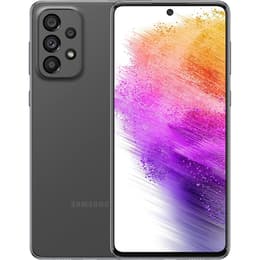
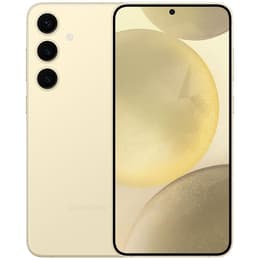

Galaxy A73 5G vs Galaxy S24+

Galaxy A73 5G
Galaxy A73 5G
See options
Galaxy S24+
Galaxy S24+
Starting at

Refurbished price:A$639.00

Versus A$1,833.00 new

See options

Ratings

The Samsung Galaxy A73 5G, released in March 2022, and the Samsung Galaxy S24 Plus, launched in January 2024, represent different segments within Samsung's smartphone lineup. While both devices operate on the Android platform, the Galaxy S24 Plus offers a more advanced feature set and extended software support compared to the mid-range Galaxy A73 5G.

Scores

Durability

The longevity of a smartphone is influenced by its release timeline, software support, and physical resilience.

  • Release Timeline and OS Support: The Galaxy A73 5G, released in March 2022, launched with Android 12 and is expected to receive major OS updates up to Android 16, with security updates continuing for approximately five years from its release. In contrast, the Galaxy S24 Plus, released in January 2024, began with Android 14 and is notable for its commitment to seven years of both OS and security updates, extending its software lifespan significantly further, potentially until 2031.
  • Repairability: The Galaxy A73 5G has a repairability score of 8 out of 10, indicating a relatively straightforward repair process for components like the back panel and screen. The Galaxy S24 Plus boasts an even higher repairability score of 9 out of 10, featuring easily removable back panels, modular internal components, and battery pull tabs, though screen replacement can be more intricate due to its thin bezels.
  • Physical Durability: Both devices offer water and dust resistance, with the Galaxy A73 5G rated IP67 and the Galaxy S24 Plus featuring an enhanced IP68 rating, providing better protection against immersion. The Galaxy A73 5G uses Corning Gorilla Glass 5 for screen protection, while the Galaxy S24 Plus features the more advanced Corning Gorilla Glass Victus 2.

Release year

2022

2024

Operating system

Android

Android

Foldable

No

No

Performance

Performance differences between these two devices are primarily driven by their respective processing capabilities and RAM configurations, impacting how smoothly they handle various tasks.

  • Processor Capabilities: The Galaxy A73 5G is equipped with a processor that handles everyday applications and moderate gaming smoothly, providing a responsive experience for typical smartphone usage. The Galaxy S24 Plus, featuring a current-generation flagship processor, delivers significantly more power, ensuring demanding applications, intensive multitasking, and graphically rich games run with high frame rates and minimal lag.
  • RAM and Multitasking: The Galaxy A73 5G typically comes with 6GB or 8GB of RAM, which is sufficient for most users to switch between several apps without significant slowdowns. The Galaxy S24 Plus includes 12GB of RAM, allowing for more aggressive multitasking and keeping a larger number of applications active in the background without needing to reload them.
  • Storage Options: The Galaxy A73 5G offers 128GB or 256GB of internal storage and supports microSD card expansion up to 1TB, providing flexibility for users who need extensive local storage. The Galaxy S24 Plus comes with 256GB or 512GB of internal storage but does not offer microSD card expansion.

Memory (GB)

6 GB

12 GB

Screen quality

The visual experience on both smartphones is a key differentiator, with distinct display technologies and specifications.

  • Display Technology and Resolution: The Galaxy A73 5G features a 6.7-inch Super AMOLED Plus display with a Full HD+ resolution (1080x2400 pixels), offering vibrant colors and deep blacks. The Galaxy S24 Plus also has a 6.7-inch display, but it uses a Dynamic AMOLED 2X panel with a Quad HD+ resolution (1440x3120 pixels), providing a sharper and more detailed image.
  • Brightness and Refresh Rate: The Galaxy A73 5G's display offers a 120Hz refresh rate for smooth scrolling and animations, and it gets bright enough for comfortable outdoor use. The Galaxy S24 Plus features an adaptive refresh rate that can scale from 1Hz to 120Hz, optimising power consumption, and boasts a significantly higher peak brightness of 2600 nits, ensuring excellent visibility even in direct sunlight.
  • Viewing Experience: Both phones provide an immersive viewing experience due to their large screen sizes. The higher resolution and superior brightness of the Galaxy S24 Plus contribute to a more refined visual quality, particularly for high-definition content and detailed tasks.

Resolution

1080 x 2400

1440x3120

Audiovisual

Both devices offer capable camera systems, but they cater to different levels of photographic expectation and feature sets.

  • Rear Camera System: The Galaxy A73 5G features a quad-camera setup with a 108MP main sensor with optical image stabilisation (OIS), a 12MP ultrawide, a 5MP macro, and a 5MP depth sensor. The Galaxy S24 Plus has a triple-camera system, including a 50MP main sensor, a 12MP ultrawide, and a 10MP telephoto lens with 3x optical zoom.
  • Photography Performance: The Galaxy A73 5G delivers detailed and vibrant photos in good lighting conditions, with decent performance in low light. The Galaxy S24 Plus generally produces high-quality images with good detail and dynamic range, though some users have noted a softer processing style compared to previous models. Its dedicated telephoto lens provides enhanced zoom capabilities.
  • Video Recording and Front Camera: Both phones are capable of recording 4K video at 30 frames per second. The Galaxy A73 5G has a 32MP front-facing camera, while the Galaxy S24 Plus features a 12MP front camera, both capable of capturing clear selfies and video calls.

Miscellaneous

Beyond core specifications, several practical elements contribute to the overall user experience of these smartphones.

  • Connectivity: Both the Galaxy A73 5G and Galaxy S24 Plus support 5G connectivity for faster mobile data speeds. The A73 5G includes Wi-Fi 6 (802.11ax) and Bluetooth 5.1. The S24 Plus offers more advanced connectivity with Wi-Fi 6E (and potentially Wi-Fi 7 with updates) and Bluetooth 5.3, providing faster and more stable wireless connections.
  • Ports and Sensors: Both devices feature a USB-C port for charging and data transfer, but neither includes a 3.5mm headphone jack. Both incorporate in-display fingerprint sensors for secure unlocking.
  • Design and Handling: The Galaxy A73 5G has a plastic back and frame, contributing to its lighter weight of 181g and a slim profile of 7.6mm. The Galaxy S24 Plus features a more premium construction with a glass back and an aluminum frame, weighing 196g and measuring 7.7mm thick.

Weight

181 oz

196 oz

Screen size (in)

6.7

6.7

Network

5G

5G

SIM card

Dual Physical SIM

Physical SIM + eSIM

Carrier compatibility

Unlocked

Unlocked

The Samsung Galaxy A73 5G and Galaxy S24 Plus cater to different user needs and priorities. The Galaxy A73 5G is often praised for its large, vibrant display, long battery life, and capable camera system, making it a solid choice for users seeking a well-rounded device for everyday use without needing the absolute latest in performance. Some users have noted that while its processor is efficient for daily tasks, it might not offer the same future-proofing as higher-end chips.

The Galaxy S24 Plus, on the other hand, receives acclaim for its powerful performance, extended software support, and bright, high-resolution display. Users appreciate its enhanced multitasking capabilities and robust build quality. Criticisms sometimes point to the camera's processing, which some find can be softer than expected, and the lack of expandable storage.

Users prioritising long-term software support, top-tier performance for demanding applications, and a premium display experience will find the Galaxy S24 Plus well-suited to their needs. Conversely, those who value expandable storage, a slightly lighter build, and a strong overall feature set for general use, while also considering a quality-assured refurbished option, may lean towards the Galaxy A73 5G. Both devices offer compelling features, and the choice ultimately depends on individual priorities for performance, longevity, and specific functionalities.


See all articles

Our recent comparisons