
Compare models
Galaxy A56 vs Galaxy S23 Ultra
- 1-year warranty
- Free standard shipping
- Free 30-day returns
Differences at a glance
The Samsung Galaxy A56 (2025) and the Samsung Galaxy S23 Ultra (2023) represent two distinct approaches to modern mobile technology, balancing mid-range accessibility with premium capability. While the Galaxy A56 focuses on modern software integration and day-to-day efficiency, the Galaxy S23 Ultra brings a legacy of high-tier performance, advanced camera versatility, and integrated stylus functionality. Both devices operate on Android with Samsung's custom interface, though their release timelines and hardware tiers cater to different practical expectations.
Available Models
Colour
Storage
Scores
Durability
When evaluating long-term usability and update support, both devices offer extended software lifespans but differ in their remaining active support windows and hardware resilience.
- Software Update Timeline: The Galaxy A56 benefits from a later release year, granting it an extended window of official Android security and platform updates. The Galaxy S23 Ultra, launched earlier, has a shorter remaining update window but maintains robust security support.
- Repairability and Build Longevity: Both smartphones utilize glass and metal construction, though the Galaxy S23 Ultra features higher-tier Corning glass protection and armor aluminum framing, contributing to overall physical resilience against daily wear.
- Expected Practical Lifespan: Users seeking extended software freshness will find the newer Galaxy A56 well-positioned, whereas the Galaxy S23 Ultra relies on its robust hardware tier to maintain longevity over time.
Release year
2025
2023
Operating system
Android
Android
Foldable
No
No
Performance
Daily operation and responsiveness vary due to the different hardware tiers, with the Galaxy S23 Ultra prioritizing demanding workloads and heavy multitasking.
- Multitasking and App Loading: The Galaxy S23 Ultra handles heavy applications, complex rendering, and intensive gaming with high thermal efficiency and smoother graphics handling. The Galaxy A56 manages standard daily multitasking, messaging, and web browsing reliably without noticeable lag.
- Storage and Memory Configurations: The Galaxy S23 Ultra provides higher baseline RAM options and faster storage read speeds, supporting intensive background tasks. The Galaxy A56 offers balanced storage choices suited for general media storage and standard application suites.
- Battery Behavior: Users report that both devices easily sustain a full day of moderate use, with the Galaxy S23 Ultra utilizing a slightly larger battery capacity paired with efficient power management for intensive tasks.
Screen quality
Visual output and display responsiveness differ slightly in peak brightness and panel technology, impacting media consumption and outdoor readability.
- Display Technology: Both models feature vibrant OLED panels with deep contrast levels and rich color reproduction, ensuring sharp text clarity and immersive video playback.
- Refresh Rate and Smoothness: Both devices support adaptive refresh rates up to 120Hz, ensuring smooth scrolling through web pages, documents, and interface menus.
- Outdoor Brightness: The Galaxy S23 Ultra achieves higher peak outdoor brightness levels, making on-screen content easier to read under direct sunlight compared to the Galaxy A56.
Resolution
1080 x 2340
1440 x 3088
Audiovisual
Photography and media capture capabilities highlight a major hardware divergence, particularly for users interested in specialized zoom and high-resolution sensor output.
- Camera Systems: The Galaxy S23 Ultra features a versatile multi-lens setup including a high-resolution main sensor and dedicated telephoto lenses for distant subjects. The Galaxy A56 utilizes a capable main and ultra-wide configuration designed for everyday snapshots and casual video recording.
- Low-Light and Video Performance: The Galaxy S23 Ultra excels in challenging lighting conditions and supports advanced high-resolution video stabilization. The Galaxy A56 provides clear, balanced photos in daylight and standard indoor lighting environments.
- Audio and Media Output: Both devices include stereo speakers that deliver clear dialogue and adequate volume for media consumption without external accessories.
Miscellaneous
Physical handling, connectivity, and additional input tools create distinct ergonomic and functional differences between the two devices.
- Dimensions and Weight: The Galaxy S23 Ultra is a larger, heavier device with a boxier footprint, whereas the Galaxy A56 features a more rounded, lighter profile that feels compact in hand.
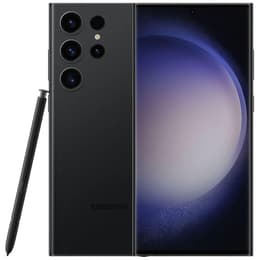
- Specialized Input: The Galaxy S23 Ultra includes an integrated stylus for note-taking and precise screen navigation, a feature absent on the Galaxy A56.
- Connectivity and Ports: Both models support current 5G networks, fast Wi-Fi standards, and USB-C connectivity, while omitting traditional headphone jacks.
Weight
200 oz
234 oz
Screen size (in)
6.7
6.8
Network
4G
5G
SIM card
Physical SIM + eSIM
Dual Physical SIM + eSIM
Carrier compatibility
Unlocked
Unlocked
What the community thinks
Choosing between the Samsung Galaxy A56 and the Galaxy S23 Ultra depends heavily on individual usage priorities. Users prioritizing advanced camera zoom capabilities, heavy gaming performance, and integrated stylus functionality will find the Galaxy S23 Ultra well-suited to their daily routines. Conversely, users seeking a balanced, modern smartphone focused on everyday communication, media streaming, and extended software support timelines will lean toward the Galaxy A56. For buyers exploring sustainable purchasing habits, choosing a quality-assured refurbished option provides a practical way to access these high-end features while reducing electronic waste. Both models offer dependable daily performance, allowing consumers to select the device that aligns most closely with their specific workflow.