Galaxy A55 vs Motorola Edge 30 Fusion

Galaxy A55
Galaxy A55
Starting at

Refurbished price:A$339.00

Versus A$699.00 new

See options
Motorola Edge 30 Fusion
Starting at

Refurbished price:A$257.46

Versus A$1,352.00 new

See options

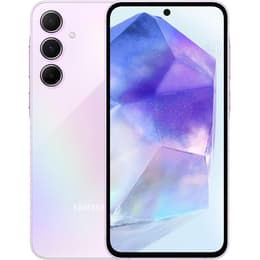
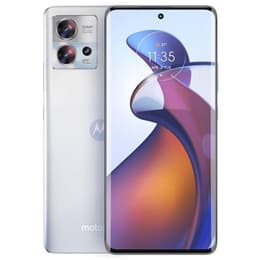
The Samsung Galaxy A55, released in March 2024, and the Motorola Edge 30 Fusion, launched in September 2022, are both Android smartphones that cater to different user priorities. While the Galaxy A55 emphasizes extended software support and enhanced durability, the Edge 30 Fusion focuses on delivering a high-performance experience within a sleek design.

Scores

Durability

The practical lifespan of a smartphone is significantly influenced by its software support and physical resilience. These two devices offer distinct approaches to longevity.

  • Software Updates: The Samsung Galaxy A55 is positioned for longer software relevance, with a commitment to four major Android OS updates and five years of security patches from its release. In contrast, the Motorola Edge 30 Fusion typically receives two major OS updates and three years of security updates, meaning its software support period is nearing its conclusion.
  • Physical Durability: The Galaxy A55 features Gorilla Glass Victus+ on both its front and back, along with an IP67 rating for dust and water resistance, offering robust protection against environmental elements. The Edge 30 Fusion, while featuring a glass front and back, has an IP52 rating, indicating splash and dust resistance rather than full immersion protection.
  • Expected Lifespan: Users prioritizing a device that remains current with the latest Android features and security updates for an extended period may find the Galaxy A55 more suitable. The Edge 30 Fusion, while still capable, will see its software support diminish sooner.

Release year

2024

2022

Operating system

Android

Android

Foldable

No

No

Performance

Performance in daily use, from app navigation to demanding tasks, is a key differentiator between these two devices, influenced by their internal components and battery capacities.

  • Processing Power: The Motorola Edge 30 Fusion is equipped with a processor that was considered flagship-tier at its release, providing very snappy performance for everyday tasks, smooth multitasking, and capable gaming experiences. The Samsung Galaxy A55 features a newer, mid-range processor that offers robust performance for daily use, including social media, browsing, and light-to-moderate gaming, with good thermal management.
  • Multitasking and Storage: Both devices offer configurations with 8GB or 12GB of RAM, allowing for efficient multitasking. The Galaxy A55 supports expandable storage via a microSD card, offering flexibility for users who need more space. The Edge 30 Fusion does not offer expandable storage.
  • Battery Behavior: The Galaxy A55 houses a larger 5000 mAh battery, with users frequently reporting it lasts a full day with normal usage. The Motorola Edge 30 Fusion has a 4400 mAh battery, and users also report solid battery life, often lasting a full day even with heavy use, attributed to its efficient processor.

Memory (GB)

8 GB

8 GB

Screen quality

The visual experience on a smartphone is largely defined by its display, and both the Galaxy A55 and Edge 30 Fusion offer vibrant screens with distinct characteristics.

  • Display Technology and Clarity: The Samsung Galaxy A55 features a 6.6-inch Super AMOLED display, known for deep blacks and vibrant colors, with a resolution of 1080 x 2340 pixels. The Motorola Edge 30 Fusion comes with a 6.55-inch P-OLED display, also offering rich colors and contrast, with a resolution of 1080 x 2400 pixels.
  • Brightness and Smoothness: Both displays offer high peak brightness levels, with the Edge 30 Fusion reaching up to 1100 nits and the Galaxy A55 up to 1000 nits, ensuring good visibility in various lighting conditions. The Edge 30 Fusion boasts a 144Hz refresh rate for exceptionally smooth scrolling and animations, while the Galaxy A55 provides a 120Hz refresh rate, which also delivers a fluid visual experience.
  • Viewing Experience: The Edge 30 Fusion features curved edges on its display, which some users find contributes to a more premium feel and immersive viewing. The Galaxy A55 has a flat display with slightly thicker bezels.

Resolution

1080x2340

1080 x 2400

Audiovisual

For many users, the camera system is a crucial aspect of a smartphone, and both devices offer capable setups for capturing moments.

  • Rear Camera System: The Samsung Galaxy A55 features a triple rear camera setup, including a 50MP main sensor with optical image stabilization (OIS), a 12MP ultrawide lens, and a 5MP macro lens. The Motorola Edge 30 Fusion also has a triple rear camera system, with a 50MP main sensor (OIS), a 13MP ultrawide lens with autofocus, and a 2MP depth sensor.
  • Photography and Video Quality: Users of the Galaxy A55 generally report good photo clarity and video quality, with particular praise for the smoothness of 60fps video recording. The Edge 30 Fusion's main and front cameras are noted for taking good pictures, though overall camera performance, especially in low light, is sometimes described as mediocre. Both devices are capable of recording 4K video, with the Edge 30 Fusion's main camera also supporting 8K recording.
  • Front Camera and Audio: Both phones are equipped with a 32MP front camera for selfies. The Galaxy A55's selfie camera can occasionally exhibit a yellowish tone. Both devices offer stereo speakers, with the Galaxy A55 providing loud and clear audio without distortion.

Miscellaneous

Beyond the core features, several practical elements contribute to the overall user experience and daily convenience of these smartphones.

  • Connectivity and Ports: Both the Galaxy A55 and Motorola Edge 30 Fusion support 5G connectivity and modern Wi-Fi standards, ensuring fast data speeds. They both utilize a USB Type-C port for charging and data transfer. The Galaxy A55 supports Bluetooth 5.3, while the Edge 30 Fusion supports Bluetooth 5.2.
  • Biometrics and Sensors: Both devices feature an optical under-display fingerprint sensor for secure unlocking. The Galaxy A55 uses virtual proximity sensing, which relies on software and the front camera, whereas the Edge 30 Fusion has a physical proximity sensor.
  • Design and Handling: The Galaxy A55 has an aluminum frame with a glass front and back, weighing 213g, which some users find to be on the heavier side. The Motorola Edge 30 Fusion is notably lighter at 168g and thinner, with a sleek design that many users appreciate for its comfortable handling.

Weight

213 oz

168 oz

Screen size (in)

6.6

6,55

Network

5G

5G

SIM card

Physical SIM

Dual Physical SIM

Carrier compatibility

Unlocked

Unlocked

When considering the Samsung Galaxy A55 and the Motorola Edge 30 Fusion, user feedback highlights distinct strengths for each device. The Galaxy A55 is frequently praised for its premium build quality, robust daily performance, and excellent battery life that reliably lasts a full day. Users also appreciate its capable cameras, especially for video, and the promise of extended software support. However, some users have noted its weight, occasional initial lag that improves with updates, and a fingerprint sensor that can be slower than on flagship models.

The Motorola Edge 30 Fusion receives commendation for its premium feel, exceptionally smooth display, and strong performance for everyday tasks and gaming, often described as feeling like a flagship device from its era. Its thin and light design is also a significant positive for many. Criticisms often revolve around its camera performance, particularly in low-light conditions, and a shorter software update commitment compared to newer devices.

Users prioritizing long-term software support, enhanced durability against dust and water, and a consistently reliable battery experience may find the Samsung Galaxy A55 to be a more fitting choice. Conversely, individuals who value a very sleek and lightweight design, a higher refresh rate display, and strong raw performance for demanding applications might lean towards the Motorola Edge 30 Fusion. Both devices offer compelling features, and choosing between them often comes down to these specific user priorities. For those seeking a quality-assured refurbished option, both models can be found, offering a sustainable choice for consumers.

See all articles

Our recent comparisons